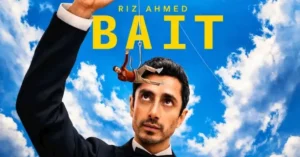

The first season of Bait has officially wrapped up on Prime Video, and the finale is leaving viewers with far more questions than answers. The show, created by and starring Riz Ahmed, follows Shah Latif, a British Pakistani actor whose life spirals after a James Bond audition rumor goes viral. While many tuned in expecting a story about landing the iconic role, the six-episode series instead delivered a sharp, often uncomfortable look at identity, ambition, and the price of chasing validation.
The ending does not confirm whether Shah becomes 007. That decision is intentional. The show’s creators used the final moments to ask a much harder question: after everything he lost, does he even want it anymore?
The Final Scene Leaves Shah at a Crossroads
The finale places Shah back in the same audition room where his troubles began. He has been given a second chance. The cameras are rolling, the director is watching, and the pressure is immense. But the expression on Shah’s face is not one of triumph or relief.
Instead, viewers see a man who has been stripped down by four chaotic days of media scrutiny, family tension, and a hate crime targeting his home. The show does not show him walking away, nor does it show him delivering the perfect take. It simply leaves him standing there, suspended between the life he thought he wanted and the one he might have destroyed trying to get it.
The series deliberately avoids giving a clear answer about whether Shah lands the Bond role. That missing piece of information is the point. The show argues that the outcome of the audition matters less than what the pursuit cost him. By the final episode, his relationship with his cousin Zulfi has grown distant, his connection to his community feels frayed, and his sense of self has been battered by both public backlash and personal doubt.
What the Title ‘Bait’ Really Means
Throughout the season, the title reveals its meaning across three layers. On the surface, the Bond audition serves as bait for Shah, a dangling opportunity that pulls him away from everything stable in his life. On an industry level, the show critiques diversity casting, presenting Shah as bait for a system that values optics over authentic representation. The producers in the series see his viral fame as a tool, something they can use to show they are considering a brown actor, regardless of whether they ever intend to hire him.
On the deepest level, the title refers to the personal bait Shah swallows. He trades time with his family, compromises his values, and endures racist abuse in the hope that a role will finally tell him who he is. The series suggests that chasing external validation, especially from an institution as historically white and British as James Bond, is a trap.
Surreal Elements Highlight Shah’s Psychological State
One of the most talked-about elements of the series is the recurring appearance of a pig’s head. After someone throws the severed head through his family’s window in a hate crime, Shah stores it in his freezer. In later episodes, the head begins talking to him, voiced by Sir Patrick Stewart.
The surreal conversations serve as a device to externalize Shah’s self-doubt and anxiety. They represent the internal voices telling him he does not belong, that he is making a mistake, and that he has sold out his community. These scenes ground the show’s darker themes in a format that feels both absurd and painfully honest.
Critical Reception and Audience Reactions
Since its release on March 25, 2026, Bait has drawn strong reviews from critics. The series holds a 95% critics score on Rotten Tomatoes alongside an 88% audience score. On IMDb, it sits at 6.4/10, reflecting a more divided response from general viewers.
Critics have praised Ahmed’s performance and the show’s willingness to tackle difficult subjects like racism, tokenism, and the pressures faced by actors of color. Some reviewers noted that the six-episode structure leaves certain themes underexplored, but most agree that the finale lands with emotional weight.
Audience reactions on social media show a split. Some viewers appreciated the show’s refusal to give a tidy ending. Others expressed frustration that they never learn whether Shah gets the part. A viewer on X wrote, “I watched all six episodes waiting to see if Riz Ahmed becomes Bond, and they just… never tell you. Kind of genius actually.”
The Cast and Creative Team Behind the Series
Ahmed wears multiple hats on this project. He stars as Shah Latif, created the series, wrote episodes, and served as an executive producer and co-showrunner alongside Ben Karlin, known for his work on The Daily Show and Modern Family.
The supporting cast includes Guz Khan as Shah’s cousin Zulfi, Sheeba Chaddha and Sajid Hasan as his parents, Ritu Arya as his ex-girlfriend Yasmin, and Weruche Opia as his agent Felicia. Himesh Patel appears in a recurring role as a rival actor also rumored for Bond.
Release Information for Global Audiences
All six episodes of Bait Season 1 are now streaming on Prime Video. Viewers in the United States, United Kingdom, Canada, Australia, and India can watch the full series on the platform. The show premiered on March 25, 2026, and is available in its entirety for binge-watching.
The Real-World Parallels in Riz Ahmed’s Story
The series draws clear connections to Ahmed’s own experiences in the entertainment industry. He has spoken publicly about navigating race and identity in British film and television. The show’s exploration of what it means to be a Muslim actor in a post-9/11 world comes from lived perspective rather than theoretical analysis.
A notable real-world echo occurred during the show’s release window. British actor Paapa Essiedu revealed he received racist death threats after being cast as Severus Snape in HBO’s upcoming Harry Potter series. The timing underscored how relevant the themes of Bait remain, with actors of color continuing to face targeted abuse for taking on high-profile roles.
The Pig’s Head and the Podcast Format
One of the show’s most creative choices involves the pig’s head interviewing Shah in a podcast-style setup. The sequence blends horror, comedy, and psychological drama in a way that feels fresh for television. Sir Patrick Stewart’s voice brings an unexpected layer of British establishment authority to the surreal conversations, forcing Shah to confront his fears with a voice that sounds like it belongs in the very institutions he is trying to join.
Technical Achievements in Cinematography
The series stands out for its visual style. Directors Bassam Tariq and Tom George employ long tracking shots, including a standout sequence in Episode 4 set on Brick Lane in London. The episode unfolds in a single continuous take, following Shah as he navigates a reunion with Yasmin while the pressures of his Bond rumors mount in the background.
Cinematographers Frank Lamm and Dan Atherton move between intimate handheld shots and dramatic crash zooms. The crash zooms pay homage to 1960s and 1970s Indian and Pakistani cinema, connecting Shah’s story to a broader tradition of South Asian filmmaking.
Also Read:




The Soundtrack Adds Another Layer
Music plays a key role in establishing the show’s tone. The soundtrack spans decades and regions, featuring Pakistani playback singer Naheed Akhtar, 1970s Qawwali from the Sabri Brothers, 1980s disco from British Pakistani duo Nermin Niazi and Feisal Mosleh, and 1990s drum and bass from Origin Unknown. Contemporary tracks from Jorja Smith, Sevaqk, Troyboi, and Amrit Maan round out the mix. Composer Shruti Kumar provides the score that ties these elements together.
Looking for more fresh updates from the world of streaming? Keep it locked on VvipTimes for the latest reviews, recaps, and breaking entertainment news.