

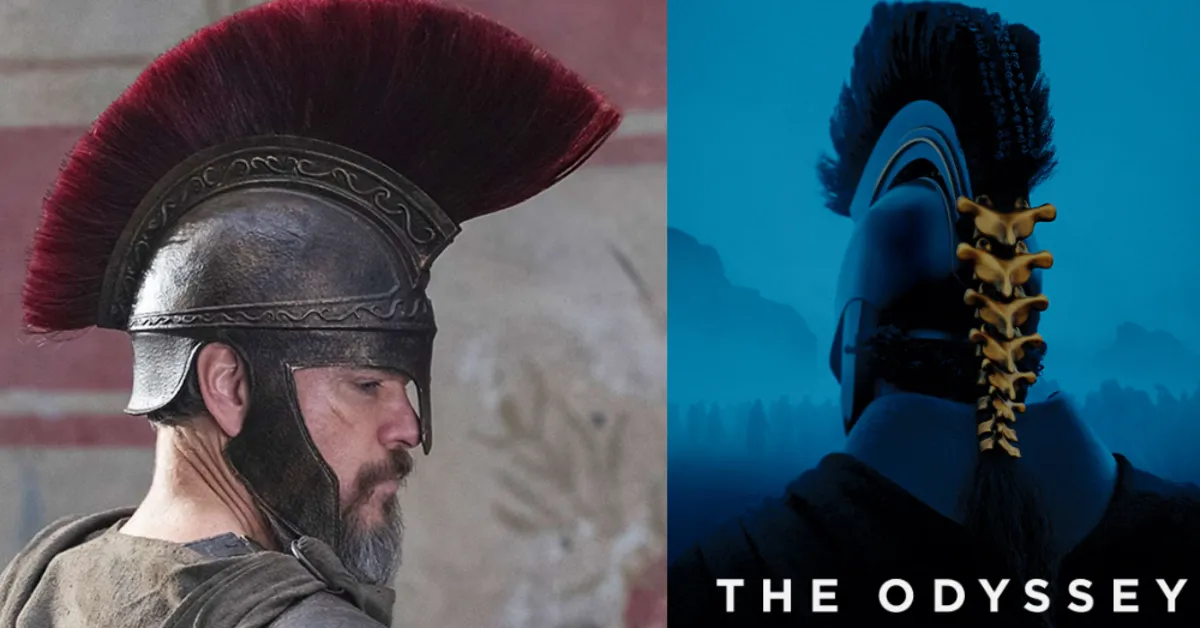
Christopher Nolan’s The Odyssey has finally reached theaters worldwide, bringing Homer’s ancient Greek epic to life on an unprecedented IMAX scale. The film, starring Matt Damon as Odysseus, Anne Hathaway as Penelope, and Tom Holland as Telemachus, has become one of the most talked-about releases of 2026. As audiences finish the nearly three-hour journey, one question keeps coming up: does The Odyssey have a mid-credits or post-credits scene?
No Post-Credits Scene, Just Like Every Other Nolan Film
The short answer is no. The Odyssey does not include a mid-credits scene or a post-credits scene. The film wraps up its main narrative before the credits begin, with no additional sequences teasing a future installment. This choice aligns perfectly with Nolan’s filmmaking philosophy. Whether it’s Inception, Interstellar, Dunkirk, Oppenheimer, or even The Dark Knight trilogy, Nolan has never relied on post-credits scenes to extend his stories. His films are designed to end where the narrative naturally reaches its conclusion.
Matt Damon leads the cast as King Odysseus, who spends 10 years at war and another decade lost at sea, encountering cyclops, sirens, and giants along the way. The film follows his desperate journey home to Ithaca after the Trojan War, where his wife Penelope has been waiting for 20 years. The ensemble cast also includes Zendaya as Athena, Robert Pattinson as Antinous, Charlize Theron as Calypso, and Lupita Nyong’o as Helen of Troy.
Why You Should Stay Through the Credits
Even though there’s no extra scene, there are still good reasons to remain seated when the credits start rolling.
The end credits feature “When I’m Home,” an original song performed by James Blake and Travis Scott, with music by Oscar-winning composer Ludwig Göransson. The biggest surprise is that Christopher Nolan is credited as a co-writer, marking the first songwriting credit of his filmmaking career. The lyrics echo Odysseus’ emotional journey home, revisiting themes of memory, war, loss, and redemption that define the film.
Travis Scott previously collaborated with Nolan on “The Plan,” the song released for the director’s 2020 sci-fi thriller Tenet. Scott also appears in The Odyssey as a bard, making a cameo appearance.
A Touching Tribute to IMAX Pioneer David Keighley
Viewers who stay through the credits will also notice a dedication to David Keighley, IMAX’s longtime Chief Quality Officer. Keighley spent nearly four decades helping shape IMAX technology and worked closely with Nolan during the development of the new IMAX cameras used to shoot The Odyssey entirely on film. He passed away in August 2025 after a battle with cancer, shortly after completing work on the project.
The film is dedicated to Keighley, with a plate in the end credits calling him “a long-time champion of the format”. IMAX has since named a new camera model “The Keighley” in his honor. The dedication makes the ending one of the film’s most touching moments. Nolan’s The Odyssey is the first narrative motion picture to be fully shot with IMAX cameras.
What Happens at the End of The Odyssey
Nolan’s adaptation places greater focus on the psychological and moral consequences of war rather than only the heroic aspects of Odysseus’ journey. The film’s ending moves away from a straightforward celebration of Odysseus’ return home and instead examines the emotional weight of the violence he experienced and caused during his journey.
After losing all his men on his treacherous journey home, Odysseus returns to Ithaca disguised as a haggard beggar, with the intent of reclaiming his throne from the dozens of suitors who have been harassing Penelope for years. His now-grown son Telemachus, played by Tom Holland, slowly recognizes his father. The climax centers on Penelope’s challenge requiring the successful suitor to string Odysseus’ legendary bow and fire an arrow through 12 axes. None succeed until Odysseus reveals his identity and effortlessly completes the feat before defeating the armed suitors.
The film concludes with Odysseus reuniting with Penelope while Telemachus becomes the new king of Ithaca. Rather than ending with complete peace, Nolan keeps one final thread from Greek mythology alive as Odysseus vows to continue sailing west to honor the companions who died throughout his extraordinary journey.
Major Change from Homer’s Original Poem
While Nolan’s adaptation is largely faithful to Homer’s nearly 3,000-year-old poem, the director throws a meditative new wrinkle into the story. Odysseus comes to grips with his role in the Trojan War, leading the charge as his men committed terrible acts in his name. The character’s remorse and disgrace become a pivotal part of the movie’s third act, which ends almost entirely differently than Homer’s original.
The film changes its focus from adventure to the lasting psychological effects of war, asking whether anyone truly returns home unchanged. Even iconic moments such as the Trojan Horse are presented less as clever military triumphs and more as symbols of the devastating consequences of war. It’s a thematic approach that echoes Nolan’s earlier explorations of conflict in Dunkirk and Oppenheimer, where victory is often accompanied by moral complexity.
You May Also Like:



Critical and Commercial Success
The Odyssey has been attracting rave reviews and has become Nolan’s highest-ranking release to date on Rotten Tomatoes, with a 96% fresh score from critics. The film’s current score places it ahead of Memento, Batman Begins, and The Dark Knight, each of which holds a 94% rating on the platform. With over 1,000 verified ratings, The Odyssey also breaks Nolan’s audience score record.
At the box office, the film earned $51 million on its opening day from 3,919 North American screens. Early estimates project the film to gross between $100 million and $120 million domestically by Sunday, with worldwide ticket sales expected to exceed $200 million. In India, the film earned an estimated Rs 17.40 crore net on its opening day.
The film was released in theaters worldwide on July 17, 2026, by Universal Pictures. It is the first feature film to be shot entirely on IMAX film cameras, made possible after Nolan worked with IMAX to develop lighter, quieter equipment capable of handling dialogue-heavy scenes.
Also Read: Christopher Nolan The Odyssey Creates Pin-Drop Silence in Packed Indian Theatres
Stay tuned to VvipTimes for more breaking news and updates from the world of entertainment, where we bring you the stories that matter most.


Leave a Reply