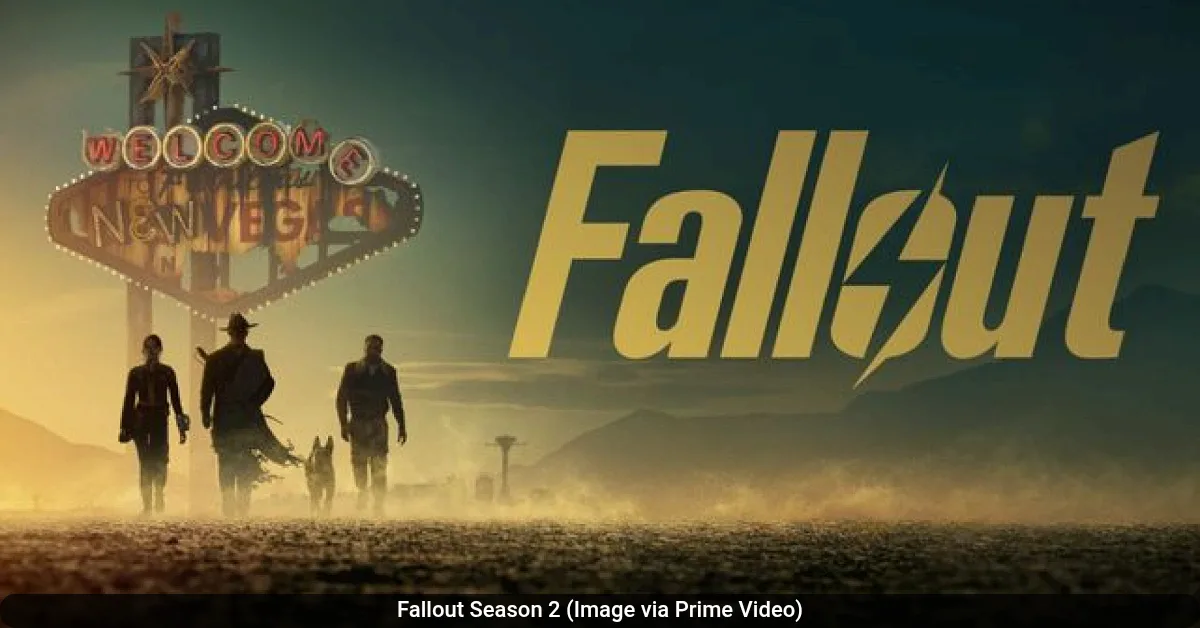
The third episode of Fallout Season 2 delivered a tense scene between Cooper Howard and the enigmatic Robert House that has viewers asking questions. In a public restroom, House corners Cooper and asks if he or his friend is a “pinko” . For many, this outdated slang was confusing. The term is a direct link to the show’s retro-futuristic 1950s America and the intense political paranoia that defined the era leading up to the Great War .
Understanding what “pinko” means is key to understanding the political tensions in the pre-war world of Fallout and the complicated position Cooper Howard finds himself in. The insult reveals the black-and-white political climate where any dissent could be labeled as treason.
What Does “Pinko” Actually Mean?
The term “pinko” is a historical insult with roots in American Cold War politics. It was used as a derogatory label for someone perceived to have socialist or communist sympathies, but who wasn’t necessarily an official member of the Communist Party .
The logic behind the word is based on color. Red is the color traditionally associated with communism. A “pinko” is therefore a “lighter shade of red”—someone whose political views are seen as leaning toward communism but are not fully committed to it . It was a way to discredit left-leaning liberals, labor organizers, or anyone who criticized the government or capitalism without officially being a “commie” or “Red” .
The word saw common use during the Red Scare of the 1940s and 1950s, a period of intense fear of communist infiltration in the United States . Politicians like Richard Nixon used it to attack opponents. This climate of suspicion is perfectly replicated in the Fallout universe, where accusing someone of being a “pinko” was a serious matter that could ruin lives .
Why Does Robert House Call Cooper Howard a Pinko?
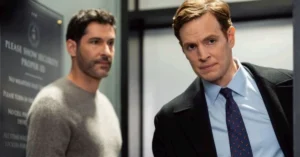
The scene in Fallout Season 2, Episode 3: “The Profligate,” shows Robert House approaching Cooper at a veterans award ceremony for Cooper’s friend, Charlie Whiteknife . House downplays Charlie’s achievements and then gets personal, asking Cooper, “You know he’s a pinko?… Are you?” .
House is probing Cooper’s political loyalties. At this point in the timeline (before the bombs fell), Cooper is a famous actor and former soldier who fought in the Sino-American War. On the surface, he should be a patriotic American hero. However, House has clearly done his research. He knows Cooper has been seen at meetings for “radicals” and has become disillusioned with the U.S. government after seeing its corruption .
Cooper’s political beliefs are shown to be complex. After his war experiences, he considered himself anti-communist. Yet, after witnessing American corporations sell out the public’s wellbeing, his views shifted. He is not a communist, but he is critical of the unchecked capitalism and greed that define his society . This nuanced, middle-ground position is exactly what someone like House would label “pink.”
“I’m not a communist. Yet the glory of unfettered capitalism is all around us. We’re standing in its ruins,” says another character in the Fallout world, capturing a similar sentiment .
House’s use of the word is both an accusation and a test. He is trying to see how Cooper will react and to establish dominance by showing he knows Cooper’s secrets. Interestingly, House even claims to empathize with the “pinko” cause, acknowledging their complaints about powerful institutions are “entirely justified” . This makes House a more cunning villain—he understands the system’s flaws but chooses to exploit them for his own gain.
The Bigger Picture: Communism and Paranoia in the Fallout World
The “pinko” exchange is not just character detail; it’s a window into the core conflict of the Fallout universe. The pre-war United States was a nation in the grip of extreme anti-communist paranoia .
In this timeline, the Cold War with China never ended. The fear of communist infiltration justified extreme government overreach. Anyone accused of being a communist or sympathizer could be spied on, imprisoned without trial, or sent to secret detention camps . People were encouraged to report their neighbors for “suspicious behavior.” This persecution extended to anyone with Chinese ancestry, who could be rounded up under executive orders .
The term “pinko” was a weapon in this psychological war. By labeling someone a pinko, you could dismiss their criticisms as un-American and dangerous. The show uses this historical term to ground its alt-history in real emotions and politics, making the pre-war society feel terrifyingly authentic .
Also Read:


Fan Reactions to the “Pinko” Scene and the House-Howard Dynamic
The bathroom confrontation has become one of the most talked-about scenes in the season. On social media, fans noted that younger viewers needed the historical term explained, while older viewers recognized it immediately . Many were captivated by the high-stakes chemistry between actors Walton Goggins (Cooper Howard) and Justin Theroux (Robert House).
The intense, close-quarters dialogue in the restroom has even sparked a new fan dynamic among some viewers, who have playfully dubbed the pair “GhoulHouse” . Justin Theroux commented on working with Goggins, saying, “We’re really giddy to be playing them together… we just had such a delicious time making those scenes together” .
Beyond the memorable acting, the scene is crucial for plot development. It marks the first direct interaction between Cooper Howard and the real Robert House, setting the stage for their inevitable future conflict. House’s mention of Cooper’s “pinko” friend also ties Cooper closer to the mysterious Moldaver and her anti-corporate cause, forcing him to choose a side as the world inches closer to nuclear war.
Also Read: Perfect Crown: Release Date, IU and Byeon Woo-seok’s Contract Marriage, Disney+ Streaming and More