

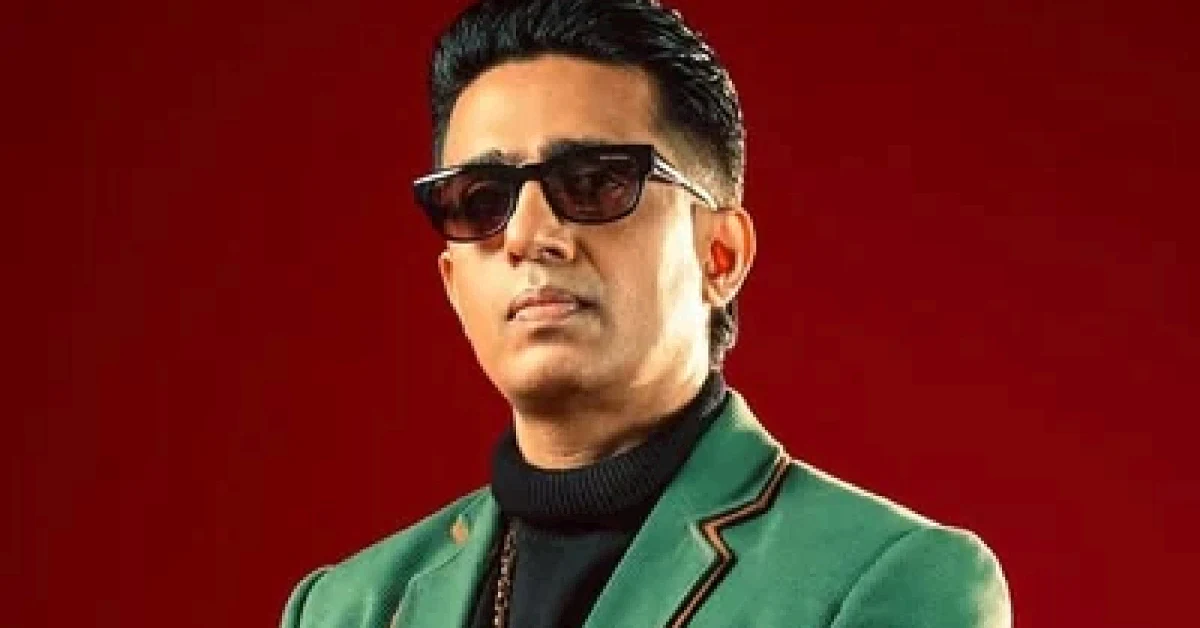
Gulshan Devaiah has pushed back against the widely repeated claim that violent, hyper-masculine films have taken over Bollywood. In an interview with Hindustan Times published on October 11, 2026, the actor argued that the current focus on action-heavy blockbusters is simply a trend, not a permanent shift. He pointed to the 1970s and 1980s as proof that very different kinds of cinema can succeed at the same time, recalling how Amitabh Bachchan’s “angry young man” and Amol Palekar’s “average young man” both found large audiences. Devaiah’s comments arrive just days before his upcoming family film Little Thomas releases in theatres on October 23, 2026.
What Gulshan Devaiah Actually Said About Bollywood Violence
Speaking about the perception that Bollywood is now defined by aggression and hyper-masculinity, Devaiah explained that box-office reporting creates a misleading picture.
“It is just that these mass entertainers, which draw large crowds, are popular for obvious reasons. They are fun. Violence can also be fun. Great directors have used it as a medium, and it can be a lot of fun, but the business aspect of these films gets highlighted so much — they make enormous amounts of money — that it creates an illusion that the entire industry is shifting in one direction. But that’s just an illusion.”
He drew a direct parallel with an earlier era of Hindi cinema.
“Like in the 1970s and 1980s, Amitabh Bachchan’s ‘angry young man’ was popular with the masses, while Amol Palekar’s ‘average young man’ thrived with the middle class — both coexisted and thrived. India has immense socioeconomic diversity, so different types of films that appeal to different audiences can coexist. A film doesn’t need to make ₹500 or ₹1000 crores to be a success; the return on investment ratio matters.”
Devaiah also noted that audience tastes remain unpredictable, pointing to the unexpected success of 12th Fail, which became the most successful film of Vidhu Vinod Chopra’s 35-year career. He also mentioned that he was unaware Hanuman Ansh was even playing in cinemas until it started making significant money.
The Personal Shift Behind Little Thomas
Devaiah has played some of the most memorable villains in recent Indian cinema. He portrayed the destructive Kulasekhara in Rishabh Shetty’s Kantara: Chapter 1 and the brutal Four-Cut Atmaram in Raj and DK’s web series Guns & Gulaabs.
His move toward lighter stories was a conscious adjustment rather than a calculated career plan. Devaiah explained that he wanted his filmography to reflect his own taste as a moviegoer, allowing him to explore different genres instead of being defined by a single type of role. He said he approaches project selection by curating a body of work that reflects his eclectic preferences, choosing roles that create a genuine urge to participate. Whether the project is a commercial film, an independent feature, or a web series, the deciding factor is the same: does the role excite him.
What Little Thomas Is About and Who Is In It
Little Thomas is directed by Kaushal Oza and backed by Anurag Kashyap as one of the producers. The film stars Gulshan Devaiah and Rasika Dugal alongside child actor Hridansh Parekh. The story follows a bright, cheerful seven-year-old boy growing up in Goa in the early 1990s who desperately wants a younger brother.
The film’s official trailer was released on October 1, 2026, offering a warm and whimsical look at the boy’s quest. Devaiah and Dugal play Thomas’s parents, bringing a cosy, retro-leaning Goan backdrop to the story.
Devaiah described the film as a refreshing change from the intense and grey characters he has portrayed in recent projects. He said Little Thomas served as a detox for him and gave him a chance to reconnect with his inner child.
Release Details for Little Thomas in India and Worldwide
Little Thomas will release in theatres across India on October 23, 2026. The film has locked a nationwide theatrical release, with the announcement made by the makers in September 2026.
For audiences outside India, no confirmed international release date or streaming platform has been announced yet. The film’s theatrical run in India will be followed by a digital release, but no official streaming date or platform has been shared by the makers. Viewers in the United States, United Kingdom, Canada, Australia, and other global markets will need to wait for an official announcement regarding international distribution or streaming availability.
The film is a children’s and family entertainer, a genre that has become relatively rare in Indian cinema in recent years. Devaiah noted that a “kids film” is usually a family film because children aged 10 or 12 will not go to the cinema on their own.
Devaiah’s Earlier Comments on Hyper-Masculinity
This is not the first time Devaiah has spoken about the dominance of aggressive male characters in Indian cinema. In January 2026, he told Screen that he found the growing obsession with bearded, ultra-macho leading men increasingly tiring. He questioned why every lead actor today feels the need to sport a heavy beard and adopt a hyper-masculine persona, indirectly referencing films like Pushpa.
“It’s just a trend. So is ultra-machismo. It can be incredibly fun.”
He made similar remarks in interviews with News18 and India Today, where he described the trend as something that becomes exhausting after a point. His January comments sparked discussion online about whether Hindi cinema has become too reliant on a single template for male heroes.
You May Also Like:


Why the Comparison to the 1970s and 1980s Matters
The 1970s and 1980s were a defining period in Hindi cinema. Amitabh Bachchan became a national icon with his “angry young man” roles in films like Zanjeer and Deewaar, which spoke to the frustrations of a generation. At the same time, Amol Palekar built a devoted following with gentle, middle-class comedies like Gol Maal and Chhoti Si Baat, playing an ordinary man navigating everyday problems.
Both actors found success without cancelling each other out. Devaiah’s point is that the same dynamic exists today. Big-budget action films draw large crowds and generate massive box-office numbers, but smaller, story-driven films continue to find their own audiences and achieve solid returns on investment.
The actor’s argument is straightforward: the loudest successes do not represent the entire industry. India’s vast socioeconomic diversity means there is room for many kinds of stories to succeed at the same time.
Also Read: Nicolas Cage Refuses AI Waiver for Spider-Noir, Says He Will Probably Never Work With Amazon Again
For more updates on Indian cinema, festival releases, and streaming news, keep reading VvipTimes.


Leave a Reply