
The story of Carrie Mathison‘s love life in Homeland is as twisted and dangerous as the spy operations she runs. Over eight intense seasons, viewers watched this brilliant but troubled CIA officer fall for a turned prisoner of war, form deep connections with fellow agents, and finally, in the show’s surprising conclusion, find a life with the most unexpected person of all: her Russian captor, Yevgeny Gromov.
This final choice was not a simple happy ending. It was a complex result of all the betrayals, sacrifices, and moral compromises Carrie made to protect the United States. The series finale, “Prisoners of War,” left her living in Moscow with Yevgeny, secretly working as an asset for her former mentor, Saul Berenson. To understand how she got there, you have to look back at the dramatic relationships that defined her journey.
The Impossible Love: Carrie and Nicholas Brody
Carrie Mathison’s most defining and tragic relationship began as an investigation. When Marine Sergeant Nicholas Brody was rescued after eight years in terrorist captivity, Carrie was convinced he had been “turned” into an enemy agent. She started surveilling him, but their connection quickly became personal. Their first real meeting was electric.
Claire Danes, who plays Carrie, once called it “the perfectly impossible love”.
This relationship was built on lies and obsession but grew into something real. Despite Brody’s plans to carry out a terrorist attack and Carrie’s mission to stop him, they fell in love. Their story was a turbulent three-season saga that ended in tragedy. To save Carrie and protect a CIA operation, Brody was captured and publicly executed in Iran. Carrie, pregnant with his daughter, Franny, could only watch in horror.
Brody’s death left a permanent mark on Carrie. Many fans believed he was the great love of her life, a man for whom she was willing to risk everything, including her career and sanity. His death closed one chapter but set the stage for her complicated future.
Other Bonds: Quinn, Saul, and Brief Affairs
After Brody, Carrie’s personal life was tangled with her dangerous work. She developed a deep, complicated bond with fellow CIA operative Peter Quinn. Quinn loved Carrie and often saved her life, but she could never fully return his feelings in the same way. Their relationship was one of mutual respect and tragedy, ending with Quinn’s death.
Carrie’s most stable relationship was not romantic. Her mentor, Saul Berenson, was her professional father figure. He believed in her, protected her, and was often the only person she could trust. However, their bond was tested to its absolute limit in the final season.
There were other, shorter affairs. She briefly dated a lawyer, Jonas Hollander, after Brody’s death, seeking normalcy. During an assignment in Pakistan, she used a romantic relationship with a young medical student, Aayan Ibrahim, to get close to a terrorist target—a decision heavily criticized even within the show. Each of these connections highlighted Carrie’s pattern of mixing intimacy with intelligence work, often with painful consequences.
The Final Deal: Carrie and Yevgeny Gromov
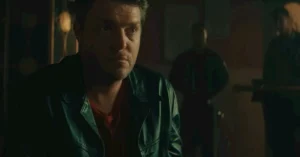
The path to Carrie’s final partner was the most brutal. In Season 7, Russian intelligence officer Yevgeny Gromov captured and tortured Carrie for months. He was her enemy. Yet, in the final season, their paths crossed again in a high-stakes negotiation. Carrie needed a flight recorder from Russia to prevent a war. Yevgeny had it. The price? Carrie had to give up Saul’s most valuable Russian spy and betray her mentor.
To save thousands of lives and stop a nuclear conflict, Carrie made the deal. She drugged Saul and nearly had him killed to get the information Yevgeny demanded. This act made her a traitor in the eyes of the U.S. government. With no country to call home, the only place left for her to go was with Yevgeny in Moscow.
The series finale jumps ahead two years. Carrie is seen living in Russia with Yevgeny. In a powerful final scene, she attends a jazz concert and subtly signals to Saul, watching from afar, that she is back in the game. She has written a book criticizing the CIA, but this is likely a cover. The final shot reveals her secret work: a new intelligence wall, this time spying on Russia for Saul.
Also Read:





What Carrie’s Ending Really Means
Carrie Mathison does not end up with a traditional romantic partner. She ends up in a strategic alliance that is part survival, part penance, and part continued service. Her relationship with Yevgeny Gromov is built on a shared understanding of the dark world of espionage, not on love as she knew it with Brody.
She sacrificed her home, her family, and her name to do what she believed was right. Her final “relationship” is the ultimate expression of her life’s work: a deep, undercover operation where her partner is also her target. She is alone, yet more connected to her purpose than ever. As one analysis of the finale noted, she is a “solitary and unhonored hero,” forever a prisoner of her war.