
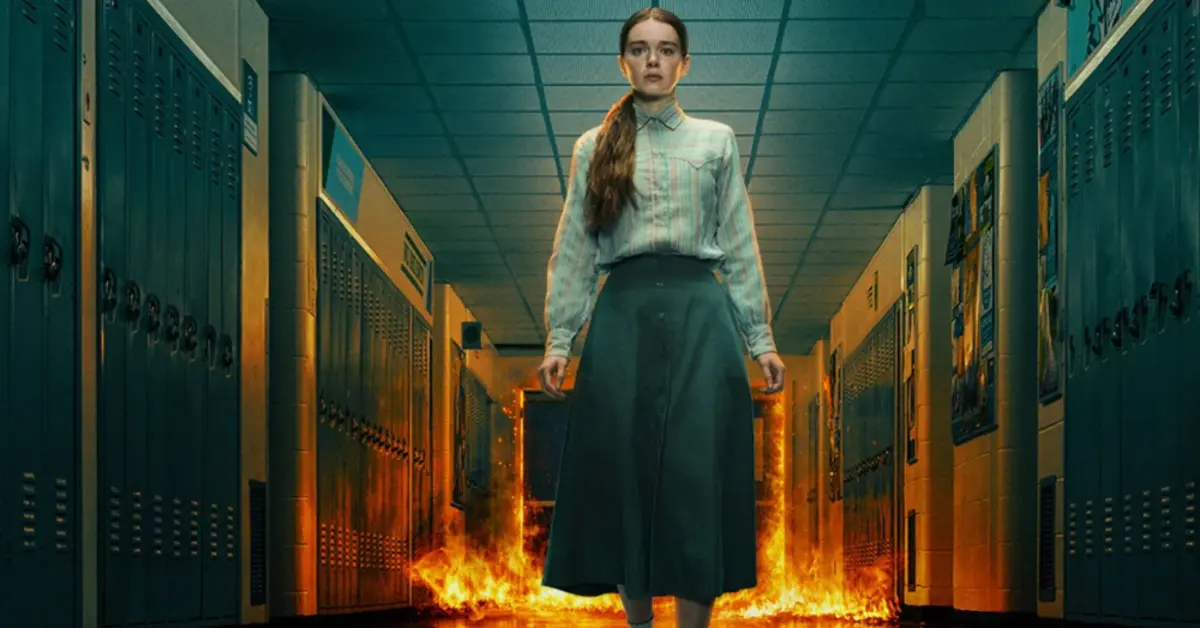

Stephen King has never been shy about admitting his early doubts. The horror master, now 79, looked back at the making of his debut novel Carrie and the 1976 film adaptation in a candid interview with The Hollywood Reporter published on November 13, 2026 — timed to the film’s 50th anniversary.
During the conversation, King recalled the deep uncertainty he felt while writing the story of a bullied teenage girl with telekinetic powers. That uncertainty extended to a very specific detail: the sanitary napkins in the novel’s opening locker-room scene.
“I didn’t know if there were coin-op machines for the napkins,” King told THR. “I didn’t even know what the napkins were, for God’s sake.”
That brutally honest line has become the most quoted moment from the interview — a rare window into a legendary writer’s early insecurity. King, then a struggling English teacher in Maine, genuinely feared he had no business writing about the experiences of teenage girls.
King’s doubts went far beyond a single detail
The napkins confession was not an isolated moment of doubt. King originally planned Carrie as a short story for lower-tier magazines like Cavalier, where he typically earned around $200 per piece, occasionally $500. The story kept growing beyond what a magazine could use, and King worried it would be too long for a short story and too short for a novel.
He also felt completely out of his depth when it came to the female experience. “I didn’t know anything about girls’ locker rooms,” he said, laughing during the interview.
Those doubts were strong enough that King threw the opening pages into the trash. The manuscript might have stayed there if not for his wife, novelist Tabitha King.
Tabitha King pulled the pages from the wastebasket
Tabitha spotted the discarded pages and read them. Her response changed literary history.
“Tabby fished it out and said, ‘You know, this is really good, so push on with it,’” King recalled. He listened. Over the next three months, the abandoned short story became his first published novel.
Doubleday bought Carrie for $2,500 in 1973. The paperback rights later sold for $400,000, enough for King to quit teaching and write full time. The book hit shelves on April 5, 1974, with a first printing of 30,000 copies.
A Boston preview screening told King he had a hit
Seeing the movie for the first time was a different kind of test. King and Tabitha drove from Maine to an inner-city theater in Boston, where Brian De Palma’s Carrie was playing on a double bill with Norman… Is That You?, a comedy starring Redd Foxx.
The audience was almost entirely Black, and King quietly worried the crowd would have no interest in a story about a white teenage girl’s traumatic adolescence. “I thought to myself, ‘Man, this audience is not going to care about this little white girl with her menstrual problems,’” he told THR.
The crowd proved him wrong almost immediately. The theater grew loud, with people shouting at the screen as the suspense built. Then came the film’s final scene — the hand bursting through the grave. Two men the size of football players sitting behind King screamed and grabbed each other in terror.
One of them shouted, “That’s it, that’s it. She ain’t never gonna be right”.
“I thought to myself, ‘Well, we got a hit,’” King said.
What the napkins comment says about King’s writing process
The napkins line is funny in hindsight, but it points to something King has discussed for decades: he wrote Carrie from a place of genuine not-knowing. He had worked as a school janitor years earlier and remembered the sanitary napkin dispensers mounted on the girls’ locker room walls. That image — a girl getting her first period in the shower with no idea what was happening — became the seed of the story.
King combined that image with his interest in telekinesis and his memories of two girls he knew growing up who were treated as social outcasts. “They were savagely bullied about their clothes, about their hair, just about their lack of social graces,” he said. “Nobody wanted to let them out of the box”.
That sense of being trapped in a role became the emotional core of the novel — and, half a century later, it still lands with readers and viewers.
The 1976 film became a turning point for horror
Carrie opened on November 3, 1976, and made $33.8 million domestically on a $1.8 million budget. The film turned Sissy Spacek into a star, gave De Palma his first real commercial success, and earned two Academy Award nominations — for Spacek as Best Actress and Piper Laurie as Best Supporting Actress. Horror films rarely crashed the Oscars then, and they rarely do now.
The movie also started one of the longest-running pipelines in Hollywood. King’s stories have been adapted for screens more than 60 times.
You May Also Like
A new Carrie series is already renewed for a second season
The story has found another life on television. Mike Flanagan’s Carrie series launched on Prime Video in 2026, with eight episodes that expand the character arcs beyond King’s original novel. King publicly endorsed the adaptation on Threads, writing that Flanagan’s version is “brilliant” and that what it says about social media is “shocking and true”.
Prime Video renewed the series for a second season in October 2026, after Flanagan teased a three-season plan. The renewal came just weeks after the show debuted, a sign that Carrie White’s story still has pull with audiences five decades after King first typed those uncertain opening pages.
For more entertainment news and updates on your favorite authors, films, and series, keep reading VvipTimes.












Leave a Reply