

For nearly 3,000 years, the Sirens’ song has stood as one of literature’s greatest mysteries. Homer’s The Odyssey describes a melody so irresistible that no sailor who hears it can escape its fatal pull. Yet the epic poem never gives readers the actual lyrics or tune. Christopher Nolan’s 2026 film adaptation follows the same path, leaving audiences to imagine the sound that tempted countless men to their deaths.
This omission is not a narrative gap. It is a deliberate storytelling choice that has puzzled and fascinated readers for millennia. The question remains: why does The Odyssey never reveal what the Sirens actually sang?
The Sirens’ promise in Homer’s epic
In Homer’s original poem, the Sirens are described as half-bird, half-woman creatures who lure passing sailors to shipwreck with their songs. Their voices were so enchanting that no one who heard them was believed to survive. Captivated by the irresistible melody, sailors would abandon their ships and leap into the sea, unable to resist the urge to draw closer.
But here is what many people miss. When the Sirens actually call to Odysseus in the epic, they do not spend much time praising their own voices. Instead, they make him a specific offer. “Famous Odysseus, great glory of Achaea,” they sing. “Draw near, and bring your ship to rest, and listen to our voices”. They promise that anyone who stops to hear them will continue on “a wiser man”. They claim to know everything that happened during the Trojan War and everything taking place across the Earth.
This is an incredibly specific temptation. Odysseus is not just a great warrior. He is defined by his intelligence and curiosity. Throughout his journey, he survives because he constantly searches for answers, thinks his way through impossible situations, and refuses to accept what appears on the surface. The Sirens do not tempt him with romance or pleasure. They tempt him with the one thing Odysseus has always shown a thirst for: knowledge. They promise answers to questions no mortal should ever be able to ask.
Why Homer never wrote the song
Ancient readers noticed this puzzle long ago. The only temptation Odysseus cannot resist is the song of the Sirens. But why? Because of its musical beauty, its content, or both? Homer leaves it open.
The clever reason runs deeper than simple mystery. After nearly 3,000 years of stories describing the world’s most irresistible song, no real piece of music could ever live up to that reputation. If listeners start evaluating the melody itself, the illusion is already broken. By leaving the song undescribed, Homer lets each reader imagine the perfect temptation for themselves.
This approach transforms the Sirens from mere singers into something far more dangerous. The song itself becomes almost secondary, serving purely as a delivery system. What matters is the idea behind it. The Sirens do not need to sing a specific tune. They only need to promise something their listener desperately wants.
Christopher Nolan’s approach to the impossible scene
Nolan’s 2026 film The Odyssey faced the same challenge that has troubled filmmakers for decades. How do you adapt a song that is supposed to be universally irresistible? Previous adaptations have leaned into haunting melodies and hypnotic performances, but none have fully succeeded.
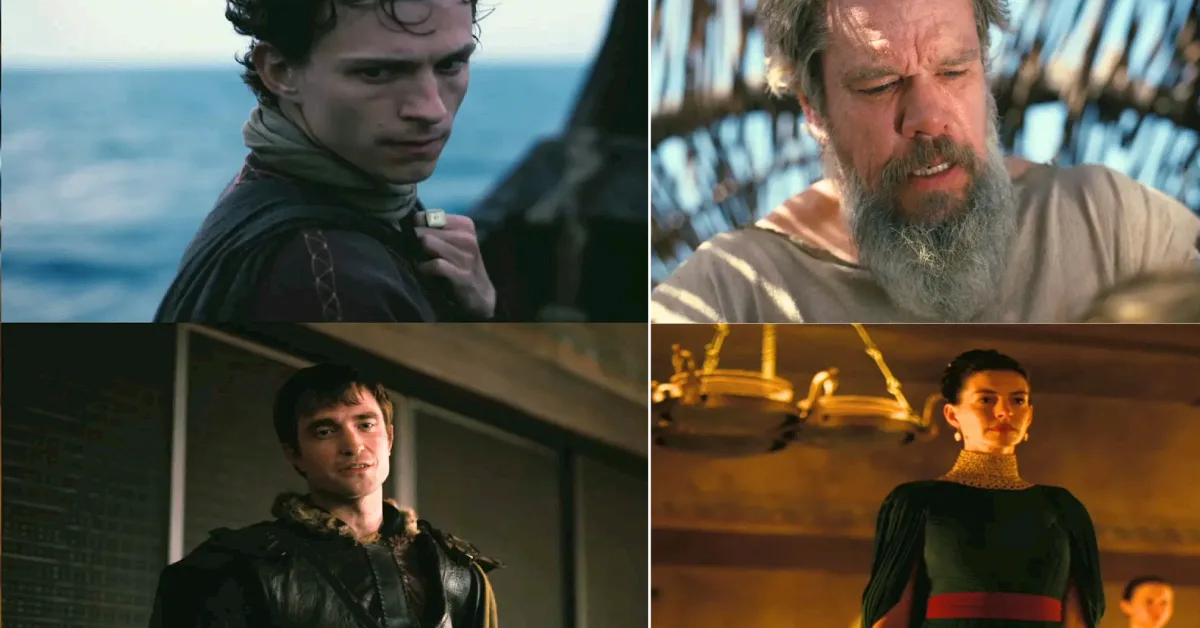
Nolan took a different path. He switched the perspective to Odysseus’ second-in-command, Eurylochus, whose ears are blocked with wax. The audience sees the Sirens’ sequence through his eyes. All he can do is watch Odysseus and his reaction to the song. The movie goes all but silent, leaving audiences to focus on Odysseus as Eurylochus does.
Matt Damon’s wordless reaction to the Sirens’ song became one of the film’s high points. As Odysseus writhes in torment, audiences feel it all. Rather than questioning whether the song is potent enough, viewers focus on what would make them react in such a way. This approach makes the scene far more powerful than any actual song could have been.
Nolan explained his thinking directly. “You look at it and you go, ‘Well, the point of the Sirens’ song is that it’s going to be different for everybody’. So it’s not really about what it sounds like,” he told Digital Spy. “It’s not about an objective view of it. It’s about that experience of what would it mean to you, so that becomes about the emotion”.
The Sirens’ silence in Kafka’s reinterpretation
The mystery of the Sirens’ song has inspired reinterpretations beyond Homer. Franz Kafka’s short story “The Silence of the Sirens” offers a fascinating twist. In Kafka’s version, the Sirens do not sing at all. They remain silent. But this silence becomes their strongest weapon.
Kafka suggests two possible reasons for the Sirens’ silence. Either they determined that silence would be a more potent weapon against Odysseus than their song. Or they saw the look of bliss on Odysseus’ face and completely forgot how to sing.
Some scholars have noted that in Kafka’s narrative, Odysseus does not hear their silence. He believes they are singing, and that he is protected from hearing them. He sees their necks turning, their deep breathing, their tear-filled eyes, their half-open mouths. But he mistakes all of this for the actions of singing.
This creates a remarkable paradox. Odysseus survives not because he resists the Sirens, but because he is completely unaware of what is actually happening. His victory is based on illusion. He thinks he has won, but he has misunderstood everything.
You May Also Like:










Why silence speaks louder than any song
The decision to never reveal the Sirens’ song serves a deeper purpose. It transforms the story from a simple monster encounter into something far more profound. The Sirens represent the ultimate temptation. But temptation is always personal. What lures one person to destruction might mean nothing to another.
By leaving the song undescribed, Homer and Nolan both force audiences to confront their own vulnerabilities. What would make you abandon everything? What promise would be irresistible enough to make you leap into the sea? The answer is different for everyone.
The Sirens’ song in The Odyssey is not really about music at all. It is about knowledge, curiosity, and the dangerous desire to know more than any mortal should. Odysseus, the man defined by his intelligence, is tempted by the promise of ultimate wisdom. The song itself is just the packaging.
That is the clever reason the song is never revealed. Any actual lyrics would limit the imagination. Any real melody would disappoint. But the silence? The silence lets each listener imagine the one thing they could never resist. And that is far more terrifying than any song could ever be.
Also Read: Spider-Man Brand New Day Director Says The Odyssey Delay Helped Make The Film Better
Keep reading VvipTimes for more deep dives into the stories behind your favourite films and classic literature.




























































































Leave a Reply