

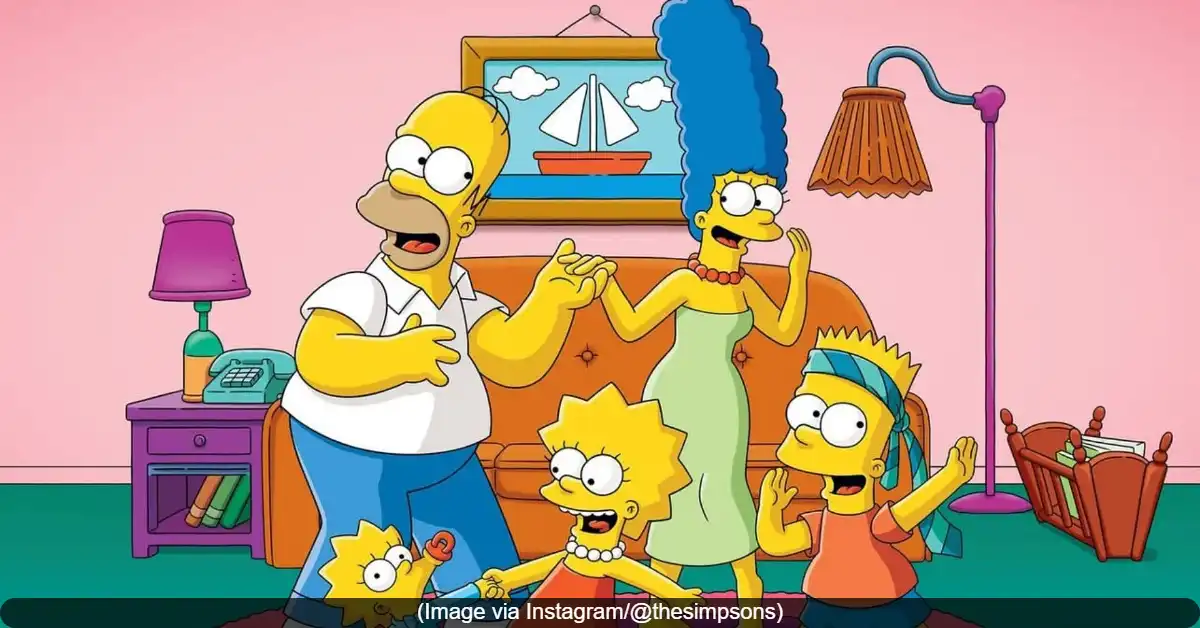

Long before Christopher Nolan brought Homer’s ancient Greek epic to the big screen with a star-studded cast, The Simpsons delivered its own unforgettable take on the legendary tale. The animated sitcom, known for turning classic literature into sharp comedy, managed to condense Odysseus’s ten-year journey into a few minutes of pure animated chaos.
With Nolan’s The Odyssey now playing in theaters worldwide and dominating the box office, fans are looking back at how Springfield’s favorite family tackled the same source material. The contrast between the two versions could not be more striking—one a grand, visually stunning epic, the other a rapid-fire parody filled with absurd jokes and pop culture references.
The Episode That Put Homer in Odysseus Sandals
The Simpsons Season 13 Episode 14, titled “Tales from the Public Domain,” first aired on March 17, 2002. The episode follows Homer as he receives a notice from the library about an overdue book he checked out when Bart was born. Before returning it, he reads three classic stories to his family: Homer’s The Odyssey, the story of Joan of Arc, and Shakespeare’s Hamlet.
The first segment puts Homer Simpson in the role of Odysseus, the legendary Greek king of Ithaca. After winning the war against the Trojans, Homer as Odysseus must find his way back home to his wife Penelope (Marge) and son Telemachus (Bart).
What makes this parody work so well is how it uses the familiar faces of Springfield to populate the ancient Greek world. Odysseus’s crew consists of Apu, Lenny, Moe, Professor Frink, and Carl. Ned Flanders appears as the King of Troy. The episode takes full advantage of the show’s deep bench of characters, turning each into a comic foil for Homer’s reckless leadership.
A Seven-Minute Journey Through an Epic Tale
The Simpsons managed to tell the entire story of The Odyssey in roughly six minutes and 30 seconds—a feat that Nolan accomplishes in nearly three hours. Despite the short runtime, the parody hits many of the most famous moments from the original poem.
The crew repeatedly calls out Homer for making poor decisions that take them further from home. An angry Zeus orders Poseidon to punish Odysseus for his sins, leading to a series of misadventures. The episode includes the encounter with the Sirens, the witch Circe turning men into pigs, and the long-awaited return to Ithaca.
One of the most talked-about scenes involves the Sirens. In Nolan’s film, the Sirens’ song is never actually heard, which disappointed some viewers. The Simpsons took a completely different approach. Patty and Selma, Marge’s sisters, perform the Siren song with their famously dreadful singing voices. The effect is so painful that Odysseus and his crew desperately try to gouge out their own eyes rather than listen.
How The Simpsons Flipped the Story on Its Head
The parody constantly subverts audience expectations. In one memorable scene, Poseidon literally blows winds to steer the ship. Circe transforms Odysseus’s men into pigs, and Homer ends up eating them. The episode takes grim moments from the original epic and turns them into comedy.
The ending provides perhaps the biggest laugh. When Odysseus finally returns to Ithaca and reunites with Penelope and Telemachus, he does not embrace them with joy. Instead, he asks to be left alone and announces he is heading to Moe’s tavern. It is a perfect Simpsons punchline that undercuts the emotional weight of the homecoming.
The episode also includes a clever joke about the title “Homer’s Odyssey.” When Homer reads the title, he wonders if the story is about a minivan he rented seven years ago—a reference to the Honda Odyssey.
Christopher Nolan Takes on the Epic
While The Simpsons turned The Odyssey into comedy, Christopher Nolan approached the material with a grand, cinematic vision. His film, released on July 17, 2026, brings Homer’s foundational saga to IMAX film screens for the first time.
The cast reads like a who’s who of Hollywood. Matt Damon takes on the lead role of Odysseus. Anne Hathaway plays his wife Penelope. Tom Holland appears as their son Telemachus. The ensemble also includes Robert Pattinson as the antagonist Antinous, Lupita Nyong’o in dual roles, Charlize Theron as the nymph Calypso, and Zendaya as the goddess Athena.
The film has been a massive commercial success. It grossed over $264 million worldwide during its opening weekend, with more than $124 million from North America and around $139 million from international markets. It became the live-action film with the most impressive opening weekend of 2026. The film was shot with a budget of $250 million and continues to perform strongly at the global box office.
Two Very Different Takes on the Same Story
The contrast between the two adaptations highlights how different approaches to the same material can produce wildly different results. Nolan’s version is a serious, visually spectacular epic that stays true to the emotional core of Homer’s poem. It is a love story at its heart, following Odysseus’s twenty-year journey to return to his wife.
The Simpsons version, on the other hand, takes the same story and uses it as a vehicle for jokes. The episode does not aim for emotional depth or historical accuracy. Instead, it uses the familiar structure of The Odyssey to deliver laughs, often by placing Springfield’s characters in situations that are completely at odds with the epic tone of the original.
Yet both versions share one thing in common: they keep the story alive for new audiences. Nolan’s film introduces The Odyssey to a generation of moviegoers who may not have read the ancient poem. The Simpsons did the same thing years ago, exposing younger viewers to Greek mythology in a humorous way.
Related Stories



View all articles about
Why This Episode Matters Now
With Nolan’s The Odyssey drawing massive crowds and generating widespread discussion, revisiting The Simpsons parody offers an interesting perspective. The episode reminds us that these ancient stories have been adapted and reimagined countless times over the centuries. Each generation finds new ways to tell the same tales.
The Simpsons has built a reputation for parodying classic literature, and “Tales from the Public Domain” stands as one of the show’s most memorable anthology episodes. It follows in the tradition of earlier trilogy episodes like “Simpsons Bible Stories” and “Simpsons Tall Tales”.
The episode also demonstrates the show’s remarkable longevity. The Simpsons has been on the air since 1989 and has been renewed through season 40. Over that time, it has parodied everything from classic literature to blockbuster films, always finding fresh ways to make audiences laugh.
For fans of Nolan’s film, watching The Simpsons parody offers a completely different experience. It is a reminder that even the most serious stories can be turned into comedy. And for fans of The Simpsons, the episode stands as proof that the show’s writers knew how to take ancient material and make it feel brand new.
The episode is available to stream on various platforms. Viewers can watch Season 13, Episode 14 to see Homer’s take on the epic journey. It remains one of the most enjoyable and accessible introductions to The Odyssey for those who prefer their Greek myths with a heavy dose of laughter.
Also Read: Perfect Addiction Episode 5 Release Date, Streaming Details and Story Recap
Keep up with the latest in entertainment news and streaming updates only on VvipTimes.















Leave a Reply