The new Sky crime drama Under Salt Marsh opens with a moment that feels deeply human, even if it breaks every police rule in the book. After former detective turned schoolteacher Jackie Ellis finds one of her students, nine-year-old Cefin, dead in a drainage ditch, she does not wait for the authorities. Covered in mud and clearly in shock, she walks to his family’s home and delivers the devastating news herself. Many viewers have questioned this choice since the show premiered on January 30, 2026. Why would someone with police training bypass proper procedure? Creator Claire Oakley recently sat down with Variety to explain the thinking behind that powerful scene and what it tells us about Jackie’s complicated character .
A Decision Driven by Instinct, Not Protocol
The scene in Episode 1 is difficult to watch. Jackie stands at the door of Shelley and Danny Hill, still wearing her muddy clothes, her face pale and haunted. She does not sugarcoat what happened. She tells them directly that their son is dead. The parents react with shock and immediately rush to the scene, leaving Jackie alone in their house, visibly shaken by what she just did.
For viewers who have worked in law enforcement or know standard police procedure, this moment raises immediate red flags. In most cases, trained family liaison officers handle death notifications. They follow specific protocols to support families and preserve the integrity of an ongoing investigation. So why did Jackie take this responsibility upon herself?
Claire Oakley explained that this decision was very intentional . “I liked the idea that Jackie is often acting on instinct and that is probably what made her ultimately leave the police and perhaps not be the best type of person to join the force,” Oakley said. “In some ways, she’s a very good detective. In other ways, she can’t cope when things get personal.”
The creator wanted to show that Jackie operates on a deeply emotional level . She felt it was her responsibility to tell the parents as quickly as possible. In a small, tight-knit community like the fictional Welsh village of Morfa Halen, the police might take time to arrive. Jackie believed they deserved to hear the truth from someone who cared about their son, not from a stranger in uniform.
But Oakley also highlighted the complexity of that choice . “As it’s happening, [she’s] realizing, like, ‘oh, it’s kind of a very irresponsible thing to do.’ I was interested in these moments where she’s not responsible, but she’s responsible emotionally, on a human level.”
What Jackie’s Decision Reveals About Her Past
The scene also serves another purpose. It gives viewers a window into Jackie’s history and her current mental state. When she shows up at the door, the Hills do not immediately panic. They seem almost used to seeing her in distress. Shelley even tells Jackie to sit down and offers to call her dad .
Oakley explained that this reaction was meant to show that Jackie has a complicated past in this community . People know her. They have seen her struggle before. Her appearance that night, covered in mud and clearly traumatized, does not shock them as much as it might if she were an outsider. This small detail tells us that Jackie has been through something difficult, and the town knows about it.
That something, as the episode later reveals, is the disappearance and presumed death of her niece, Nessa, three years earlier. Jackie worked that case as a detective alongside her then-partner Eric Bull. The case remains unsolved, and Jackie blames Bull for mishandling it . That history explains why she is so determined to handle Cefin’s case differently, even if it means bending the rules.
The Contrast Between Jackie and Bull
Jackie’s instinct-driven approach stands in sharp contrast to Detective Eric Bull’s methodical style. When Bull arrives in Morfa Halen to lead the investigation, he immediately questions Jackie’s decision to inform the parents . He tells her that was not the right procedure. But Jackie shuts down and refuses to discuss it with him.
This tension between the two characters drives much of the early episodes. Bull follows evidence, tests water samples, and interviews witnesses by the book. Jackie follows her gut, questions children on her own, and chases leads that Bull initially dismisses .
The show makes clear that both approaches have value, and both have serious flaws. Bull’s rigid adherence to protocol failed to solve Nessa’s case three years ago. Jackie’s emotional involvement in that same case led to her leaving the force under a cloud . Together, they represent two different ways of seeking justice, and neither works perfectly on its own.
A Community Under Pressure
The setting of Morfa Halen adds another layer to Jackie’s decision. This is not a big city with a large police force and dedicated victim support services. It is a small coastal town facing an imminent environmental crisis. A massive storm is approaching, and officials warn that sea levels could rise by five to six meters . The community has raised money to build a sea wall, but no one knows if it will hold.
In this context, the usual rules of policing might not apply. The town is isolated. The storm threatens to destroy evidence. Everyone knows everyone else’s business. Jackie’s choice to tell the parents herself feels less like a breach of protocol and more like the only humane option in a place where formal systems sometimes move too slowly .
Oakley has spoken about how the environment shaped the story . She spent time on the North Wales coast and fell in love with the salt marshes. She wanted to create a drama that could explore these landscapes in detail while also telling a story about a community facing existential threats. The idea of protection, both environmental and personal, runs through the entire series .
The Hidden Connection Between the Cases
As Episode 1 progresses, Jackie’s decision to tell the parents herself takes on even greater significance. While going through old belongings of her niece Nessa, Jackie finds a sketchbook with a drawing of a man in a white suit . Later, she discovers that Cefin drew the exact same figure before he died. This chilling connection confirms what Jackie already suspected: the two cases are linked.
If Jackie had followed proper procedure and waited for family liaison officers, she might not have been in the Hills’ home that night. She might not have had access to Cefin’s belongings. Her decision to break the rules, however irresponsible from a police perspective, puts her in a position to spot this crucial piece of evidence .
The show does not celebrate Jackie’s rule-breaking as heroic. It simply presents it as part of who she is. She cannot separate her personal feelings from her professional responsibilities. That makes her messy and complicated, but it also makes her effective in ways that a more disciplined officer might not be.
The Investigation Unfolds
As the series continues, the evidence mounts that Cefin did not die where he was found. Tests show salt water in his lungs, but the ditch contains only fresh rainwater . His body was moved. A stray hair on his shirt does not belong to him. There are traces of chemicals on his skin consistent with toxic waste exposure .
These details point toward a much larger conspiracy involving illegal dumping, corrupted sea wall construction, and a community’s desperate attempts to protect itself from both environmental collapse and criminal exposure . The investigation forces Jackie and Bull to work together despite their history, and it gradually reveals that the killer is someone they both know and trust.
Spoiler warning for those who have not finished the series – The killer is ultimately revealed to be Mac, the man in charge of building the sea wall . He is married to Nisha, who is the sister of Nessa’s mother, making him Nessa’s uncle by marriage. When Nessa and later Cefin accidentally discovered the illegal toxic waste site at the abandoned Sunnyside amusement park, Mac silenced them permanently. He believed he was protecting his family and his work, but his actions destroyed the very community he claimed to love .
The Human Element in Crime Drama
Claire Oakley’s explanation of Jackie’s decision in Episode 1 reflects a broader philosophy behind Under Salt Marsh. The show is not just a whodunit. It is a character study of people under extraordinary pressure, facing threats both natural and man-made .
“The salt marshes protect us,” Oakley told Variety . “They protect us from the sea level rise from the storms. So they’re very important if we want to continue living here, because our island is getting smaller. And so [there was] this idea of protection and ‘What if we don’t protect the things that we need to?’ What if we don’t protect the future generations against potential horrors?”
That question applies to the environmental story, but it also applies to Jackie. She failed to protect Nessa three years ago. When she finds Cefin’s body, she cannot fail again. Her decision to tell his parents immediately, however unorthodox, comes from a place of deep protective instinct. She will not let another family wait for answers while systems slowly grind into motion .
Critical and Audience Response
Under Salt Marsh has connected strongly with viewers since its debut. The premiere episode attracted 1.8 million viewers within its first week, making it Sky’s most successful original drama launch since The Day of the Jackal . Critics have praised the show’s atmospheric setting, complex characters, and willingness to engage with real environmental issues facing coastal communities .
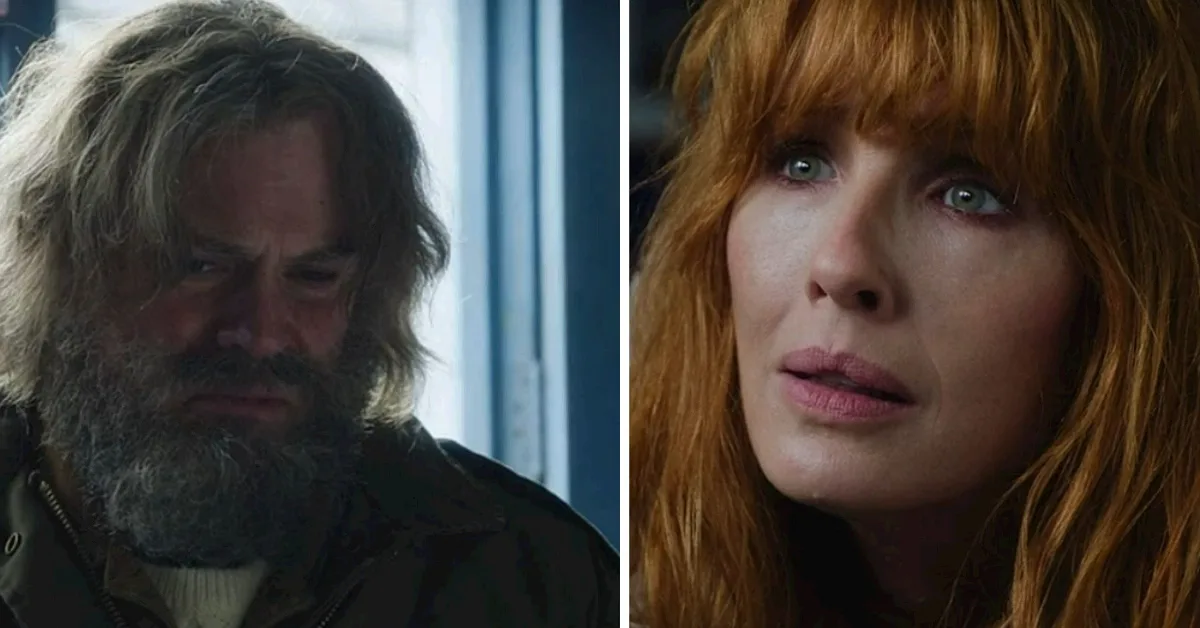
The series is now available to stream in full on Sky and NOW TV in the UK. International distribution details are still being finalized, but given the show’s strong performance and the star power of Kelly Reilly, best known for her role as Beth Dutton in Yellowstone, it is likely to reach global audiences soon .
Also Read:




The Weight of One Decision
Looking back at Episode 1 with the full context of the series, Jackie’s choice to tell Cefin’s parents about his death carries even more weight. It sets the tone for everything that follows. It shows us who Jackie is: a woman who cannot separate her emotions from her actions, who follows her instincts even when they lead her into dangerous territory, and who will do whatever it takes to protect the people she loves .
Oakley’s explanation reminds us that good television is built on these kinds of character moments. The plot matters, but the choices characters make under pressure matter more. Jackie’s decision in those first few minutes of Episode 1 is not just a plot point. It is the key to understanding everything she does afterward.
The creator’s willingness to let her protagonist make questionable choices, to act on instinct rather than protocol, makes Under Salt Marsh feel more real than many police procedurals. Real people in crisis do not always follow the rules. They do what feels right in the moment. Jackie Ellis does exactly that, and the consequences ripple through every episode that follows .
Also Read: Smiling Friends Seasons: A Complete Guide to All Episodes and the Surprising Series End
For more exclusive interviews, episode recaps, and breaking news about your favorite shows, keep visiting VvipTimes – your trusted source for entertainment news that matters.