

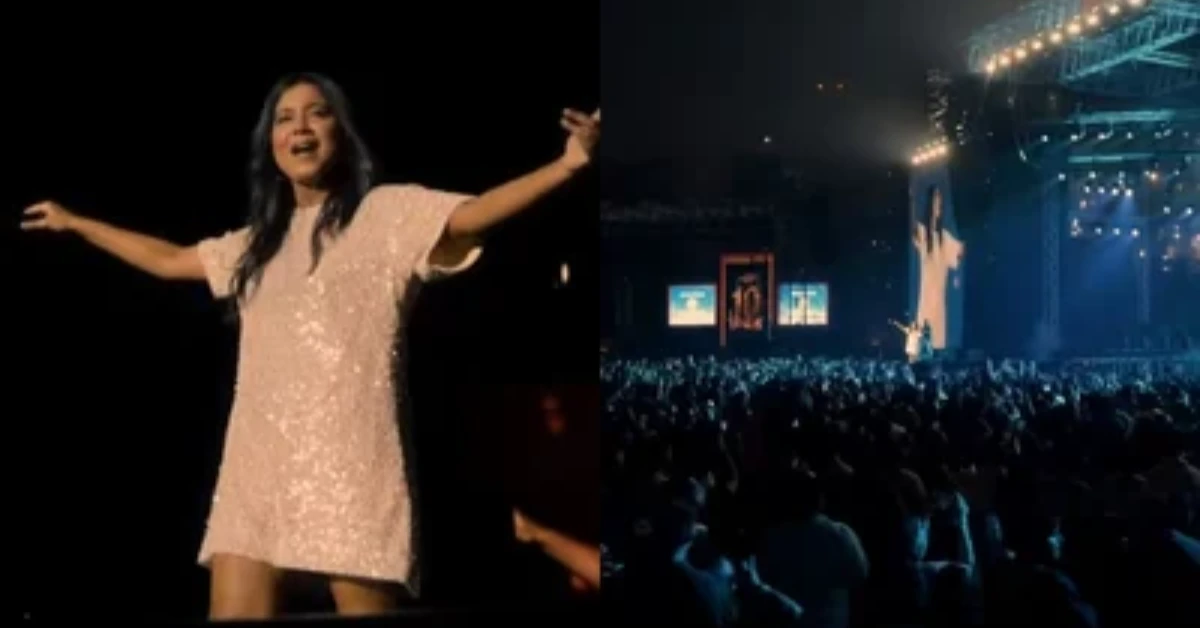

Shilpa Rao did not get to say goodbye to Mumbai on Saturday night. Her microphone was switched off mid-sentence at the Bollywood Music Project, her stage lights went dark, and another artist began performing on a second stage while she was still standing there. The audience kept calling her name. She could hear them. She just could not answer.
Rao posted about it the same night, and the note she wrote is the reason this story has outgrown a single festival’s scheduling error. “Mumbai, a little piece of my heart broke tonight,” she wrote on Instagram and X. “It hurts deeply to have something so beautiful taken away from us like this. But even when the music stopped, you did not. The way you kept calling my name, the love in your voices. I could feel it all. Our story tonight was left unfinished. I promise, I will come back”. The post did not name the organisers. It did not threaten anyone. It simply told the truth about what happened and thanked the people who stayed.
That restraint is worth noting, because the facts of the night are not restrained at all. Rao was performing at the 10th-anniversary edition of BMP in Mumbai on October 24. According to multiple reports, her set was already fighting technical problems — a faulty microphone, a replacement that also failed — before the sound was cut entirely while she was thanking the crowd. She waited on stage for roughly 15 to 20 minutes, according to News18, while the lights stayed off and fans chanted her name. When she returned during Kutle Khan’s set to try to say a proper goodbye, she was cut off again and escorted backstage.
The Apology, the Denial, and the Scheduling Excuse
Bollywood Music Project issued an apology shortly after midnight on October 25, citing “unpredictable operational delays, curfew restrictions and extended performances earlier in the day”. The festival said it held Rao “in the highest regard” and regretted that her performance could not be presented in full.
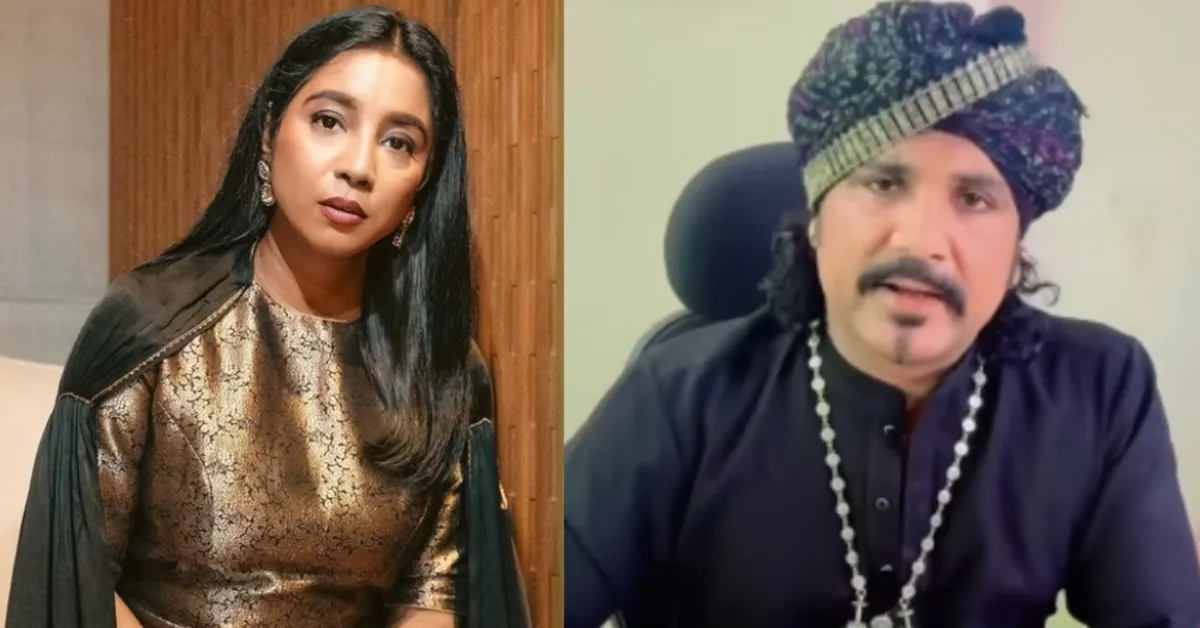
Kutle Khan, the folk singer whose set began while Rao was still on stage, released a video statement on October 27 denying any role in the cutoff. He said he was following organisers’ instructions and that his own slot had been cut from 20 minutes to eight at the last minute. He also said he paused his performance when Rao asked to address the audience, and resumed only after a voice in his in-ear monitor told him to start again. “Shilpa is a very good friend of mine, like a sister,” he said. “The trolling and negativity being spread on social media right now are very unfortunate”.
Rao’s husband, Ritesh Krishnan, was less measured. In an Instagram post on October 26, he called the treatment “selfish, petty, shameless, and utterly classless” and accused BMP’s PR team of trying to convince Mumbai that the incident had not happened as they saw it. “Denying a fellow artist just two minutes to say goodbye to her audience” was the line that landed hardest, because it stripped the argument down to its simplest terms: the festival did not run out of time for everyone.
What the Double Standard Looks Like
Rolling Stone India reported that while Rao’s set was cut short without warning, headliner Himesh Reshammiya continued performing beyond the 10 pm curfew. That detail matters more than any single apology. It moves the story from “festival logistics went wrong” to “whose time was protected and whose was not.” Rao is a National Award winner for “Chaleya” from Jawan, one of the most streamed Indian playback singers of her generation, and a live act who has spent years building a touring reputation on vocal precision rather than spectacle. If a curfew was the hard constraint, the question is why the constraint applied so firmly to her set and so loosely to the act that followed.
The All Indian Cine Workers Association (AICWA) made that point in a statement on X on October 25. The body called the treatment “completely unacceptable” and said cutting an artist’s sound and lighting mid-show before handing the stage to another performer was “a direct insult to her dignity and to the honour she has earned”. AICWA also offered support if Rao decides to take action against the festival. That is not a routine industry reaction. It is a union putting a marker down on how live-event organisers can treat artists when schedules slip.
Related Stories


View all articles about
The Larger Problem BMP Stepped Into
India’s live music circuit is expanding fast, and the operational discipline has not always kept pace. Rolling Stone India placed the BMP incident alongside Monali Thakur’s 2024 criticism of stage infrastructure at a Varanasi concert and the fallout from Neha Kakkar’s Melbourne show, framing them as connected symptoms of a market where demand for live events has outrun the systems that protect performers.
That framing is the useful one. A festival can apologise for a curfew. It cannot apologise its way out of the structural choice to solve a scheduling problem by silencing an artist mid-sentence. The audience at BMP made its own judgment in real time. When the mic went dead, the crowd did not drift away. It kept calling Rao’s name. She heard it, and she wrote it down for them.
For VVIPTimes, the measure of this story is not the apology BMP issued after midnight. It is the 20 minutes Shilpa Rao stood in the dark while Mumbai kept saying her name.





















Leave a Reply