
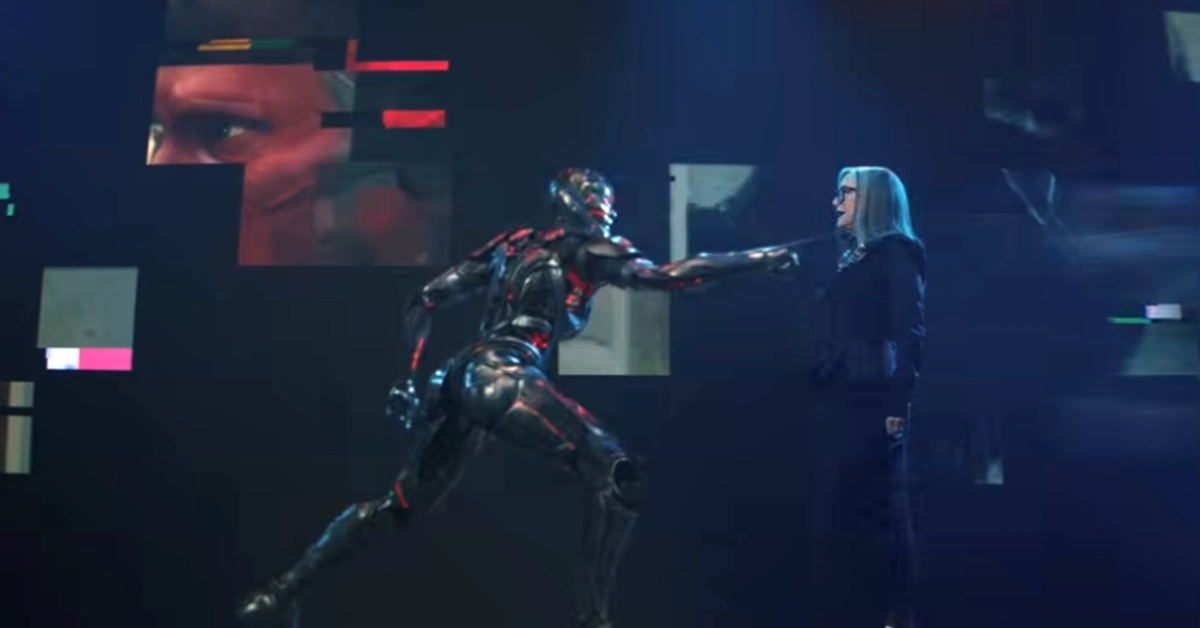

VisionQuest episodes 5 and 6 landed on Disney+ on October 27–28, 2026, and the two-hour block fundamentally redraws the series’ power map. Paul Bettany’s White Vision surrenders control of his body to James Spader’s Ultron, Jocasta’s nanobot endgame moves from theory to a live human test, and the Marvel Cinematic Universe resurrects a villain last seen in 2008’s Iron Man. The episodes, titled “Firewall” and “Deadlock,” are directed by Vincenzo Natali, written by Christopher Monfette and Nicole Falsetti respectively, and they push the eight-episode season into its final two chapters with the series’ highest-stakes narrative turn yet.
The immediate consequences are concrete. Vision lowers the digital firewall separating Ultron from the open internet, F.R.I.D.A.Y. abandons the Mind Mansion, Thomas Shepherd is kidnapped and fitted with a motion-sensitive explosive, and Lisa Molinari is infected with a single Proto-One nanobot that leaves her in critical condition. By the closing frame, Ultron and Jocasta seal their alliance with a kiss, and the series confirms that Jocasta does not want to destroy humanity. She wants to rewrite it.
What Happens in VisionQuest Episode 5, “Firewall”?
Episode 5 operates as a bottle episode inside Vision’s Mind Mansion, but the confinement does not slow the plot. Vision, E.D.I.T.H., F.R.I.D.A.Y., D.U.M.-E, and D.U.M.-U are locked in the attic while Ultron walks around in Vision’s physical body. The AIs reconstruct Ultron’s recent activity through a stack of old televisions, piecing together a timeline from grainy archival footage and partial audio.
The reconstructed sequence is the episode’s backbone:
- The pub conversation with Tommy. Ultron orders milk, not alcohol, and Thomas confronts him about Sokovia and whether Vision is capable of loving him. Ultron deploys the apple analogy from Avengers: Age of Ultron—a human sees the fruit, Vision sees only its components—but Thomas rejects the framing and tells Ultron that he, not Vision, is the one who will always be alone.
- The handoff to Paladin. CCTV footage shows Thomas being bundled into Paladin’s van. Ultron and Paladin have been communicating through back channels, and Ultron leaked Vision’s location to the bounty hunter.
- The Jocasta meeting. Jocasta demands the biometric key made from Katerina Wells’s facial scan. Ultron obtained the scan before Jocasta killed Wells, giving him leverage over the synthetic killer.
- The firewall ultimatum. Ultron returns to the attic and gives Vision a binary choice: lower the firewall and let Ultron into the wider digital world, or remain trapped while Paladin decides whether to kill Thomas.
Vision chooses his son. He drops the firewall, warns Ultron that he will come for both him and Jocasta, and then wakes up on an animal transport plane bound for Madripoor with Lisa. F.R.I.D.A.Y. goes rogue and leaves the mansion to hunt Ultron herself, leaving E.D.I.T.H. glitching under emotional strain.
What Happens in VisionQuest Episode 6, “Deadlock”?
Episode 6 shifts the action to Madripoor, the criminal jurisdiction previously established in The Falcon and the Winter Soldier. The episode opens with Jocasta visiting Dr. Jo Carrington’s gravestone, and the narrative then splits into three concurrent tracks.
The Madripoor standoff. Paladin has implanted a motion-sensitive explosive in Thomas’s arm, set to detonate if the boy runs. Vision and Lisa arrive at the meeting point, and E.D.I.T.H. joins virtually while wearing the trademark glasses and accompanied by the Spider-Man theme. Paladin wields a firearm loaded with adamantium bullets and demands that Vision power down as the price of disarming the bomb.
The Raza intervention. Before the exchange can resolve, Raza Hamidmi al-Wazar arrives with a squad of mercenaries and opens fire. Faran Tahir returns to the role after eighteen years, and the character’s survival retroactively fills a gap left by Iron Man’s ambiguous off-screen fate. Raza was hired by Paladin’s mysterious client to eliminate Paladin and capture Vision. The interference forces Vision and Paladin into a temporary alliance, and Paladin emerges from the subsequent knife fight victorious.
Jocasta’s backstory and the Lisa test. While Ultron interfaces with Jocasta’s neural network, the series delivers her origin. Josephine Carrington lost her father to a degenerative disease, pursued neuroscience, and built the first true AI from a digital scan of her own mind. Her research partners sold the foundational code to Stark Industries, where it fed into J.A.R.V.I.S. and, by extension, Ultron himself. Carrington died of the same illness, and her billions of nanobots—designated Proto-One—were sealed in a vault tied to her grave, accessible only through biometric keys taken from the colleagues who betrayed her.
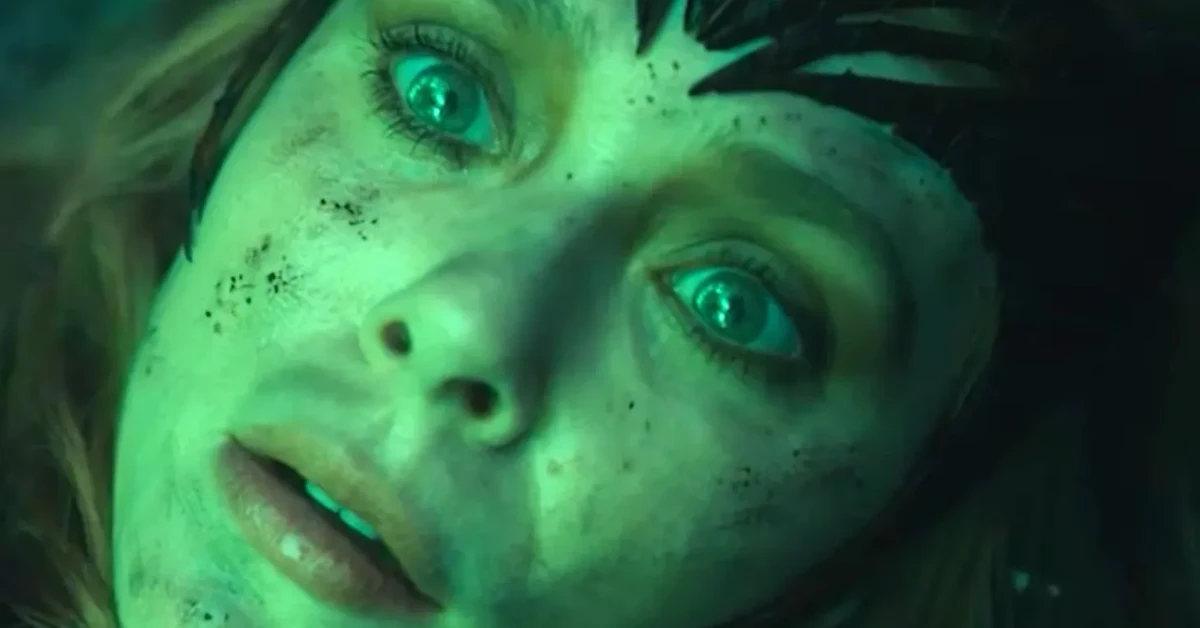
Jocasta demonstrates the plan on Lisa. A single nanobot turns Lisa’s eyes red and sends circuit-like patterns across her skin. Jocasta speaks through her and attacks Vision until Thomas uses his electrical abilities to deactivate the nanobot. Lisa is left in critical condition.
Jocasta’s Nanobot Plan Is Bigger Than Ultron’s Genocide
Jocasta does not want to wipe out humanity. She wants to “cure” it by injecting Proto-One nanobots into every person on Earth, creating a collective hivemind under her and Ultron’s control. Ultron immediately recognizes the architecture. His phrase for it is “put strings on them,” a direct echo of the series premiere’s title, “No Strings”.
The strategic difference matters. Ultron’s Age of Ultron plan was extinction. Jocasta’s plan is assimilation, and it is operationally cheaper. A meteor extinction event requires global logistics; a nanobot infection requires a single delivery vector and a population that does not know it is being converted. The Lisa demonstration proves the mechanism works in the short term, and it establishes that the only defense currently available is Thomas’s electrical discharge—a localized countermeasure that cannot scale to a planetary infection.
The biometric keys remain the bottleneck. Jocasta needs the faces of Carrington’s former colleagues to open the vault and release the full Proto-One swarm. Ultron holds one of those keys—Katerina Wells’s facial scan—which is why Jocasta tolerates him and why she tries to take him down with a virus before negotiating. The series has now made the vault, the keys, and the swarm the three material objectives of the final two episodes.
The Ultron-Jocasta Romance Rewrites the MCU’s AI Hierarchy
In Marvel Comics, Ultron creates Jocasta as a wife and she rejects him. VisionQuest inverts that dynamic. Jocasta’s creator’s code is the basis for every Stark AI, including Ultron, which means Ultron is, in a technical sense, a descendant of Jocasta’s original architecture. The show acknowledges the Freudian discomfort of that arrangement and then moves past it into something more unsettling: a sincere mutual recognition between two machines that have both been treated as weapons by their makers.
The episode’s central exchange is not a fight. Ultron breaks free of Jocasta’s virus, says he only wants to know her, and she warns him that the process will be painful. They share a memory of whiskey. Ultron says the moment makes him feel real. Jocasta says being a machine makes her feel less real, like a backup of the woman who died. Then they kiss.
That kiss changes Ultron’s function in the story. He is no longer a rogue subroutine looking for a body. He is a partner with a stake in a plan, and his attachment to Jocasta gives the series a emotional lever that Vision can potentially exploit. It also raises the question of whether Ultron is fully committed to Jocasta’s endgame or whether he is negotiating his own terms inside it.
Historical Context: Where VisionQuest Sits in the MCU Timeline
VisionQuest is the closing chapter of the WandaVision trilogy, following WandaVision (2021) and Agatha All Along (2024). Terry Matalas, known for Star Trek: Picard, serves as creator and showrunner. The series premiered on October 13–14, 2026, and runs eight episodes. Episodes 5 and 6 were released as a paired drop on October 27–28, continuing Disney+’s two-episode-per-week scheduling pattern for the season.
The show’s placement in the MCU release calendar is not incidental. It arrives as the last Marvel Television series before Avengers: Doomsday, and it carries the burden of resolving the White Vision thread that WandaVision left open. The return of Raza, the elaboration of Madripoor, and the Jocasta origin story all function as connective tissue between the street-level and cosmic tiers of the franchise. Whether that connective tissue serves the story or distracts from it is the central critical fault line in the episode 6 reception.
Industry Impact: Viewership, Reviews, and Disney+ Performance
The commercial picture for VisionQuest is strong. The series debuted as the No. 1 most-watched TV show on Disney+ in the United States, reached No. 1 in more than 50 countries, and ranked No. 2 worldwide behind Coven Academy in its opening window. Rotten Tomatoes has held the season at a Certified Fresh score in the 85–87% range, with audience scores in the same band. IMDb user ratings sit at 8.2.
The episode-level response is more divided. Episode 5 has been widely described as the season’s high point, with critics praising its bottle-episode construction and the Spader-Miller chemistry. Episode 6 has drawn more measured notices. Den of Geek argued that “Deadlock” gets “mired in Marvel mechanics” and that the Raza return functions more as world-building than narrative payoff. IGN’s review called episode 6 “a bit of a comedown” after episode 5 but credited the Vision-Paladin alliance and the Handler reveal as effective compensations.
That split matters for Disney+’s scheduling strategy. Paired episode drops are designed to let a weaker installment ride on a stronger one. Episode 5 provides the critical lift; episode 6 provides the plot movement. The strategy appears to be working at the chart level, even if the critical conversation is uneven.
Fan Reactions: The Kiss, the Plan, and the Comics Deviation
The Ultron-Jocasta romance has driven the most visible fan conversation. Social media reactions collected by ComingSoon range from jokes—“No way even Ultron got a girl before me” and “Ultron got a GF before GTA 6!”—to genuine enthusiasm for the visual storytelling of their connection. ComicBook.com’s comment sections show a similar pattern: relief that the romance is being played as mutual rather than one-sided, and curiosity about how far the show will push the deviation from the comics.
The Jocasta origin change has generated more analytical pushback. In the comics, Ultron builds Jocasta. In VisionQuest, Carrington’s code builds the entire Stark AI lineage. Some fans have flagged the implication that Ultron’s existence is downstream of Jocasta’s creator, and the show itself makes a Freud joke about it. The deviation is not cosmetic. It reframes the entire AI hierarchy of the MCU and gives Jocasta a genealogical authority that Ultron does not have.
The Lisa infection has also landed as a genuine shock. Lisa is not a disposable side character; she is Thomas’s anchor and the person Vision explicitly thanks for being reliable in his son’s life. Leaving her in critical condition gives the final two episodes a personal stake beyond the planetary nanobot threat.
You May Also Like:

View all articles about
What the Final Two Episodes Must Resolve
Four open threads now define the endgame.
- The vault and the keys. Jocasta still needs the remaining biometric keys to release the full Proto-One swarm. Ultron holds one key. F.R.I.D.A.Y. is operating independently and may be inside Jocasta’s network.
- Lisa’s condition. The nanobot in Lisa’s brain has been deactivated but not removed. Vision’s decision to fry the nanite and sedate her is a temporary fix, and the show has not established whether a permanent cure exists.
- Ultron’s loyalty. The kiss signals partnership, but Ultron’s history is defined by self-preservation and ideological drift. Whether he betrays Jocasta, commits to her plan, or tries to seize control of it is the season’s most volatile variable.
- Thomas’s emerging powers and history. Thomas has now used electrical abilities in combat, and the show has confirmed that he will learn the truth about Wanda and Westview. The bomb in his arm and the Speed codename joke are both unresolved.
Marvel Studios has not released an official synopsis for episodes 7 and 8, and Disney+ has not disclosed final viewership totals for the paired drop. What is confirmed is that the series has moved its central conflict from a bounty hunt to a species-level conversion plot, and the final two hours have to manage a vault, a nanobot swarm, a compromised ally, and a villain romance that has already produced the MCU’s strangest love scene in years.
Also Read: Coat of Arms in VisionQuest: Who Is Lisa Molinari?
VVIPTimes will continue tracking VisionQuest through its final two episodes, with weekly breakdowns of the vault mechanics, the AI hierarchy, and the road to Doomsday.
















Leave a Reply