



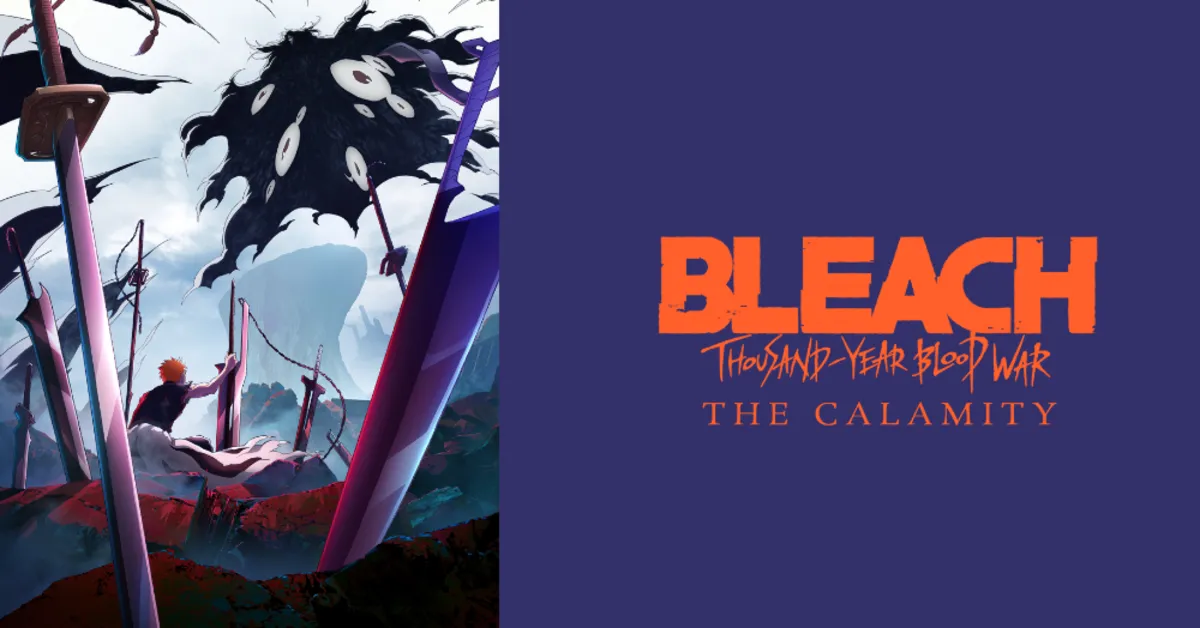
The Bleach anime has officially wrapped up its television run after 22 years. The final episode of Bleach: Thousand-Year Blood War – The Calamity, titled “DEATH & STRAWBERRY,” aired on October 26, 2026, closing the door on one of the longest-running and most influential shonen series in anime history. The finale did not just end the brutal war against Yhwach; it jumped ten years into the future, showing fans what became of Ichigo Kurosaki, his friends, and the three worlds they fought to protect.
The Final Episode: A Full-Circle Farewell
Episode 50 of the Thousand-Year Blood War adaptation served as the series finale. Its title, “DEATH & STRAWBERRY,” is a direct callback to the very first chapter of Tite Kubo’s original manga, Death and the Strawberry, which began Ichigo’s journey in 2004. The episode adapted the manga’s epilogue, something fans had waited over a decade to see animated after the original anime was cancelled in 2012 before reaching the final arc.
The finale’s story picks up ten years after the Great War to Protect the Soul King. The Seireitei, reduced to ashes during Yhwach’s invasion, has been gradually rebuilt, and peace has largely returned to the Soul Society. On the day the final reconstruction district is completed, a ceremony is held to appoint new captains to the Thirteen Court Guard Squads. But the calm is broken when the Research and Development Bureau detects an ominous spiritual pressure at the exact moment of the inauguration.
That lingering threat leaves a door open, but the episode’s focus is firmly on the future. The ten-year jump shows the survivors of the war moving forward, and it introduces the next generation of characters who carry the legacy of the Soul Reapers.
Ichigo and Rukia’s Children Take the Stage
One of the most talked-about moments from the finale was the debut of the children of the series’ central characters. Ichigo Kurosaki and Orihime Inoue’s son, Kazui Kurosaki, and Renji Abarai and Rukia Kuchiki’s daughter, Ichika Abarai, appear in the ten-year timeskip, signaling a new era for the franchise. Their arrival mirrors the original manga’s ending and gives the finale a sense of generational closure—the battles of the parents have ended, and a new chapter has quietly begun.
For longtime viewers, seeing these children animated for the first time was a payoff that the original 366-episode run never delivered. The first anime series ended in 2012 with the Fullbring arc, leaving the Thousand-Year Blood War storyline and its epilogue unadapted for a decade. The 2022 revival of Thousand-Year Blood War gave the franchise a second life, and the finale completed the promise made to manga readers who had known the ending since 2016.
A Production Built to Say Goodbye Properly
Studio Pierrot, working under its Pierrot Films brand, handled the final season. Tomohisa Taguchi served as chief series director, with Hikaru Murata directing the final cour. Masashi Kudo returned for character design, and Shiro Sagisu composed the music, bringing back the sound that defined Bleach for two decades.
The finale was not rushed. The production team deliberately delayed the final two episodes by roughly a month from their original September schedule to give the staff more time to polish the closing stretch. That decision extended the wait for fans, but it allowed the finale to arrive with the visual quality the series deserved.
The episode ended with a special ending sequence that paid tribute to the cast and crew. The sequence featured illustrations of the characters, the voice actors, and the staff, set to two tracks that bookended the franchise’s musical history: “Number One,” the iconic battle theme from the original series, and “Spiral,” the opening theme from The Calamity cour. The ending also included a recreation of Ichigo and Rukia’s first meeting, closing the loop that opened 22 years earlier.
Voices from the Finale
Fan reactions to the finale centered on the emotional weight of the ending and the tribute sequence. Social media posts from Japanese viewers captured the mood in the hours after the episode aired.
“I never thought the anime I watched as an elementary school kid would be completed like this. I’m just grateful I got to see it with god-tier animation. Thank you for playing ‘Number One’ at the end.”
“I’ve seen the Bleach finale. I think this might be the first finale where I felt so much love from the production team. Showing every character in the final line art made me cry. The quality of the final chapter’s anime was incredible—it had enough passion and love to go down in anime history. I can only say thank you.”
The finale also prompted a wave of farewell messages from the voice cast and staff on social media, with Masakazu Morita, the voice of Ichigo, among those reflecting on the series’ long run.
What the 22-Year Run Leaves Behind
The numbers behind Bleach are difficult to overstate. The original anime ran from 2004 to 2012, producing 366 episodes across multiple arcs that introduced a generation of international viewers to Soul Reapers, Hollows, and the world of the Soul Society. The manga, written and illustrated by Tite Kubo, ran in Weekly Shonen Jump from 2001 to 2016 and remains one of the best-selling manga series of all time.
The Thousand-Year Blood War revival began in 2022, a full decade after the original anime ended. Produced by Pierrot Films, the revival adapted the final arc of Kubo’s manga in four cours, expanding the story with new fights, added scenes, and extra lore that gave the arc more room to breathe than the manga’s compressed final stretch. Tite Kubo was closely involved in the adaptation, and he confirmed that anime-original scenes were based on ideas he had considered during the manga’s original serialization.
The franchise’s cultural footprint extends beyond the screen. Bleach helped define the shonen anime boom of the 2000s alongside Naruto and One Piece, and its return in 2022 demonstrated that a long-dormant series could still command global attention. The finale’s simulcast release across Hulu in the United States, Disney+ internationally, and Netflix in select Asian regions reflected how anime distribution had changed since the original series’ earliest episodes circulated through fan subs and early streaming platforms.
The Hell Arc Question and the 2027 Calendar
The end of the anime has not closed the book on Bleach entirely. Tite Kubo introduced a new story thread in a 2021 one-shot titled Bleach: No Breaths From Hell, often referred to by fans as the Hell Arc. The one-shot followed the characters years after the main series and introduced a mystery surrounding Hell and the fate of deceased Soul Reaper captains.
No anime adaptation of the Hell Arc has been confirmed. During a fan-club Q&A, Kubo said he has more stories he wants to illustrate but no desire to return to a regular weekly manga serialization schedule, and he has not confirmed a continuation of the Hell Arc. The lack of an official announcement after the finale has kept speculation alive without confirming anything.
What is confirmed is a busy franchise calendar for the months ahead. Jump Festa 2027 will host a Bleach stage on December 20, 2026. BLEACH FES is scheduled for February 27 and 28, 2027, at Makuhari Messe in Chiba, featuring voice actors, live performances, and exclusive programming; tickets are priced at ¥11,000 (roughly $70 USD), or ¥15,000 (roughly $96) with merchandise. The original art exhibition, BLEACH EX. II, is set to return in summer 2027 with new artwork, and the franchise is marking the manga’s 25th anniversary through exhibitions and merchandise releases.
These events give the franchise a public presence well into 2027, but they are not announcements of a new anime. The Hell Arc remains a possibility without a confirmed production, and the finale itself did not include a post-credits teaser for a continuation.
A Final Send-Off That Closed the Circle
The Bleach anime ended the way few long-running series manage to: with the adaptation of its source material’s true ending, produced with the involvement of its creator, and released to a global audience that had waited more than a decade to see it. The ten-year timeskip gave Ichigo, Orihime, Rukia, Renji, and the rest of the cast a future beyond the war, and the arrival of Kazui and Ichika gave the franchise a symbolic handoff to a new generation.
Related Stories

View all articles about
The series that began with a teenager meeting a Soul Reaper in his bedroom in 2004 closed with that same teenager—now an adult—watching his son step into the world he once protected. The story is complete. Whether the Hell Arc or another continuation eventually follows, the Bleach anime’s 22-year run has a definitive ending, and that ending belongs to the fans who stayed with it through the hiatus and the return.
Also Read: Bleach Thousand-Year Blood War Tops Fall 2026 Anime Rankings in Week 3 After Finale
The final episode and the special tribute videos are available to stream on Hulu and Disney+, with the English dub of the final two episodes scheduled for November 23 and November 30, 2026. For more entertainment news and anime coverage, keep reading VvipTimes—where the final chapter gets the attention it deserves.


























Leave a Reply