
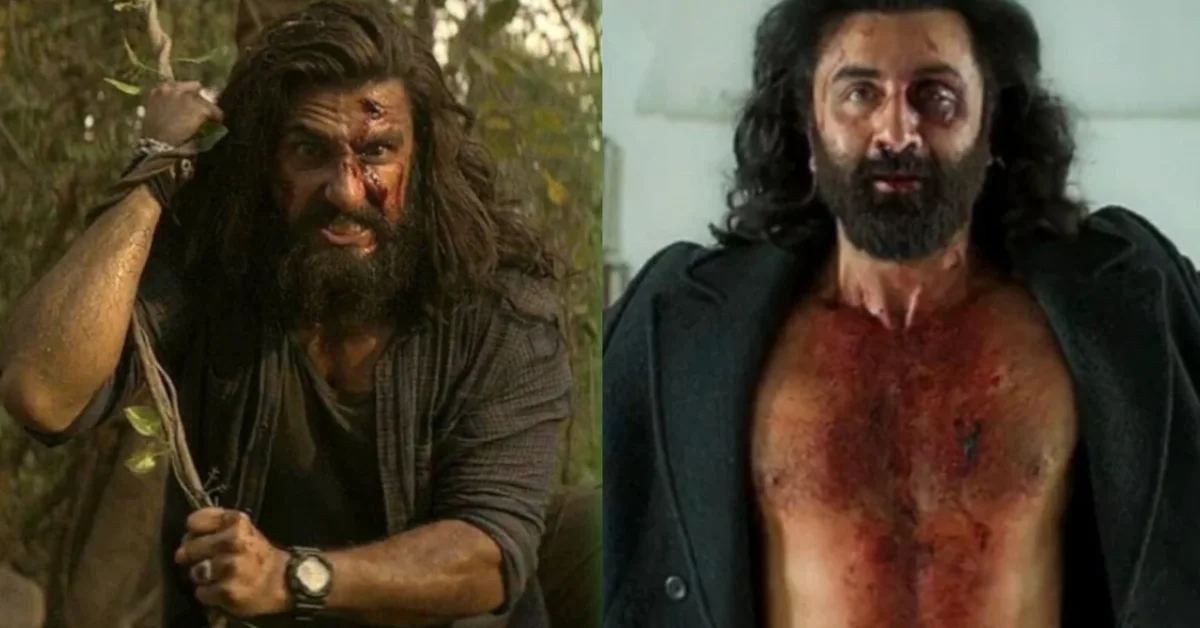

Recent real-world attacks involving children have pushed the long-running debate over screen violence back into the public eye. An eight-year-old boy in Haryana’s Panchkula allegedly attacked a six-year-old girl with a brick inside a classroom, while a 21-year-old in Andhra Pradesh allegedly entered a Class 10 room with a chainsaw and attacked a student. No direct link has been established between these incidents and cinema, but the graphic nature of the cases has revived a question parents and filmmakers keep circling: where is the line between storytelling and harm?
What Sparked the Conversation Again
The debate is not new. Over the past five years, blockbusters across Indian film industries have drawn criticism for extreme and sometimes glorified violence. Sandeep Reddy Vanga’s Animal (2023) became a flashpoint, with Ranbir Kapoor’s character entering a college classroom carrying a rifle. The Dhurandhar films, the highest-grossing Indian releases of 2025 and 2026, are the latest big examples, including a scene where Akshaye Khanna’s character smashes a man’s face. Rajinikanth’s Jailer and Allu Arjun’s Pushpa 2: The Rule also faced viewer criticism for brutal sequences.
A Lucknow incident added another layer. A man allegedly assaulted theatre staff after his minor son was denied entry to an A-rated screening of Dhurandhar, arguing the boy was mature enough to watch it. The episode captured a wider reality: age ratings exist on paper, but enforcement and parental discretion vary widely.
What Happens in a Child’s Brain
Dr Shivananda Pai, consultant neurologist at KMC Hospital in Mangaluru, explains that children learn by watching and copying. “If they see violence used to solve problems or gain control, they might start to think that aggression is a way to act,” he said. “Repeated exposure can also make kids less sensitive to people’s pain and suffering. They may become emotionally numb over time.”
Dr Subhrajit Parida, consultant in paediatrics and neonatology at Manipal Hospital, Bhubaneswar, points to a simpler problem: young children cannot always separate fiction from reality. “At times, they try to imitate superheroes by fighting, kicking, boxing, killing and performing many other such acts,” Parida said. “They also admire the way superheroes are rewarded for their violent actions.” He added that repeated exposure can gradually lead children to absorb such behaviour into everyday life.
“The legal designation of adulthood at the age of 18 years may be legally necessary but biologically it is a simplistic fiction.” — Dr Shaunak Ajinkya, psychiatrist at Kokilaben Dhirubhai Ambani Hospital, Mumbai
Dr Ajinkya explains that the brain’s prefrontal cortex, which handles impulse control and risk assessment, is not fully mature until the mid-20s. The amygdala, the brain’s threat-processing centre, fires at full capacity much earlier. An 18-year-old may reason like an adult, but emotional regulation often operates on what he calls “a provisional licence.”
Desensitisation Is the Bigger Concern
The most consistent finding across research is not that a violent film turns a child into a violent adult overnight. The risk is quieter and cumulative. Dr Amit Sen, child and adolescent psychiatrist at Children First in Delhi, links the normalisation of aggression in films, OTT content, and gaming to a rise in juvenile crimes. “None of these formats goes beyond the instant justice, hyper-violent storyline, or discusses the accountability of the conflict,” he said.
Dr Ajinkya calls the real danger “emotional desensitisation and a ‘mean world syndrome.’” Repeated viewing shapes what a developing brain perceives as acceptable, normal, or even glamorous. “When the cinematic world routinely resolves conflict with brutal force, it may erode a youngster’s normal reaction of aversion to aggression and violence,” he said.
A 2026 study published in Scientific Reports found that adolescents engage with violent content at moderate to high frequencies, and that television and movies—not just video games—are the primary sources. Younger adolescents and female adolescents showed particularly high engagement levels. A separate 2026 observational study of 228 Italian primary school children who watched the age-restricted series Squid Game found that 42 children (32%) engaged in imitation behaviours, reenacting game-based violent scenes with friends, siblings, or classmates.
The Other Side: Fiction, Freedom, and Blame
Filmmakers have pushed back against a direct causal link. Sandeep Reddy Vanga, responding to criticism after Animal, wrote on X that when a crime occurs, “the first response should be empathy and an attempt to understand the larger problem. Not finding a convenient scapegoat in cinema.”
Anurag Kashyap argues that audiences are exposed to far more violence in games than in films. “We should definitely have more ratings—A, R, X—but not censorship,” he said. Suparn Verma defended action cinema on its own terms: “Action is as cinematic as romance.”
Vikram Bhatt takes a middle position. “Violence, like sexuality, has always had a pull,” he said. “But just because something is instinctively fascinating doesn’t mean it is socially harmless. Excessive violence can be dangerous when consumed without restraint.”
Mahesh Bhatt framed the issue as one of responsibility rather than restriction:
“When we turn up brutality just to be seen, we risk making numbness look like strength. I’ve fought censorship all my life. I still do. This isn’t about restriction — it’s about responsibility. The true power of cinema is not to excite the blood but to awaken the conscience.” — Mahesh Bhatt, filmmaker
Some researchers also question how strong the causal evidence really is. Psychologist Jonathan Freedman of the University of Toronto has argued that far fewer than half of scientific studies find a causal connection between media violence and aggression, and that the evidence does not support the claim that TV and film violence causes aggression in children.
What the Ratings Actually Say
The Motion Picture Association (MPA) updated its ratings guide in November 2025, giving parents more detail than ever on what each rating allows. A G-rated film “generally does not contain violence.” In an R-rated film, “violence may be graphic in nature.” The guide also breaks down descriptors like “bloody,” “strong,” and “strong bloody” under the violence category.
“I really like giving parents and families as much information as possible on media,” Sarah Coyne, a BYU professor who researches media effects on children, told the Deseret News. “We know from research that parents want more content information and I think this is a good move by the MPA.”
In the UK, the BBFC reclassified Star Wars: Episode I – The Phantom Menace from U to PG in 2025 due to “moderate violence,” a small but telling example of how violence standards shift over time. The BBFC’s 12A category allows “moderate violence” when it is “containable” within the guidelines.
A 2026 study from Central Queensland University found that parents overwhelmingly want specific warnings for sexual violence and suicide or self-harm, rather than vague labels like “mature themes.”
What Parents Can Actually Do
Muskaan Trikha, clinical psychologist at Medanta’s Institute of Neurosciences in Noida, points out that the concern is not limited to films. Edited scenes circulating as reels and short videos can reach children without them actively seeking the content. “Repeated exposure to such content can increase anxiety and create an exaggerated perception that the world is unsafe,” she said.
The research points toward conversation over blanket restriction. Dr Ajinkya advocates for media literacy: teaching young viewers to understand a director’s intent, tell realistic violence from sensationalised violence, and recognise the commercial motives behind hyper-violent content. “Parents and educators should continue these conversations well into early adulthood,” he said.
Dr Sen agrees. “You have to give the counter-argument,” he said, arguing that critical awareness is more useful than full restriction for teenagers navigating visual media.
Related Stories


Saadet Aybeniz Yıldırım, a clinical psychologist quoted by Daily Sabah, stressed that not every child who watches violent content develops a behavioural problem. “But such content can still make them imagine that problems can be solved in this way,” she said. She added that healthy parent-child communication and knowing what children are following online matter more than blanket bans.
Also Read: Priyanka Chopra Announces Ventilator 2: Her First Marathi Production Returns After 10 Years
For more entertainment news and expert-led breakdowns, keep reading VvipTimes.




























Leave a Reply