
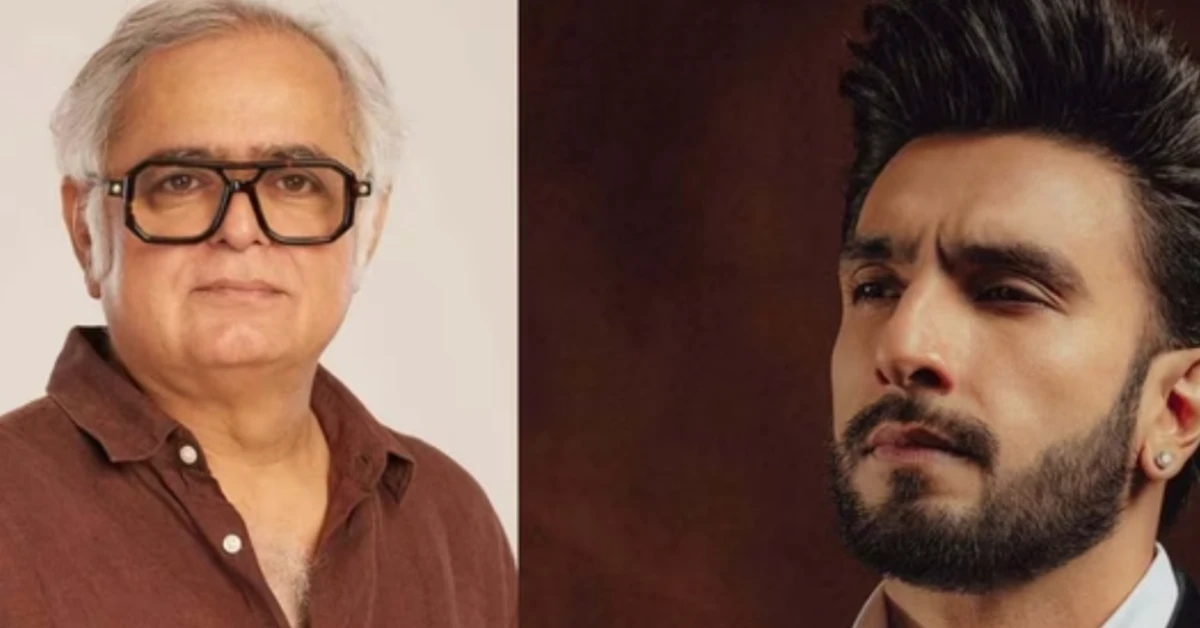

A six-hour film shoot at Mumbai’s historic Azad Maidan has turned into a full-blown public argument between the Mumbai Cricket Association and the team behind Ranveer Singh‘s upcoming zombie thriller, Pralay. At the centre of it all is producer Hansal Mehta, who has defended his production’s paperwork while firing a much broader warning about how difficult it has become to film in the city that calls itself the home of Indian cinema.
The shoot, which took place in early November 2026, was cleared by the Maharashtra government’s Sports Department. It still managed to postpone Under-14 and Under-16 inter-school cricket matches, and that did not sit well with the MCA. What followed was a back-and-forth of letters, public statements, and a blunt assessment from Mehta about bureaucratic friction that he says is pushing filmmakers out of Mumbai.
What Exactly Happened at Azad Maidan
Azad Maidan is not a film studio. It is a sprawling open ground in South Mumbai that has served as a training and tournament venue for young cricketers for decades. Local and inter-school matches are a regular feature there, and the ground is maintained by the MCA.
For the first time, the Maharashtra government’s Sports Department granted permission to a film production to use a portion of the ground. The production house, Light Rays, was allowed to use 5,000 square yards of the maidan for a six-hour shoot of Pralay. The company paid ₹40,000 as a booking fee and submitted another ₹40,000 as a refundable security deposit, according to reports cited by multiple outlets.
The approval came with conditions: no vehicles on the cricket pitches, no cooking, and no digging at the venue. The production was also told to obtain a No Objection Certificate from the MCA.
Large sets were erected. Artificial grass was laid down. The shoot went ahead.
The problem was what happened to the cricket.
The Cricket Association’s Objection
The MCA says it was not consulted before the permission was granted, despite being the body responsible for maintaining the ground and its pitches. The association wrote to the state’s Sports Department seeking an explanation and publicly questioned why a commercial film shoot was prioritised over scheduled youth matches.
Nadim Memon, an MCA Apex Council member, laid out the association’s position in direct terms. He pointed out that Azad Maidan is already under pressure. A portion of the ground has been occupied for Aqua Line Metro work, and contractors have not vacated despite repeated reminders. The Mumbai Police were also still occupying another section.
“This is the first time a film shoot has taken place at Azad Maidan. Large sets were erected, and artificial grass was laid for the shoot of Pralay. This is not a film-shooting venue but a cricket ground where players hone their skills to progress to the international level. Our ongoing tournaments were disrupted because of the shoot. Who will take responsibility for this loss? You cannot commercially exploit a cricket ground by allowing a commercial film shoot.”
Memon also argued that the Sports Department’s decision sends a troubling signal. “Instead of supporting sports, it is allowing commercial bookings at the ground,” he said, adding that the association works to nurture young cricketers and organise interstate tournaments.
The MCA’s concern is not just about one shoot. It is about what comes next. If a commercial film production can book a cricket ground once, the association fears it will become a regular practice, further shrinking the space available for young players in a city already short on open ground.
Hansal Mehta’s Response: “Fully Permitted” but “Treated as Trespassers”
Hansal Mehta, whose production banner True Story Films is backing Pralay alongside Ranveer Singh’s Maa Kasam Films, did not stay quiet. Speaking to the Hindustan Times, the filmmaker said the production had followed every rule and secured every required document.
“Our shoot at Azad Maidan was fully permitted. We have requisite permission letters from police departments, sports departments including an acknowledgement of the same from MCA.”
That line matters. Mehta’s claim is not just that the shoot was legal. It is that the MCA itself acknowledged the permission at some stage. The association’s public objection, from Mehta’s point of view, sits awkwardly next to that acknowledgement.
But Mehta did not stop at defending the paperwork. He used the controversy to raise a larger complaint about filming in Mumbai, one that has been building across the industry for years.
“The larger problem is this. Mumbai is the home of Indian cinema. It has also become a most unfriendly city to shoot in. A single location needs clearances from multiple departments, each with its own process, its own delays and its own power to stop a shoot. Even when you have every permission, you are treated as if you are trespassing.”
That quote captures the frustration in plain terms. A filmmaker can hold every letter, every stamp, every NOC, and still be stopped on the day by a department that decides, at the last minute, that it has a problem. Mehta says the system is designed not to facilitate shoots but to give multiple offices the power to shut them down.
He also made a comparison that will sting for anyone who wants Mumbai to remain India’s film capital.
“So many other states welcome film crews. They understand that a shoot brings jobs, business and visibility. Here, we are met with obstruction. I say this with much sadness as a proud Mumbaikar and Maharashtrian – This is why so many of us now prefer to shoot outside Mumbai.”
The emotion in that statement is not performative. Mehta has worked in Mumbai for over three decades. He is not an outsider complaining about the city. He is a filmmaker who wants to keep working there and is watching the conditions that made Mumbai the centre of the industry erode, one clearance letter at a time.
“I have worked in this city for over three decades. I love it and I want to keep telling its stories here. But filmmakers will go where they are allowed to work. If Mumbai wants to remain the centre of this industry, it has to stop treating its own filmmakers as a nuisance.”
Mehta’s final point was about cooperation, not confrontation. “We followed every rule no matter how complicated or difficult it may be. We will continue to do so. We simply seek the cooperation of the authorities and a much needed lack of mistrust in doing so,” he said.
The Government’s Defence
The Maharashtra government did not leave the permission unexplained. Navnath Fartade, Deputy Director of Sports for the Mumbai Division, defended the decision by pointing to an existing government resolution. That resolution, according to Fartade, permits Azad Maidan to host non-sporting events for up to 30 days annually.
The approval itself was signed by Sports Department Under Secretary Ashok Damayyawar on October 30 and sent on November 2, per reports. The production paid the booking fee and the security deposit. The conditions were laid out. From the government’s side, the paperwork was in order.
The MCA’s counter is straightforward: a rule that allows non-sporting events for 30 days does not mean every one of those days should go to a commercial film shoot on a ground that young cricketers depend on. The association’s objection is less about the legality of the permission and more about the priorities it reflects.
Why This Controversy Matters Beyond One Film
The Pralay shoot is a single event. The argument it has triggered is not.
Mumbai’s film industry runs on location shoots. Streets, chawls, mills, maidans, railway platforms, and heritage buildings are all part of the visual language of Hindi cinema. When filmmakers cannot access those locations without navigating a maze of departmental clearances, the city loses something on screen. Stories set in Mumbai get filmed in Hyderabad, Ahmedabad, or Lucknow. The texture changes. The authenticity slips.
Mehta’s statement that other states “welcome film crews” is not an exaggeration. Several states have streamlined their permission processes, set up single-window clearance systems, and actively court productions with incentives. The competition for film shoots is real, and Mumbai is not winning it by default anymore.
The MCA’s position is equally understandable. Azad Maidan is not a generic open space. It is a working cricket ground with a schedule, a purpose, and a community of young players who use it to build their game. Allowing a commercial shoot that displaces matches sets a precedent that the association has every right to challenge.
The two sides are not actually in disagreement about the facts. The shoot had permission. The matches were disrupted. The permission came from the Sports Department, not the MCA. The question is what those facts mean for how Mumbai manages its public spaces and its film industry.
Mistletoe Murders Season 3: Full Episode Schedule, Season 2 Recap, and What to Know Before Watching
About Pralay: The Film at the Centre of the Row
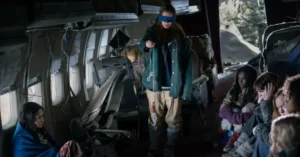
Pralay is not a small project. It is a ₹300 crore post-apocalyptic zombie thriller set in a near-future Mumbai devastated by a deadly pandemic and a subsequent zombie outbreak. The film stars Ranveer Singh in the lead and marks the Hindi film debut of Kalyani Priyadarshan.
Jai Mehta, Hansal Mehta’s son, is directing the film in his feature debut. He previously co-directed the acclaimed series Scam 1992: The Hansal Mehta Story and helmed Lootere. The story is written by Jai Mehta and Vishal Kapoor. The film is produced by True Story Films (Hansal Mehta and Sahil Saigal), Maa Kasam Films (Ranveer Singh’s banner), and Birla Studios, led by Ananya Birla.
Shooting began in Mumbai on August 16, 2026, with a large part of the production planned in Australia. The film is positioned as a pan-India release in Hindi, Tamil, Telugu, Malayalam, and Kannada. A release window of 2027 has been reported by multiple outlets, though some promotional material has carried a 2028 tagline, and an official date has not been locked by the makers.
The Azad Maidan shoot was one small part of a much larger production. But it became the flashpoint because it put two things Mumbai cares about—its cricket grounds and its film industry—on opposite sides of a permission letter.
What the Row Has Exposed
The Pralay controversy is not really about a zombie film. It is about how Mumbai handles the everyday business of filmmaking. A production team with every required document can still end up in a public fight with a sports body. A cricket association can be told that a ground is available for non-sporting use and still feel blindsided by the way it happened. And a filmmaker who has spent his career in the city can say, on the record, that the city has become unfriendly to the very industry it built its reputation on.
Related Stories

Hansal Mehta’s statement to the Hindustan Times closes with a request that is difficult to argue with: cooperation and a lack of mistrust. Whether the authorities and the MCA take that request seriously is a question that will be answered by the next shoot, the next permission letter, and the next set of matches scheduled at Azad Maidan.
Stay with VvipTimes for clear, fact-checked breakdowns of the entertainment stories that actually matter—no noise, just the full picture.
























Leave a Reply