
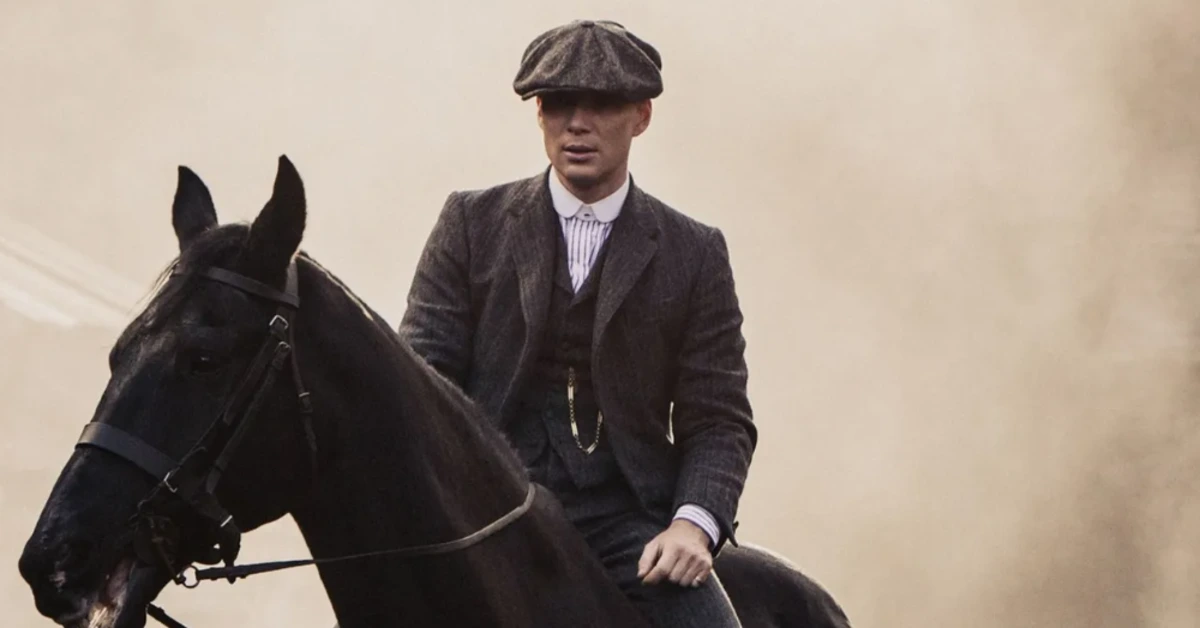

Peaky Blinders: The Immortal Man arrived on Netflix on March 20, 2026, after a limited UK theatrical run that began on March 6. The film was meant to be a farewell. A final chapter for Cillian Murphy’s Thomas Shelby, the Birmingham gangster who became one of television’s most magnetic antiheroes across six seasons.
Instead, the film has left a sizeable portion of the show’s fanbase arguing that the ending it gave Tommy did not honour the man they spent a decade watching. The specific complaint is not that Tommy Shelby died. It is how he died, and what the film made him do before he did.
The Arthur Shelby Problem: A Brother Killed in a Drunken Rage
The most divisive element of The Immortal Man is not Tommy’s death. It is the revelation that Tommy killed Arthur Shelby, his older brother and the show’s emotional backbone, in an alcohol-fuelled rage years before the film’s events.
The film presents Arthur’s death as a suicide at first. Later, Tommy confesses the truth: he strangled Arthur after his brother became addicted to opium and started stealing from him. Paul Anderson, who played Arthur across all six seasons, does not appear in the film beyond a brief vision. His death happens off-screen.
The reaction from long-time viewers has been blunt. One Reddit user wrote: “I have a big problem with him killing Arthur. The TV show reminds us over and over that family is Tommy’s strength, he will do anything for them”. Another comment, quoted by Entertainment Daily, was sharper: “The way they sent off Arthur was horrible. I don’t care how much booze Thomas was on, the idea of him strangling Arthur because he felt like too much of a burden is so, SO off character for him”.
The criticism is not simply grief over a beloved character dying. It is that the death contradicts the central emotional logic of the series. Peaky Blinders built six seasons on the idea that Tommy’s ruthlessness was always, ultimately, in service of his family. Making him the direct killer of the brother who stood beside him through every war, every betrayal and every impossible plan reads to many as a betrayal of the character, not a completion of him.
A “Complete Character Assassination” of Tommy Shelby
The Arthur twist is the loudest example, but it is not the only one. Across reviews and fan discussions, a pattern emerges: The Immortal Man takes Tommy Shelby and strips away the qualities that made him compelling, without replacing them with anything that feels earned.
A review on Pretzel Rated put the charge directly: the film “feels like a complete disservice. It’s as though Steven Knight forgot what made the… elements were missing… It felt hollow, empty, and a complete character assassination of Tommy fooking Shelby”.
The Independent‘s review was more measured but reached a similar place. It called the film “cool, bombastic and formulaic” and argued that “what it actually contributes in terms of thematic or narrative development is negligible”, adding that “season six already did the necessary work”. The point is not that the film is unwatchable. It is that the film did not need to exist to complete Tommy’s story, and in trying to extend it, it damaged what was already complete.
The Irish Times was harsher still, describing “the dead-horse-flogging preservation of the brand” and noting that “for all the smoke and masonry, remarkably little seems at stake”. The review also pointed to “recycled trauma, cod-Shakespearean voiceover and portentous murmuring” in place of the sharp, strategic dialogue that once defined Tommy.
What the Film Gets Right, and Why It Still Falls Short
To be fair to The Immortal Man, Cillian Murphy is not the problem. Even the film’s critics agree that he slips back into Tommy with the same quiet menace that made the character iconic. NDTV wrote that “Murphy plays him with restraint — less fire, more ash — and it works”, describing this version of Tommy as “heavier, like every decision has finally caught up with him”.
Barry Keoghan, as Tommy’s illegitimate son Duke Shelby, brings a feral volatility that several reviewers found compelling. The Independent noted that Keoghan “shares with Murphy the same ability to poke holes in his own charisma so we can glimpse the vulnerability behind it”.
The problem is structural. A two-hour film cannot carry the weight of six seasons of character work, and The Immortal Man tries to do too much with too little time. The New York Times observed that the film is “almost swallowed whole by its clichés — the reluctant hero responding to one last call; the father-son melodrama — and paper-thin characterizations”. An IMDb featured review put it more simply: “This is supposed to be the man who outsmarted politicians, gangsters, and enemies for years. Yet in this film, he feels like a shadow of the character we followed for six seasons”.
The Ending: A Quiet Death for a Man Who Was Never Quiet
Tommy Shelby dies at the end of The Immortal Man. He is shot by Duke at his own request, after being wounded by the Nazi conspirator Beckett (played by Tim Roth). His body is burned on a funeral pyre, surrounded by photographs of his family.
Creator Steven Knight has said the ending was always the plan. “I thought, to end it, he’s gonna have to go”, he told the Times of India. Cillian Murphy echoed the sentiment, saying the ending “needed to happen”.
The intention may have been to give Tommy peace. But the execution has left a gap between what the filmmakers believe they delivered and what a significant portion of the audience received. The film’s Rotten Tomatoes score sat at 93% on its premiere day, but its Metacritic score was a mixed 61, a split that reflects the divide between critics who accepted the film on its own terms and viewers who felt the character they loved had been diminished rather than concluded.
A Commercial Success That Does Not Settle the Argument
Netflix’s numbers tell a different story from the fan backlash. The film drew 25.3 million views in its first three days on the platform, ranking as the number one title in 50 countries. Within ten days, that figure had climbed to around 44 million views.
People watched. But watching is not the same as approving, and the volume of the viewing only makes the criticism harder to dismiss as a fringe reaction. A film that reaches tens of millions of people with a version of a beloved character that many of them reject does not settle the question of legacy. It amplifies it.
Paul Anderson himself, speaking to LADBible, offered a response that was neither defence nor attack: “Well, what can you do, eh? It is how it is. I thought I’d just leave them to it”. He also said he felt the series could have continued for “a couple more” seasons rather than ending with a film.
You May Also Like:

For a character whose entire arc was built on control, calculation and the careful management of his own myth, The Immortal Man ends with Tommy Shelby’s legacy in the hands of others. The film’s defenders call it a fitting farewell. Its critics call it a quiet undoing. The argument will not be resolved by box office numbers or streaming charts, because the people who built Tommy Shelby’s legend over six seasons are the same people now questioning whether the final chapter was worth the damage it did to the man they thought they knew.
For more entertainment news, reviews and streaming updates, keep reading VvipTimes.














Leave a Reply