
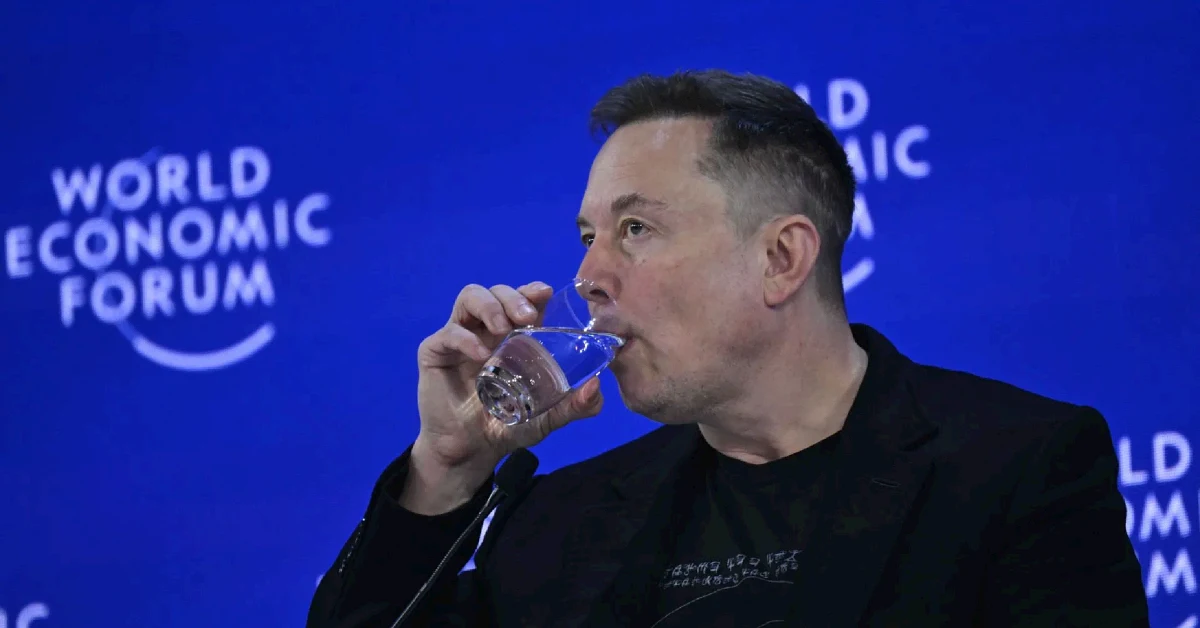

Elon Musk has publicly claimed that Transportation Secretary Sean Duffy rejected an offer to provide free Starlink satellite internet service to the Federal Aviation Administration (FAA) — an offer Musk says was declined with the words “they were not needed.” The claim arrived three days after a massive FAA ground stop on November 13, 2026, that disrupted air travel across the United States. Musk’s post has reignited a debate over the aging infrastructure behind America’s air traffic control system, the role of private satellite companies in public safety, and whether a backup link from space could have softened the blow.
The Claim That Lit Up X
Elon Musk posted the claim on X on Monday, November 16, 2026. He quote-posted his own message from February 2025, which had criticized the FAA’s legacy telecommunications equipment, and added a pointed update.
“As I was saying … Free Starlinks for FAA were offered to Sec Duffy, but he said they were not needed. As it turns out, they were.”
The post did not include a date for when the offer was allegedly made, nor did it outline the scope of what SpaceX proposed to provide. The Department of Transportation, the FAA, and Secretary Duffy’s office have not publicly confirmed Musk’s account of the exchange. No terms, contracts, or formal proposals related to the claim have been released.
The timing of the post was deliberate. It landed on the first business day after a nationwide ground stop that forced the FAA to halt all departing flights across the country — an event that sent shockwaves through airports, airlines, and the traveling public.
What Happened on November 13
The FAA ground stop began at approximately 3:30 p.m. Eastern Time on Friday, November 13, 2026. According to the FAA’s own account, its legacy telecommunications network became unstable when data began flooding the system at a rate of 1,000 connection attempts every four to five seconds. The flood was traced to two locations: a radar site in Amarillo, Texas, and a radio communications site in El Dorado, Arkansas, where contractor L3Harris had been installing a new router.
The instability spread across 17 of the FAA’s 22 Air Route Traffic Control Centers. The agency grounded departures nationwide while roughly 3,500 aircraft already in the air landed safely. The stop was lifted at 8:15 p.m. ET. Operators canceled roughly 12,462 flights that day, though the FAA notes that not all cancellations were directly caused by the ground stop.
The FAA later stated that L3Harris blocked the two affected sites to stabilize the network and disabled the same router function on about 60 similar units across the system. Officials found no sign of a cyberattack. The disruption was the second nationwide ground stop of its kind since the September 11, 2001 attacks.
The Technical Reality: A Router Problem, Not a Connection Problem
Musk’s post implies that Starlink satellite service would have prevented the outage. The technical details of the incident tell a more complicated story.
The FAA described the fault as occurring inside its own terrestrial network — specifically, a router that flooded the system with connection attempts. A backup satellite link is designed to help when a fiber line is cut or a primary connection fails. It does not automatically resolve a situation where a router inside the network is malfunctioning and needs to be identified and shut down.
Juniper, the router manufacturer, said the device worked as configured. L3Harris was in the process of replacing copper wiring with fiber at the Arkansas site when the flooding occurred. The FAA has paused the installation of new routers following the incident.
Whether Starlink would have prevented Friday’s disruption is not clear. Musk did not explain in his post how satellite links would have been used to address a fault inside the FAA’s ground-based router system.
The $50 Billion Fight Behind the Post
Musk’s claim landed in the middle of a funding battle. Secretary Duffy has asked Congress for $50 billion to overhaul the nation’s air traffic control system, up from an earlier request of $30 billion. President Donald Trump backed the larger figure on Truth Social, saying the work “should be done all at once.”
Congress had already given the FAA $12.5 billion for radar, radios, and related upgrades. Duffy said the money does not cover a new telecommunications system. “What I don’t have money for is a new telecom system,” he said during an appearance on Face the Nation. House Democrats Rick Larsen and Andre Carson have pointed out that only about $1 billion of the previously allocated funds has been spent.
Verizon holds the contract for the FAA’s new telecommunications network, a deal worth up to $2.4 billion over 15 years — roughly $160 million a year. The contract is small compared to Verizon’s $138 billion in fiscal 2025 revenue, but it places the company at the center of a system that failed on a national scale.
Social Media Reaction: Shock, Skepticism, and Calls for Answers
Musk’s post drew immediate reactions across X, with users questioning why a free offer of satellite backup would be turned down.
Matt Van Swol, a former nuclear scientist at the U.S. Department of Energy and a popular social media commentator, responded with disbelief:
“If it is really true that @SecDuffy turned down FREE Starlinks for the FAA… He honestly needs to be fired. That’s an insane thing to do… is this true?”
Travis Akers, a retired U.S. Navy intelligence officer, framed the post as a political problem for the administration:
“Even Elon is throwing Duffy under the bus.”
Another account summarized the political damage: the post was “absolutely devastating to the Administration’s argument that they’ve been doing everything they can.”
The reactions reflect a broader frustration with the state of U.S. air travel infrastructure. The ground stop stranded thousands of passengers, forced airlines to scramble, and revived memories of previous FAA system failures. For many observers, the question of whether a free Starlink offer was on the table — and why it was declined — has become a proxy for a larger debate about accountability and modernization.
Duffy’s Record on Starlink
Secretary Duffy has not been outright hostile to Starlink. In early 2025, the FAA tested SpaceX terminals at its Atlantic City, New Jersey facility and at two “non-safety critical sites” in Alaska. SpaceX said at the time that it was providing the kits at no cost and had no intent to take over any existing FAA contract. Duffy described Starlink then as “part of a solution” rather than a replacement for existing systems.
By July 2025, the FAA told lawmakers it was not considering replacing its L3Harris and Verizon telecommunications contracts with Starlink. FAA Administrator Bryan Bedford stated that no satellite service would be the sole communications technology for safety-critical air traffic control.
The distinction matters. Starlink can provide a redundant path for data in the event of a terrestrial outage, but it is not a like-for-like replacement for the specialized, low-latency, safety-critical communications infrastructure that air traffic control relies on. The FAA’s own systems are built around strict certification and redundancy standards that satellite internet has not yet met for primary safety operations.
What Musk’s Post Does Not Say
Musk’s post leaves several key questions unanswered. It does not specify when the offer was made, what equipment or bandwidth SpaceX proposed to provide, or whether the offer was formal or informal. It does not explain how Starlink terminals would have been integrated into the FAA’s router-based network. And it does not address whether the router flooding issue — a fault inside the terrestrial system — would have been mitigated by a satellite backup.
The Department of Transportation has not responded publicly to Musk’s account. Duffy has continued to focus his public statements on the need for congressional funding and the age of the existing system, rather than engaging directly with the Starlink claim.
You May Also Like





The Stakes Beyond the Post
The FAA outage and the Starlink claim have placed SpaceX back in the conversation as Washington debates how to pay for the next air traffic control system. SpaceX already supplies Starlink to commercial airlines for inflight connectivity, and United Airlines’ rollout required FAA certification for each aircraft type.
Any role for Starlink in FAA infrastructure would be small compared to SpaceX’s broader connectivity business, which reached $5.20 billion in the third quarter, up 69% year over year. But the political and symbolic value of being seen as a potential fixer of a national crisis is significant — and Musk’s post has ensured that the debate over satellite backup versus terrestrial modernization is now part of the public record.
For more stories on the intersection of technology, celebrity, and public infrastructure, keep reading VvipTimes.



































Leave a Reply