

Ava DuVernay is back with a Netflix documentary that turns a 158-year-old constitutional amendment into a living, breathing argument about belonging. “14th” arrives in select theaters on November 27 and streams globally on Netflix on December 4, and it carries a question the filmmaker says sits at the heart of everything: “If 13th asked who gets caged, then 14th asks who gets counted.”
The film lands at a moment when the 14th Amendment is not a history lesson but a headline. In June 2026, the U.S. Supreme Court struck down President Donald Trump’s executive order that tried to limit birthright citizenship, ruling 6-3 that the Constitution’s Citizenship Clause protects almost anyone born on U.S. soil. Months later, a separate fight is brewing over whether the Census should count every person living in a state or only citizens and legal permanent residents for congressional apportionment — a battle that goes straight to the amendment’s phrase “the whole number of persons in each State.”
What DuVernay’s ‘14th’ Is Actually About
The documentary is a follow-up to DuVernay’s 2016 film “13th,” which examined mass incarceration and the Thirteenth Amendment’s exception for involuntary servitude as punishment for a crime. “14th” shifts the lens to citizenship, equal protection, and due process — the three pillars of the amendment ratified on July 9, 1868, in the wake of the Civil War.
Netflix’s official logline says the amendment was “written in the wreckage of the Civil War” and “was meant to close the door on the hierarchy of human worth.” Instead, it became what the film calls a “permanent argument.”
DuVernay traces more than 150 years of that argument. The film moves from the Reconstruction era — when the amendment gave formerly enslaved people a legal claim to citizenship — through the 1898 Supreme Court case United States v. Wong Kim Ark, which confirmed that children born in the U.S. to foreign nationals are citizens. It then carries the story into the present, where birthright citizenship and Census counting have become frontline political fights.
“This is not a film about the past tense of freedom. I’m not interested in asking you to look back. The film asks what kind of country is being written beneath our feet now … while we’re busy believing the stories we’ve all been told.” — Ava DuVernay to Netflix’s Tudum
The Supreme Court Ruling That Made the Amendment a Headline Again
The film’s release follows one of the most consequential 14th Amendment rulings in decades. On June 30, 2026, the Supreme Court rejected Executive Order 14160, which Trump had signed on his first day back in office in January 2025. The order directed federal agencies not to recognize the citizenship of children born in the U.S. if neither parent was a citizen or legal permanent resident.
Chief Justice John Roberts, writing for the majority, leaned on the amendment’s text and on the 128-year-old precedent of Wong Kim Ark. “Citizenship, then and now, was the right to have rights — to freely participate in our political community,” Roberts wrote. “We keep that promise.”
The ruling was not unanimous. Justices Clarence Thomas, Samuel Alito, and Neil Gorsuch dissented. Alito called the decision a “serious mistake” and raised concerns about “birth tourists” — people who travel to the U.S. specifically so their children are born as American citizens. Thomas argued that citizenship should depend on “allegiance” and “domicile,” not simply birth on U.S. soil.
Trump responded on Truth Social, writing that the ruling was “too bad for our Country” and urging Congress to act. “We can easily make it up in Congress through Legislation,” he wrote, though the path through a closely divided Senate and a two-thirds requirement for a constitutional amendment is widely seen as a long shot.
The Census Fight Is the Same Fight
The documentary’s “who gets counted” question is not only about citizenship papers. It is also about the decennial Census and how congressional seats and Electoral College votes are divided among states.
Under current law and longstanding practice, the apportionment population includes all residents — citizens, noncitizens, documented and undocumented immigrants, and overseas military and federal personnel. That definition comes from the 14th Amendment’s instruction to count “the whole number of persons in each State.”
A new rule proposed in 2026 would change that, limiting the apportionment count to American citizens and lawful permanent residents. Local officials and civil rights groups have pushed back, arguing the move violates the amendment’s plain language. “What we see is, each person counts as a person,” said one expert quoted by The Root. “We are counting every person. That is what the 14th Amendment guarantees us.”
The fight matters because seats in the House of Representatives and votes in the Electoral College are tied to population totals. States with large noncitizen populations — California, Texas, New York, and others — would lose political weight if only citizens were counted. The amendment’s text does not use the word “citizen” in its apportionment clause. It says “persons.”
The Voices in the Film
DuVernay conducted more than 50 interviews for “14th,” drawing on historians, lawyers, curators, politicians, and scholars. The cast of voices includes U.S. Reps. Alexandria Ocasio-Cortez and Anna Paulina Luna, Senator Alex Padilla, former Senator Jeff Flake, conservative author Donald T. Critchlow, Pulitzer Prize-winning historians Eric Foner and David Blight, cultural critic Hasan Piker, and legal scholars Sherrilyn Ifill and Robert Chang.
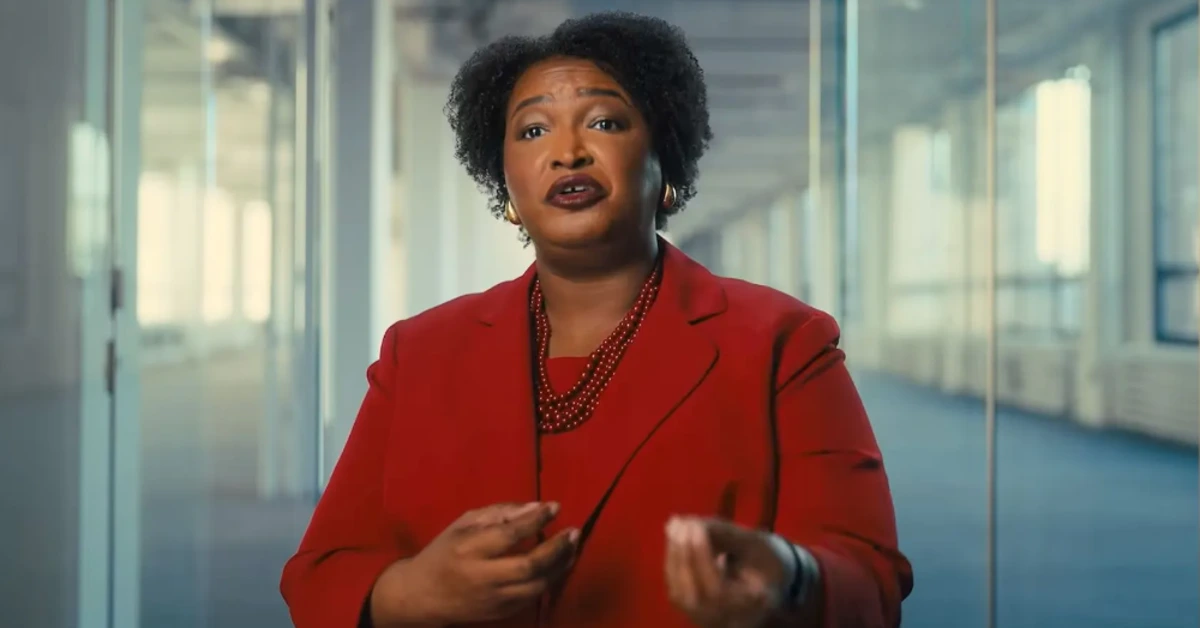
Stacey Abrams, the former Georgia State Representative, delivers one of the film’s sharpest warnings in the trailer.
“The whole of the 14th is under assault. If the 14th falls, then every other right that it guarantees is now in jeopardy.” — Stacey Abrams in the “14th” trailer
Sherrilyn Ifill, the civil rights attorney, adds a line that frames the film’s urgency.
“We are all at peril. If we don’t think it’s coming for us, we are so sadly mistaken.” — Sherrilyn Ifill in the “14th” trailer
The trailer also includes a clip of Vice President JD Vance saying, “The concept of birthright citizenship is an absurdity.” DuVernay places that soundbite against the historical record the film lays out — a record that includes the amendment’s ratification and the 1898 ruling that has anchored birthright citizenship for generations.
You May Also Like




Release Details and Where to Watch
“14th” premiered as the Closing Night selection at the 64th New York Film Festival in October 2026. It also screened at IDFA in Amsterdam, the world’s largest documentary festival, and won the Audience Award for Documentary Feature at the Middleburg Film Festival in Virginia.
For global audiences, the rollout is straightforward. The film opens in select U.S. and U.K. theaters on November 27, 2026. It then streams globally on Netflix on December 4, 2026. The film is produced by ARRAY, DuVernay’s production company, with Spencer Averick, Paul Garnes, and Tammy Thomas-Garnes producing. Jason Moran composed the score.
Netflix’s Adam Del Deo, Vice President of Documentary Film and Series, said in a statement that DuVernay’s “remarkable ability to bring history into conversation with the present” made “13th” a “cultural touchstone” and that “14th” delivers “another ambitious and thought-provoking documentary.”
The amendment itself has never stopped being contested. It was ratified in 1868. It survived the end of Reconstruction, the rise of Jim Crow, and decades of legal challenges. In 2026, it survived a Supreme Court test on birthright citizenship. The Census fight is still moving through the courts and Congress. DuVernay’s film does not settle the argument. It puts the argument on screen, in plain language, with the people who have spent their lives studying it and the people whose citizenship is on the line.
Also Read: Elon Musk Restores Blue Tick for Jensen Huang After Ex-NVIDIA CEO Loses X Verification
For more entertainment news, movie release guides, and documentary coverage, keep reading VvipTimes.



































Leave a Reply