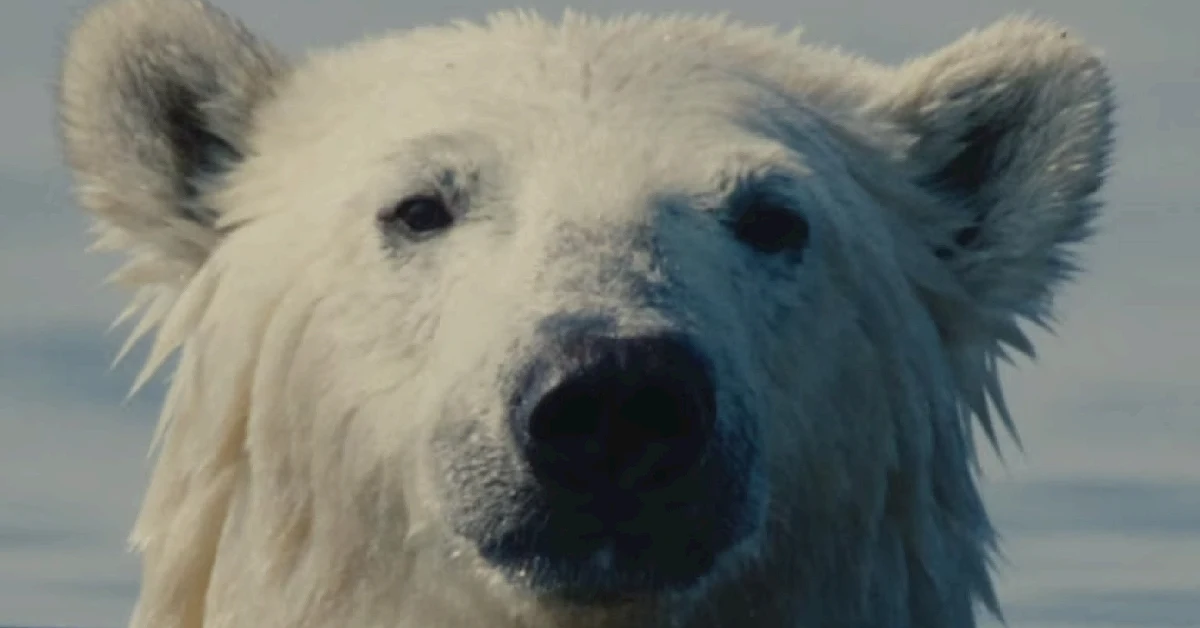

Nuisance Bear, the documentary that won the U.S. Grand Jury Prize at Sundance 2026, will open the seventh edition of the All Living Things Environmental Film Festival (ALT EFF) on December 3, 2026. The festival runs through December 13 and will screen 88 films from 42 countries across 41 locations in India, with flagship events in Mumbai, Bengaluru, and Ahmedabad. The pairing of a film shot from a polar bear’s point of view with a festival built to reach audiences far beyond big cities is the story here. Both the movie and the event are trying to move environmental storytelling away from the usual places and into shared, everyday spaces.
What the film actually shows
Nuisance Bear follows a single polar bear moving through Churchill, Manitoba, a town that calls itself the “Polar Bear Capital of the World.” The bear navigates a landscape packed with tourists, wildlife officers, traps, and vehicles. Directed by Jack Weisman and Gabriela Osio Vanden, the film began as a 14-minute short that premiered at the Toronto Film Festival in 2021, was picked up by The New Yorker, and was shortlisted for the Academy Awards. The feature version expands that short into a study of what happens when an ancient migration route meets modern human settlement.
The film does not follow the usual nature documentary script. There is no majestic voice-over telling viewers how beautiful the Arctic is. Instead, the camera stays close to the bear’s experience. The directors put cameras on cars to film the animals without chasing them. “You feel safer, you feel like you’re being more respectful to bears, you’re able to move with them,” Osio Vanden said during a post-premiere Q&A at Sundance. The result is a film that asks a blunt question: who is really the nuisance here? The bear, or the systems that keep pushing it out of its own habitat?
An Inuit narrator, the late Mike Tunalaaq Gibbons, guides parts of the film. His presence brings in a perspective that mainstream wildlife films often leave out: the relationship between Indigenous communities and polar bears goes back generations, and the tension is not just between bears and tourists. It is also between colonial history, hunting regulations, and communities that live with the animals every day.
Why this film opens this festival
Kunal Khanna, co-founder and festival director of ALT EFF, explained the choice in a statement. “Cinema has the ability to take conversations around the environment beyond facts and statistics, and make them deeply human and relatable,” he said. “Nuisance Bear is a fitting film to open this year’s festival because it looks at the complex relationship between humans and the natural world through a lens that is both intimate and thought-provoking”.
That logic runs in both directions. ALT EFF describes itself as the world’s largest decentralised environmental film festival. Instead of packing everything into one city, it spreads screenings across 41 locations, including tier-2 and tier-3 towns, rural areas, the Himalayas, and tribal regions of Odisha. A film that refuses to stay inside the usual nature-documentary frame opens a festival that refuses to stay inside the usual film-festival map. The match is not just thematic; it is structural.
A festival built for reach, not exclusivity
The seventh edition of ALT EFF is the festival’s most expansive yet. The programme includes 15 world premieres and 54 India premieres. The films cover wildlife, climate change, conservation, sustainable development, and communities living through ecological pressure. Screenings are not limited to theatres. An online programme and a network of watch parties allow viewers in different parts of India to take part without travelling to a metro city.
Three gala weekends anchor the festival: Mumbai hosts the opening weekend, followed by celebrations in Bengaluru and Ahmedabad. These galas are designed to bring cinema together with art installations, music, and other cultural programming, so environmental themes are not confined to a screen and a Q&A. The festival also has an international jury, including actor and environmental activist Rajshri Deshpande, along with writer Pranay Lal, casting director Dilip Shankar, documentary filmmaker Priya Thuvassery, screenwriter Sumit Roy, and National Geographic Explorer Arati Kumar Rao.
Deshpande, known for her work in Sacred Games and Trial by Fire, also runs the Nabhangaan Foundation, which works on river revival and sustainable development in drought-affected villages in Marathwada. “Environmental issues are no longer distant conversations; they are deeply connected to the lives, livelihoods and futures of communities everywhere,” she said about joining the jury.
The film’s road to the opening night
Nuisance Bear did not arrive at ALT EFF as a small, quiet documentary. Its journey has been unusually visible for a non-fiction film. The short version was a proof of concept. The feature version brought in A24 as a presenter, with producers Michael Code, Will N. Miller, and Teddy Leifer. MUBI acquired worldwide rights, and the film opened in Los Angeles on November 6, with releases in New York, Canada, and the UK on December 4. The score is by Cristóbal Tapia de Veer, known for The White Lotus. Editing was handled by Andres Landau, who worked through more than 700 hours of footage.
The film also won the Werner Herzog Film Award and earned five Critics Choice Documentary Award nominations. The Sundance jury called it “the least polarizing” film in its competition and praised it for telling “an enormous story with great drama, beauty and verve” while confronting “the realities of climate change, the tensions between Indigenous tradition and Western capitalist encroachment, and the complexities of humanity’s relationship with the natural world”.
That recognition matters for ALT EFF’s audience because it signals that environmental cinema does not have to look like a lecture. It can look like a thriller, a poem, or an argument—sometimes all in the same scene. The film’s theatrical rollout also means viewers outside India can see it in cinemas around the same window as the festival opening, giving the ALT EFF screening a wider context rather than an isolated event.
What the opening night sets up
The December 3 screening in Mumbai is not just a premiere. It is the first note of a ten-day programme that stretches from metro theatres to village screenings. The film’s central question—whose land is it, and who gets to decide—travels well across that distance. Churchill and Arviat are far from India, but the pressure of human expansion on animal habitats, the tension between tourism and local life, and the way climate change forces species into new conflicts are not foreign stories. They are global ones, told here through one bear’s path.
You May Also Like




For viewers who want to follow the festival beyond the opening night, ALT EFF’s online programme and watch parties make the programme accessible without a trip to Mumbai, Bengaluru, or Ahmedabad. The full film lineup and screening locations are listed on the festival’s official site. The opening film will also continue its own run in cinemas across the United States, Canada, and the UK in December, so the conversation the festival starts in India can continue in theatres elsewhere.
For more stories on film festivals, documentary releases, and environmental cinema, keep reading VvipTimes.