
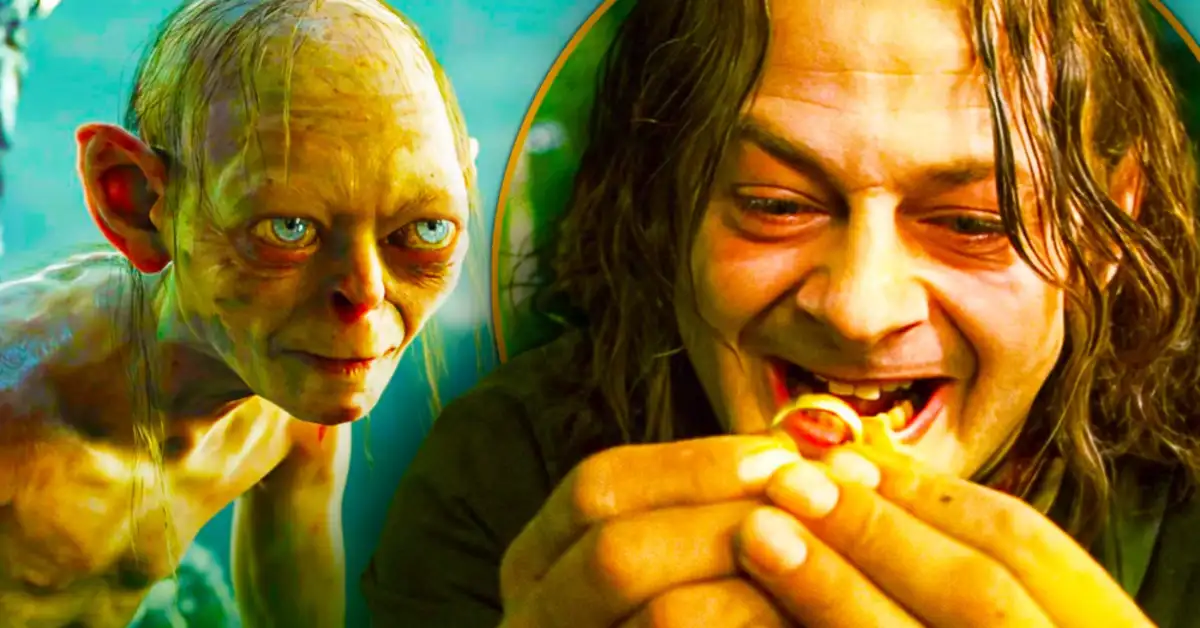

Andy Serkis spent years trying to convince people that performance capture is real acting. After playing Gollum in The Lord of the Rings, he talked about it for hours, watched eyes glaze over, and kept pushing the same point. Now, the actor and director says he has calmed down. In a new interview with The Times, Serkis explained that he used to be “evangelical” about the technology, but he has accepted that many people simply do not get it. His attitude today is blunt and simple: “If you get it? Great”.
The change in tone does not mean he has changed his mind about the craft. Serkis still argues that performances like Gollum are created by an actor, in the same way a prosthetics team helped John Hurt become The Elephant Man. He is simply done trying to win every argument. The conversation matters because Serkis is back in Middle-earth. He is starring in and directing The Lord of the Rings: The Hunt for Gollum, a new film set to arrive in theaters on December 17, 2027.
Why Andy Serkis Stopped Preaching About Performance Capture
Serkis first played Gollum in 2001 in The Lord of the Rings: The Fellowship of the Ring. The role turned him into the most famous face of performance capture, a process that records an actor’s voice, facial expressions and body movements at the same time. The technology helped bring Gollum to life, but it also created a stubborn question that has followed Serkis for more than two decades: is it really acting if a computer is involved?
For years, Serkis answered that question with energy. He described himself as “a bit evangelical” about performance capture as far back as 2011, when he was promoting Rise of the Planet of the Apes. He kept making the same case through his work as Caesar in the Planet of the Apes trilogy and as Kong in King Kong. The argument was always the same: the actor is still doing the acting, even if the final image is digital.
The new interview shows a different approach. Serkis told The Times that he has “talked for hours about how performance capture is acting and watched eyes glaze over,” but he now believes “life’s too short”. He has not given up on the craft. He has given up on the lecture. “I calmed down,” he said. “Now I just think, ‘If you get it? Great’”.
“Because this technology is so misunderstood. I used to be evangelical. I’ve talked for hours about how performance capture is acting and watched eyes glaze over, but life’s too short. I calmed down. Now I just think, ‘If you get it? Great.’” — Andy Serkis, speaking to The Times
The John Hurt Comparison That Explains His Point
Serkis has a clear way of explaining why performance capture deserves to be treated as acting. He compares Gollum to John Hurt in The Elephant Man. Hurt was completely unrecognizable in the role, and a team of makeup and prosthetics experts helped create his look. Nobody argues that Hurt was not acting. Serkis says the same logic should apply to a digital mask.
“Performances like Gollum are authored by an actor in the same way a prosthetics team engineered John Hurt in ‘The Elephant Man.’ But, for some reason, a performance underneath a physical mask is more understandable to some than this, which is a digital mask.” — Andy Serkis
The comparison has followed Serkis for years. Empire once pointed out that Hurt earned a Best Actor Oscar nomination for The Elephant Man, while Serkis never received one for The Two Towers. The gap is not about the quality of the work, in Serkis’s view. It is about how people see the work. A physical mask looks like craft. A digital mask can look like a shortcut, even when the actor underneath is doing everything.
Peter Jackson Says the AI Debate Is Costing Serkis Awards Recognition
The awards question is not only about how audiences see performance capture. Peter Jackson, who directed Serkis in The Lord of the Rings, said in May 2026 that the rising fear around artificial intelligence is making it even harder for a Gollum-type character to win major awards. Jackson does not dislike AI in film, but he thinks the debate has created a cloud over digital performances.
“A lot of the current environment, everyone’s so worried about AI … I don’t think a Gollum-type character or a generated character has any hope for winning any awards. Which is a bit unfair, especially in the Andy Serkis case where it’s not an AI-generated performance. It’s a human-generated performance 100% of the way.” — Peter Jackson
Jackson’s point is direct. Serkis’s Gollum was not created by a machine generating a performance from scratch. It was created by a human actor who gave the character his voice, his movement and his choices. The technology recorded and translated that work. It did not replace it. The debate around AI has made that distinction harder to see for some viewers and voters.
Serkis has drawn the same line. He told Variety in July that AI cannot currently replicate the kind of “authored performance” that performance capture records, and he said AI is being used on The Hunt for Gollum only to de-age cast members. The distinction matters to him: one tool helps an actor play a role, the other replaces the actor. He puts performance capture in the first category.
Returning to Gollum Is Keeping Andy Serkis Awake at Night
Serkis is not only talking about the past. He is living with Gollum again. Filming on The Lord of the Rings: The Hunt for Gollum was underway by mid-July 2026, and Serkis confirmed that shooting had begun a little over a week earlier. The role is taking a physical and mental toll. Serkis told The Sunday Times that he is a “terrible sleeper” and that going back to a character he started playing 26 years ago has been “insane”.
“I’m a terrible sleeper. My mind is pretty active, and it has been insane going back to the character I started playing 26 years ago, and so I’m waking up at night… Actually, I don’t know if I’m asleep or awake, but I think, ‘Am I directing you, Gollum? Or you me? Are we arguing?’ My mind is… busy.” — Andy Serkis
The challenge is not only acting. Serkis is also directing the film, which means he is managing the set while stepping back into one of the most demanding roles of his career. He first thought the Gollum job would be “three weeks of voiceover” before he met Jackson and saw the artistry involved. That short job turned into a decades-long relationship with the character. Now that relationship is playing out in his sleep.
What We Know About ‘The Hunt for Gollum’
The Lord of the Rings: The Hunt for Gollum is set to open in theaters on December 17, 2027. The film was originally eyeing a December 2026 release, but the date was pushed back. Warner Bros. confirmed the December 17, 2027 date at CinemaCon 2026. Serkis stars as Gollum and directs the film.
The cast brings back several familiar faces from the original trilogy. Ian McKellen returns as Gandalf, Elijah Wood returns as Frodo, and Lee Pace returns as King Thranduil. New additions include Kate Winslet as Marigol, Jamie Dornan as Strider, Leo Woodall as Halvard, and Anya Taylor-Joy as an elf. The story is set between the events of The Hobbit and the start of The Fellowship of the Ring, filling in a period when Gollum was searching for the One Ring.
The film is not the only project keeping Serkis in the public eye. His memoir, My Pressures: The Bizarrely True Story of Andy Serkis, was published on November 3, 2026. The book covers his life and career, including the years he spent defending performance capture while building a career out of it.
You May Also Like:

A Long Argument, Finally Set Down
Serkis has spent more than two decades explaining why Gollum counts as acting. He has made the case in interviews, in awards campaigns and in the work itself. The new tone is not a surrender. It is a decision about where to put his energy. The argument is still there, but the preaching has stopped. The work is still there, too. The Hunt for Gollum will give audiences another chance to see what he has been talking about all along.
Also Read: Luke Evans Rules Out Bard’s Return in The Hunt for Gollum, Says Bain Could Be in It
For more entertainment news and film updates, keep reading VvipTimes.






















Leave a Reply