
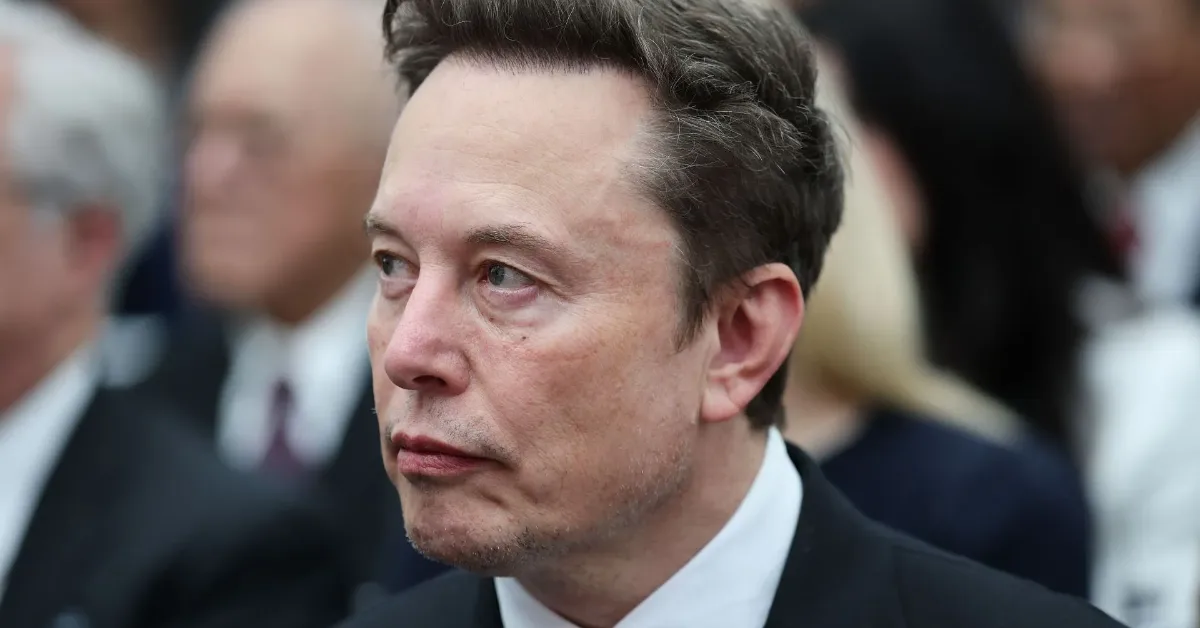

Elon Musk has claimed that the software behind Starlink, SpaceX’s satellite internet network, is “very well suited” to training what he calls super intelligence. The remark, posted on X on Tuesday, November 10, 2026, quickly pulled in 2.66 million views and a wave of replies asking whether Musk already operates a data center in orbit. The comment also arrived alongside a detailed technical thread explaining how Starlink’s engineering team rebuilt the training software behind Grok, the AI model from Musk’s xAI operation.
What Musk Posted on X
The core post was short and direct. Musk wrote that Starlink’s software was originally designed to move large amounts of data between satellites and the ground. That same system, he said, turns out to be a strong fit for training advanced AI.
“Turns out that the Starlink software, built for managing the movement of vast amounts of data through space and to the ground, is also very well suited to training super intelligence.”
A second post from Musk filled in the technical background. He said SpaceX writes its own headers and calculates its own time, including leap seconds. The new Grok AI and super intelligence training stack, he added, is derived from work done by engineers who built Starlink.
“At SpaceX, we write our own headers and calculate our own time (includes leap seconds). Not many people will know what this means, but those that do will appreciate it. The new Grok AI/SI training and inference stack is derived from incredible work done by amazing engineers to create Starlink.”
Musk also made a point about the code itself. He said the stack includes some assembly language and described it as “tight code.” He added that one day super intelligence will write a better software stack, “but that day has not yet come”.
Why Starlink Software Fits AI Training
The connection between satellite networking and AI training comes down to one shared problem: moving data between many machines without losing speed. In a satellite network, software has to organize data traffic between satellites in space and ground stations on Earth. During the training of a large AI model, the work is split across many processors, and those processors must regularly exchange intermediate results. If those transfers slow down, some machines sit idle instead of calculating.
Starlink’s software was built to handle exactly that kind of coordination at scale. The tools that keep satellite data flowing are therefore useful for keeping AI training hardware busy, according to a report from Infomédiaire that reviewed Musk’s posts. The same report noted that Musk did not disclose which specific Starlink components were reused or what performance gains were measured.
The engineering overlap is not theoretical. Musk said the new Grok training and inference stack was rebuilt from scratch by the SpaceX SI team, replacing popular open-source tools JAX and SGLang. The system is written mainly in C, with some C++. The team behind it is the same group that built the complex Starlink satellite network.
The Grok Stack Connection
Musk’s posts were not just about Starlink. They were also an explanation for a delay in Grok 4.8. According to a detailed thread from X user Ming, SpaceXAI dropped JAX and SGLang and rewrote Grok’s entire reinforcement learning and inference stack in C and C++. Reinforcement learning is the stage where a model practices answers and gets graded. Inference is the part that runs when a user asks Grok a question.
The rewrite did not start in November. Musk said in September 2026 that the Starlink software team had already rebuilt the pre-training stack in C and C++ by hand, not by AI. The reinforcement learning side was still running on third-party software at that point. By November, that older layer had also been replaced.
Musk’s remark about headers and leap seconds was a signal to programmers. In C, a header file lists the building blocks a program will use. Writing your own headers means SpaceX defines those parts itself rather than trusting standard libraries. Leap seconds matter because most computer systems assume every day has the same length. Atomic clocks and the Earth’s spin do not match perfectly, so timekeepers have added 27 leap seconds since 1972. A single leap second has caused outages at Reddit, LinkedIn, and Cloudflare in the past. Handling that detail inside the training stack is a sign of how far down the engineering goes.
Internet Reactions: Data Centers in Space?
The replies to Musk’s post split between curiosity, skepticism, and jokes about orbital infrastructure. One widely repeated reaction asked whether Musk was quietly confirming something much larger than a software update: “Are you trying to say that you already have a data center in space?”.
Other users disagreed with the claim, though the public posts captured by SoapCentral did not attach full quotes to every critical reply. A Japanese social media summary from Yahoo! Real Time Search said the reaction on X included surprise at the technical repurposing and expectations for AI training on satellites and closer work with xAI. The summary also noted that low-latency, high-bandwidth communication is seen as an advantage for distributed learning.
The “data center in space” question has a real background. Musk posted on November 3, 2026, that “Data centers in space looking pretty appealing right now”. He also backed a claim attributed to Google co-founder Larry Page that most computing will shift to space. On a podcast, Patrick O’Shaughnessy said he heard Page claim that 99.999% of computing will move to space. Musk quoted the conversation and wrote that Page “has made many accurate predictions and this is one of them”.
SpaceX has already been moving in that direction. Reports from late October 2025 said Musk was suggesting that future Starlink V3 satellites could act as orbiting data centers, using high-speed laser links and large solar panels. A later report said SpaceX was building orbital data centers with Starlink V3 satellites equipped with AI processing units and laser-based inter-satellite links.
SpaceX’s Super Intelligence Business
The Starlink software claim lands at a moment when AI has become SpaceX’s biggest revenue source. In its third-quarter 2026 report, SpaceX renamed its artificial intelligence segment “Super Intelligence” (SI). The segment brought in $7.56 billion in revenue, up 830% year over year. Starlink’s connectivity segment generated $5.25 billion in the same quarter, up 69%, with 13.6 million subscribers.
The shift means the AI side of SpaceX is now larger than the satellite internet business by revenue. Starlink remains the profit engine, with $2.4 billion in operating income and a 45% operating margin in the quarter. The Super Intelligence segment’s profitability still trails Starlink, according to SatelliteToday.
SpaceX’s total Q3 revenue reached $14.6 billion, a 161% jump from a year earlier. Profit climbed to $4.4 billion. The company’s AI growth was driven by cloud services agreements, Grok, and the consolidation of Cursor, according to multiple reports on the earnings figures.
The BT Hold and Ukraine Controversy
The Starlink software post also comes during a rough stretch for Starlink’s public image. BT, the UK telecom group, has put its partnership with Starlink on hold. BT CEO Allison Kirkby said the partnership was “ready to launch” but will wait until “the noise has died down”.
“BT was cautious on how Starlink might be viewed at the moment considering what happened in Ukraine a couple of weeks ago. We will only launch it proactively when we feel the noise has died down a little bit on Elon Musk and Starlink as a result of the Ukraine thing.”
The controversy traces back to October 2026, when Ukraine said Starlink was not working properly and left the country exposed to attacks. Musk responded on X that the Ukrainian military had allegedly “violated Starlink terms of service” by using the service to build offensive drones instead of for self-defence. The Telegraph later reported that Musk had approached Donald Trump about slowing Starlink help for Ukraine, a suggestion that came from Musk himself and was accepted by the president, according to the report cited by SoapCentral.
Kirkby also said Starlink still has far more satellites than any other operator and that demand remains strong. BT plans to launch satellite broadband “in the coming months”.
What Starlink Actually Does
Starlink is a satellite internet service that uses thousands of satellites in low Earth orbit to deliver high-speed internet around the world. Musk launched it in 2015, and its parent company is SpaceX. The service is built for moving data between space and the ground at scale, which is why Musk’s claim about AI training has drawn attention from both the AI industry and Starlink’s existing customers.
The system’s software manages which satellite talks to which ground station, how data is routed, and how traffic is balanced across the network. Those are the same kinds of coordination problems that appear when thousands of AI chips need to share training data in a data center.
Regulatory Heat Around Superintelligence
Musk’s post also lands while US lawmakers are debating how far advanced AI should be allowed to go. Financial Times reported on November 6, 2026, that Democratic Representative Yassamin Ansari of Arizona proposed a pause on developing advanced models and a permanent ban on creating artificial superintelligence.
The industry itself is split on speed. Dario Amodei, CEO of Anthropic, called in September 2026 for a global slowdown in developing more powerful models, citing safety concerns. Musk and OpenAI CEO Sam Altman had backed the principle of that slowdown, according to RIA Novosti.
You May Also Like





SpaceX’s own language has shifted with the politics. The company renamed its AI segment from “artificial intelligence” to “Super Intelligence” in its Q3 report, matching a term that President Donald Trump has promoted in recent weeks as a more accurate description of advanced AI. Musk has also said digital superintelligence could add $25 trillion to the global economy, equal to a 20% to 30% lift in global output, during an appearance at the Baron Investment Conference.
Also Read: Elon Musk Says “Shame, Shame, Shame” Over Dave Chappelle’s Charlie Kirk Joke: The Full Story
For more entertainment and pop-culture updates, keep reading VvipTimes.

































Leave a Reply