
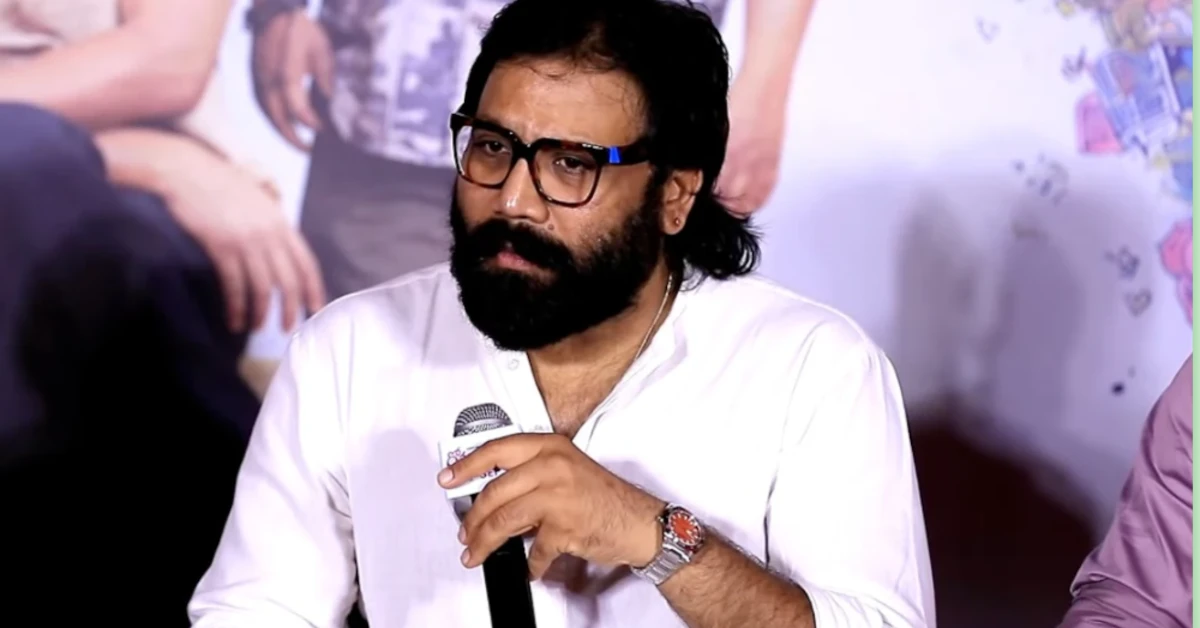

Sandeep Reddy Vanga has responded to a wave of online criticism that linked his films to a violent chainsaw attack on a schoolgirl in Andhra Pradesh. The filmmaker posted a long statement on X on November 4, 2026, arguing that cinema is being used as a convenient shield to avoid facing the real reasons behind such crimes. His post came days after a Class 10 student was attacked inside her classroom in Raptadu, Anantapur district, on October 31. The attack left the girl with severe injuries and triggered a nationwide debate about whether violent films shape real-world behaviour. Vanga’s reply has now become the centre of that debate, with supporters and critics trading barbs across social media.
Trigger warning: This article contains details of a violent crime against a child.
What Happened in Raptadu
A 21-year-old man named Hemanth entered a classroom at Zilla Parishad High School in Raptadu while a lesson was in progress. He carried a mechanised chainsaw and attacked a 15-year-old student, Gopika, after she rejected his advances, according to police reports. The girl suffered deep wounds to her neck, face, shoulders and back. Another student, Lakshmi, was injured while trying to shield her classmate. The accused was later injured in an unrelated incident, and doctors amputated his right leg, according to reports.
Gopika was rushed to a hospital in Anantapur and later shifted to Manipal Hospital in Bengaluru, where she underwent multiple complex surgeries. Doctors removed her from the ventilator on November 3, and she has started speaking to her parents. Her condition is stable, though she remains under close medical care.
The attack sparked outrage across India. Social media users began circulating clips and stills from recent films that show violence inside classrooms or against women. One scene from Vanga’s 2023 film Animal became a flashpoint. In that scene, Ranbir Kapoor’s character walks into a college classroom carrying a loaded gun to confront his sister’s bullies. Users placed images from the film next to reports of the Raptadu attack, arguing that such scenes give criminals a visual template.
Dhruv Rathee’s Post That Started the Storm
YouTuber Dhruv Rathee shared a news report about the Raptadu attack on X and wrote a caption that quickly went viral. “Special thanks to movies like Animal and Dhurandhar for giving templates to these criminals,” he posted. Dhurandhar is a 2025 film starring Ranveer Singh. Rathee’s post drew mixed responses. Some users agreed that extreme violence in mainstream cinema needs closer scrutiny. Others argued that fictional stories cannot be held directly responsible for real crimes.
Rathee’s comment set the stage for a larger argument about film and responsibility. The debate was not limited to Vanga. Other films such as Marco, KGF and Pushpa were also pulled into the conversation, with users questioning whether repeated exposure to brutal violence without consequences makes audiences less sensitive to real-world harm.
Sandeep Reddy Vanga’s Full Response
Vanga did not name Rathee directly, but his post on X was widely read as a reply to the YouTuber and to others in the film industry who had criticised his work. He wrote:
“When someone commits a heinous crime, the first response should be empathy & an attempt to understand the larger problem. Not finding a convenient scapegoat in cinema. It is becoming increasingly clear that your concern is not for the victims or their families, but that you’re using a horrific tragedy as a dirty excuse to settle your personal scores.”
He then directed his anger at specific members of the industry:
“This is especially directed at those failed, frustrated, jobless male/female actors, few directors, producers & parasites, who suddenly appoint themselves as social reformers whenever an opportunity arises to take a dig at someone else’s work. A tragedy deserves empathy, not opportunism. Learn the difference.”
The post was published on November 4, 2026, and by the evening it had been shared thousands of times. Vanga’s language was sharp, and it made clear that he saw the criticism as a personal attack rather than a good-faith debate about cinema’s role in society.
Ram Gopal Varma’s Defence
Before Vanga posted his statement, filmmaker Ram Gopal Varma had already come to the defence of violent cinema. On November 1, 2026, Varma wrote on X: “Blaming films for rise in violence is like blaming Ramayana for rise in kidnappings”. Varma, known for his own history of making gritty and provocative films, has publicly supported Vanga’s style of filmmaking in the past. His comment added a layer of film-industry pushback to the growing criticism from outside.
Varma’s analogy drew its own share of reactions. Some users pointed out that the comparison was flawed because the Ramayana is a religious text, not a commercial product designed for mass entertainment. Others saw it as a fair warning against treating art as the direct cause of crime.
Why Vanga’s Films Face Scrutiny
Sandeep Reddy Vanga’s filmography has consistently stirred debate about how men, relationships and violence are shown on screen. His first film, Arjun Reddy (2017), starred Vijay Deverakonda as a self-destructive surgeon who shouts, drinks and controls the woman he loves. The film was a commercial success in Telugu and was remade in Hindi as Kabir Singh (2019) with Shahid Kapoor and Kiara Advani. Both versions drew criticism for romanticising aggressive male behaviour.
Animal (2023) pushed those themes further. The film, starring Ranbir Kapoor, Rashmika Mandanna, Anil Kapoor, Bobby Deol and Triptii Dimri, centres on a son’s obsessive need for his father’s approval. It earned more than ₹900 crore worldwide but was heavily criticised for its graphic violence, its treatment of women and its portrayal of masculinity. The classroom scene that resurfaced after the Raptadu attack was one of the most discussed moments from the film when it released in December 2023.
Critics argue that Vanga’s films present violence as a solution and make cruelty look heroic. Supporters argue that films are fiction, that audiences can tell the difference between cinema and real life, and that blaming movies for crime lets actual offenders and failing social systems off the hook. The Raptadu attack forced both sides into the same conversation again, this time with a real victim at the centre.
The Victim’s Condition
Gopika’s recovery has been slow but positive. After being airlifted to Bengaluru, she underwent an eight-hour surgery to stabilise her condition and a second surgery lasting nearly 12 hours on her head and face. Doctors at Manipal Hospital said she was taken off the ventilator on November 3 and has begun speaking. Her vital parameters are stable. Andhra Pradesh Health Minister Satya Kumar Yadav told reporters that her condition was stable and that the ventilator had been removed. The accused, Hemanth, remains under police custody and medical observation.
The Debate Beyond One Film
The argument that followed the attack is not new. Indian cinema has faced questions about on-screen violence for decades, from the action films of the 1970s to the gritty gangster dramas of the 1990s and the hyper-masculine blockbusters of the 2020s. What changed this time was the speed at which a film scene travelled from a streaming platform to a real crime scene. Social media made the comparison immediate, visual and impossible to ignore.
Vanga’s post did not settle the debate. It sharpened it. His words turned the focus from the attack itself to the motives of the people speaking about it. By calling his critics “parasites” and accusing them of using a tragedy to settle scores, he shifted the argument from cinema’s influence to the film industry’s internal politics. Whether that shift helps the conversation or distracts from the victim’s recovery is a question that remains open.
You May Also Like


View all articles about
Spirit Release Date
Vanga’s next film, Spirit, starring Prabhas and Triptii Dimri, is scheduled to release worldwide on October 29, 2027, during the Diwali period. The film was originally planned for March 5, 2027, but the date was moved. Spirit also features Vivek Oberoi, Kanchana and Aishwarya Desai. Promotional material suggests the story follows a disgraced police officer.
Also Read: Badshah Says Ramayana’s Jatayu Scene Made Him Cry: ‘Every Frame Is Breathtaking’
For more updates on film industry debates and release news, keep reading VvipTimes.





















Leave a Reply