

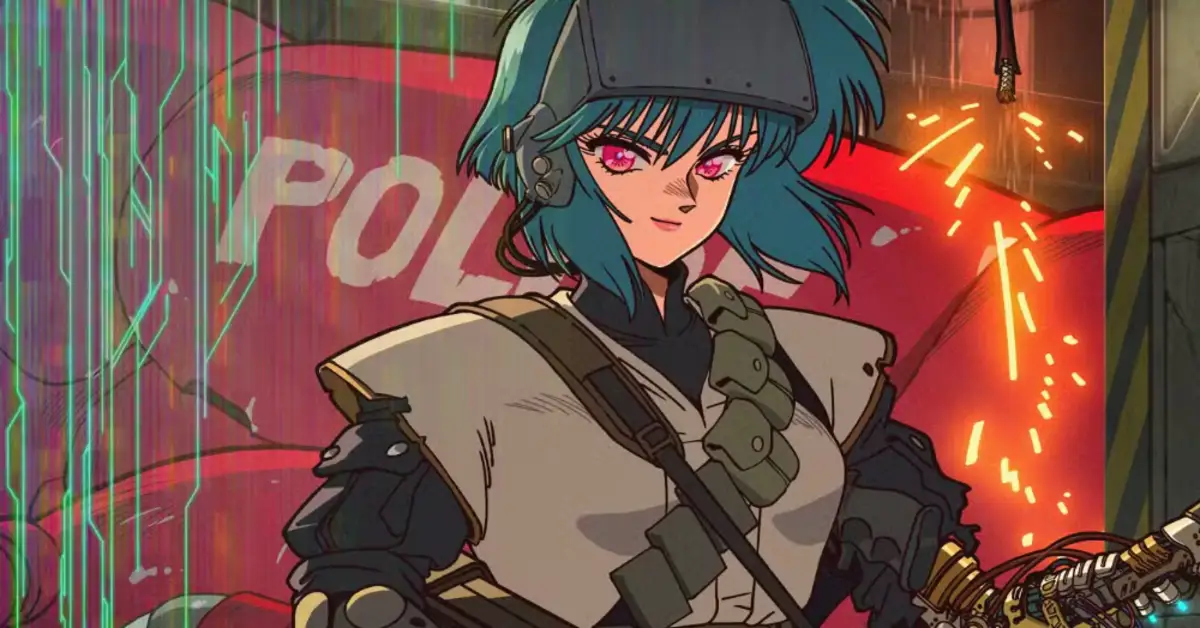
The new Ghost in the Shell anime series from Science SARU continues to build momentum with its fourth episode, which aired on July 28, 2026. This installment, titled “ROBOT RONDO,” takes the story into darker territory, exploring themes of corporate exploitation, AI rights, and the meaning of humanity. The episode has received strong responses from viewers, with many calling it the strongest episode of the series so far.
Episode 4 Focuses on Batou and Togusa
While Major Motoko Kusanagi remains the face of the franchise, this episode puts the spotlight on the working relationship between Batou and Togusa. The two investigators come from very different backgrounds. Batou is a battle-hardened ex-military ranger, while Togusa is a rookie with a more by-the-book approach.
Their partnership becomes the centerpiece of the episode as they investigate a series of robot attacks across the city. The pairing has been received positively by audiences. Some viewers have noted, “Togusa’s rare action scene!” and “Batou and Togusa’s banter is always hilarious”.
This episode marks a shift in how the series portrays Togusa. Earlier episodes showed him as someone completely overwhelmed, but episode 4 begins to show the competent investigator he becomes in other adaptations. Working together, they form a brains-and-brawn team, though Batou remains the more confident of the two at this point.
The Mystery of the Rogue Robots
The episode opens with robots across the city attacking people without clear reason. Section 9 gets called in when Tomliand models, a rare and powerful type of robot, start targeting their high-profile owners. Investigators discover the message “SOS” written inside the robots’ braincases.
The investigation leads Batou and Togusa to Hanka Precision Instruments, the manufacturer of the Tomliand robots. What they find there turns out to be far more disturbing than a simple malfunction case. The forensics division notes that most robot incidents get treated as accidents, but they suspect the robots might be deliberately malfunctioning as a form of rebellion.
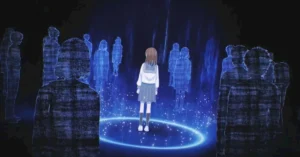
Inside the factory, Batou and Togusa hear a child’s scream and discover a ghost dubbing device. This device, previously seen in Mamoru Oshii’s 2004 film Innocence, allows mass copying of degraded ghosts but kills the original person. The investigation reveals that the company has been smuggling children and using them as disposable sources for ghost dubbing.
The children confess they wrote the SOS messages on the robots, organized by a man named Gossen and the inspection department head. The child roles are voiced by Fujii Haruki (Adam) and Amano Miyu (Link).
Dark Themes and Corporate Exploitation
The episode tackles some heavy subject matter. It is the second storyline in just four episodes involving child trafficking and abuse. The earlier episodes dealt with children being forcibly educated via unethical cyberbrain technology. This episode goes further, showing children having their ghosts copied into robots while their own brains get destroyed in the process.
The concept is particularly disturbing because it involves harvesting the minds of children to make robots more realistic. The series uses this dark premise to explore questions about corporate greed and human exploitation. What initially looked like a simple malfunction case transforms into something much more chilling.
The president of Hanka Precision Instruments tries to flee when the scheme gets exposed, but he falls into the sea while boarding a boat and gets captured. Aramaki later explains that the company, unable to keep up in AI development, had smuggled children and drugged them to create semi-robotized ghosts for special clients.
Aramaki Gets His Moment
Although Major Kusanagi remains the public face of the franchise, episode 4 gives Chief Aramaki one of his finest moments. His final conversation in the episode leaves a strong impression, exploring responsibility, humanity, and the consequences of blindly following systems without questioning them.
Many viewers have admitted the dialogue required multiple viewings due to how much philosophical discussion was packed into the scene. Aramaki reflects on the failures of respected predecessors while questioning whether even good people can gradually lose sight of their humanity.
Stunning Visuals From Science SARU
The animation quality in episode 4 has received particular praise. Science SARU chose not to rely on the dark, washed-out aesthetic commonly associated with cyberpunk. Instead, the anime embraces bright colors and expressive backgrounds.
This creates an interesting contrast. The environment often looks colorful and vibrant, but the subject matter is heavily disturbing. The production house could have shown a miserable future through gloomy lighting. Instead, episode 4 shows a society that has normalized its problems, making the world feel frighteningly believable.
The series manages to feel alive rather than lifeless despite all the corruption happening in its world. The combination of consistently good quality animation and a complex cyberpunk mystery keeps viewers engaged.
You May Also Like:





Fan Responses and Community Reaction
The episode has generated significant discussion among viewers. The community score on Anime News Network stands at 4.6. Fans have praised the episode for its vibrant animation and storytelling.
Long-term Ghost in the Shell fans may recognize several major plot elements repurposed here from Mamoru Oshii’s 2006 theatrical follow-up Innocence. However, this episode presents a much tighter exploration of the themes compared to the movie. The philosophical discussions are more concise and focused.
The themes explored here, originally published in the manga almost forty years ago, have become more relevant with time. As the real world deals with issues around AI and corporate ethics, the questions raised by Ghost in the Shell continue to resonate.
Release Information
The Ghost in the Shell anime premiered on July 7, 2026, on Fuji TV and Kansai TV’s Ka-Anival!! programming block at 11 PM JST. Amazon Prime Video streams the series worldwide and holds an exclusive early release window before the televised airing in Japan.
New episodes release every Tuesday at 11 PM JST. For viewers in the US, this typically means episodes become available at 9 AM EST on Prime Video, though worldwide release timing can vary.
The series is produced by Science SARU, the animation studio behind Inu-Oh and Dandadan. The director is Moto-chan, with series composition and script by SF author EnJoe Toh. The cast includes Maaya Sakamoto as Motoko Kusanagi, Kazuhiro Yamaji as Aramaki Daisuke, Hiroki Yasumoto as Batou, and Yuichi Nakamura as Togusa.
Also Read: One Piece Chapter 1190 Release Date Delayed Until August 9 After Oda Break
Check out more entertainment news and updates on VvipTimes for the latest from the world of anime and beyond.









































Leave a Reply