

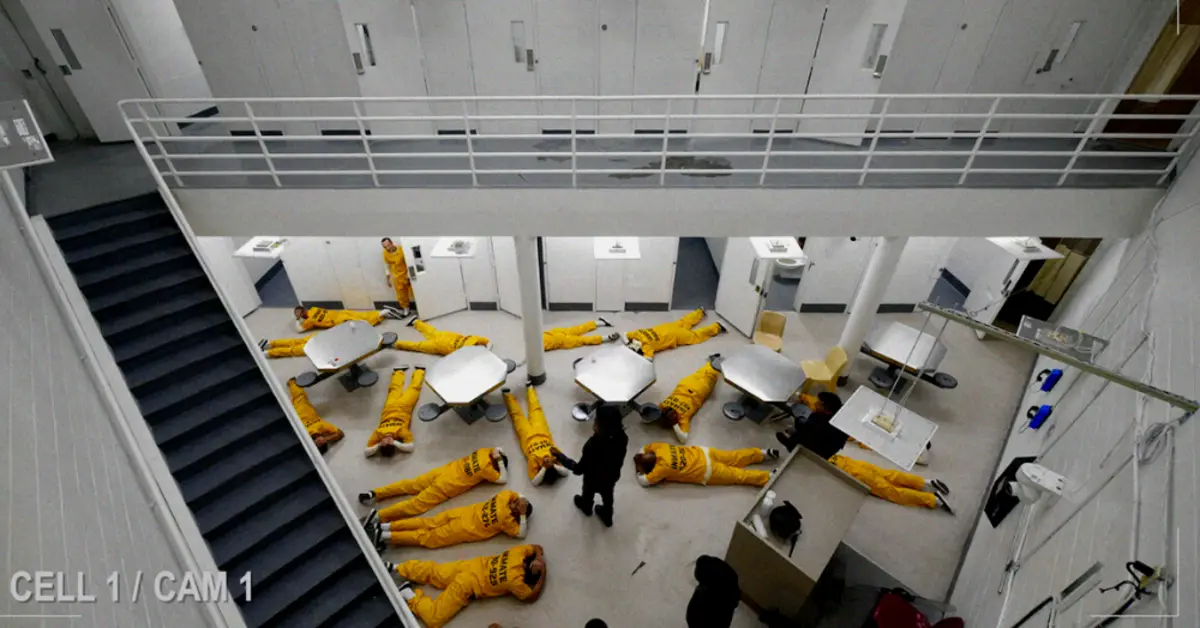

Netflix turned one of psychology’s most discredited studies into a six-episode reality competition. The New Stanford Prison Experiment premiered on October 21, 2026, placing 30 volunteers inside a real county jail in Georgia and splitting them into guards and prisoners. The show is billed as a safer, more ethical redo of Philip Zimbardo’s infamous 1971 study. Critics have mostly called it “Big Brother with handcuffs.” Original participants and researchers have called it worse.
The 1971 Study That Started It All
Philip Zimbardo, a Stanford psychology professor, built a fake prison in the basement of the university’s psychology building in August 1971. He recruited 24 male college students through a newspaper ad and randomly assigned half to be guards and half to be prisoners. The plan was to run the study for two weeks. It ended after six days.
Guards grew abusive fast. They stripped prisoners, sprayed them with fire extinguishers, and put them in a dark closet called “the hole.” One prisoner had a mental breakdown within 36 hours. The study was later criticized for having no real safeguards, unclear consent, and a lead researcher, Zimbardo, who also acted as prison superintendent.
“What he wanted to show is that normal people can do horrible things.” — Catherine Sanderson, psychology professor at Amherst College and former Zimbardo student, to CNN
The study became famous anyway. It shaped how millions of people think about power, authority, and conformity. Fifty-five years later, Netflix brought the question back.
What Netflix Actually Built in Georgia
Netflix did not rebuild a basement. The production rented a decommissioned section of the Cherokee County Adult Detention Center in Canton, Georgia, about 40 miles north of Atlanta. The jail is real. In early scenes, viewers can hear actual inmates in other parts of the facility.
30 participants entered the jail for 14 days. Eight became guards, including all three women in the cast. The other 22 became prisoners, all male. Guards wore grey uniforms and stayed in a hotel between shifts. Prisoners wore yellow jumpsuits and slept on bunk beds under strip lighting.
The cast included Kiana Goana, Jackson Sharp, Pete Zaremba, Nicholas Washington, Josh Hublitz, Michael Correra, Laura Berens, Chris Lee, Bobby Gray, and Shavonnah Jefferson. Six participants withdrew before the two weeks ended.
The Experts Watching From Outside
Three experts monitored the experiment from a separate room and commented on what they saw. Dr. Alison Wood Brooks, a behavioral psychologist at Harvard Business School, led the panel. Michael Cantrell, a retired federal corrections professional, and Trymaine Lee, a Pulitzer Prize-winning journalist, joined her.
Wood Brooks noted one of the early tensions in the show’s footage: the two guard shifts behaved differently, and that split became a source of conflict.
“The most fascinating dynamic to observe thus far has been this inconsistency between the two shifts of the guards.” — Alison Wood Brooks, behavioral psychologist, in a clip released by Netflix
The show ran through four planned phases: transition, hierarchy, role reversal, and self-governance. Guards elected leaders. Some prisoners and guards swapped roles at the halfway point. Producers said these changes were designed to keep friction alive across the six episodes.
The “Big Brother With Handcuffs” Problem
Reviewers largely agreed on one thing: this is not science. The Independent called it “less psychological torture, more Big Brother with handcuffs” and “Love Island with fewer fake tans and more yellow jumpsuits.” The Guardian wrote that the show “keeps pretending to be a study” while being “undeniably reality TV to its core”.
The Guardian’s review pointed out a basic flaw. The participants know they are on television. They reference the “experiment” constantly. Producers split guards into day and night teams to create conflict, then asked guards to elect a head guard to make some feel rejected. The review argued that none of it is real, and nobody watching thinks it is.
One critic summed up the format this way:
“The New Stanford Prison Experiment review is less psychological torture, more Big Brother with handcuffs.” — critic quoted by The Independent and The Mirror
Variety reported that the producers were nervous about taking on a failed experiment. Executive producer Jane Lipsitz said there were moments when the team thought it would end on the same day the original did. She also said the show was built with safeguards the original lacked, including a mixed-gender cast and expert oversight.
“If we were simply recreating the original experiment, that would be unconscionable. But this is a different time, with different participants, different safeguards and, ultimately, a very different journey.” — Jane Lipsitz, executive producer, to Netflix’s Tudum
The Ethics Fight Started Before Episode One
Netflix announced the series in September 2026, and the backlash arrived immediately. The Independent reported that people reacted in disbelief that Netflix was reviving a study abandoned because guards became psychologically abusive and prisoners became anxious and depressed.
Dave Eshelman, a guard in the original 1971 study, told Stanford Magazine that he was testing how much abuse prisoners would take. “But the other guards didn’t stop me. They seemed to join in,” he said. In light of that history, the Stanford Daily reported that students and online commenters questioned why Netflix would redo it as entertainment.
“Leave it to Netflix to reproduce one of the most notorious and unethical social experiments ever, but as reality TV.” — comment on an X post about the series, quoted by the Stanford Daily
An original participant told Newsweek the show was a “bad idea” and feared it would blur the line between entertainment and science.
The scientific record makes the criticism sharper. France Info and Radio France reported that the original study has been called a “scientific lie” and that no scientist has been able to reproduce its results in 50 years. CNN noted that modern ethical rules would make both Zimbardo’s study and Stanley Milgram’s earlier obedience experiments very difficult to run today because of deception and psychological harm.
Even the show’s own scientific framing is thin. The Guardian noted that the panel includes a behavioral psychologist, a corrections veteran, and a journalist, and that “there’s precious little real scientific insight on offer”.
You May Also Like:



View all articles about
Where to Watch and What to Expect
The New Stanford Prison Experiment is streaming now on Netflix. All six episodes, each about 45 minutes, arrived on October 21, 2026. The show is available in the United States, the United Kingdom, Canada, Australia, India, and other Netflix markets worldwide.
The series is produced by Alfred Street Industries, the company behind Top Chef and Project Runway. Jane Lipsitz, Dan Cutforth, Nan Strait, Dan Volpe, Jeff Grogan, and Mike Odair serve as executive producers.
Also Read: KJ Apa Nails Jim Carrey Impression on The Tonight Show, Recalls Childhood Inspiration
For more honest takes on the reality shows everyone is arguing about, stay with VvipTimes.


















Leave a Reply