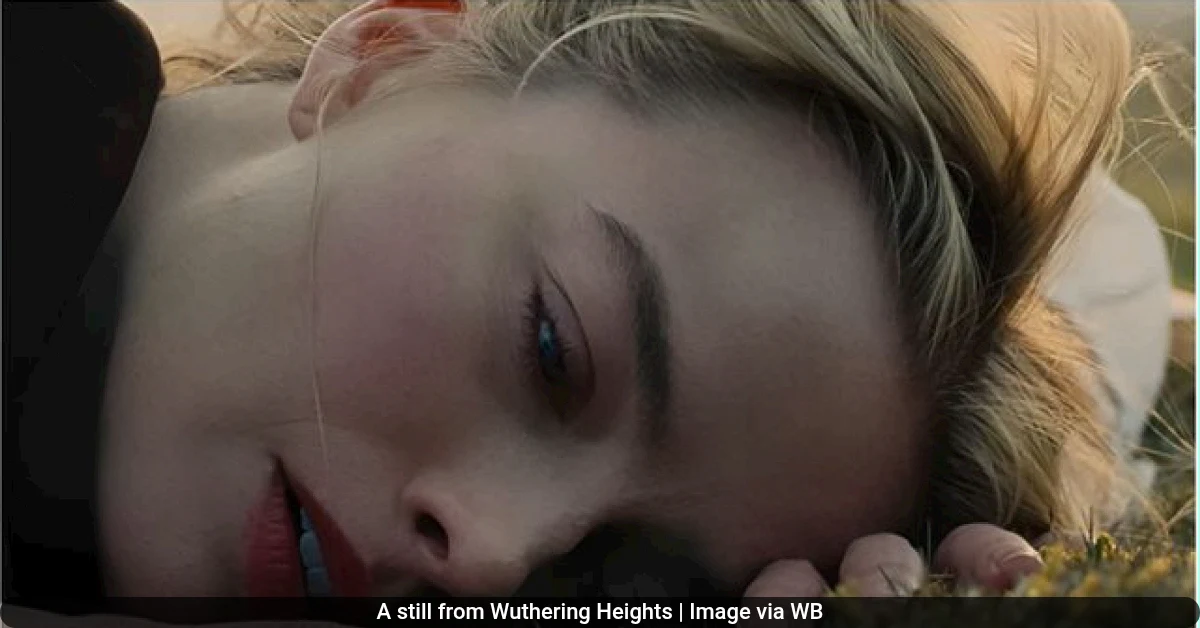
Emerald Fennell’s new version of “Wuthering Heights” is finally in theaters, and it’s safe to say this is not your grandmother’s Emily Brontë adaptation. The Margot Robbie and Jacob Elordi-led film has become the most talked-about and divisive movie of 2026, with audiences and critics passionately debating the changes Fennell made to the classic 1847 novel .
The director, known for Promising Young Woman and Saltburn, has put her own stamp on the story by putting the title in quotation marks—“Wuthering Heights” —to signal that this is her personal interpretation rather than a faithful retelling . And interpret she did. From cutting out major characters to turning the story into a full-blown erotic drama, Fennell has taken plenty of creative liberties.
If you read the book years ago (or just last week) and are curious about what’s different, or if you saw the movie and want to know what Brontë actually wrote, here are the five biggest changes between the novel and Fennell’s adaptation.
The Film Only Tells the First Half of the Book
The most fundamental change Fennell made was deciding where the story begins and ends. “Wuthering Heights” the movie focuses exclusively on the passionate relationship between Cathy and Heathcliff, starting with their childhood meeting and ending with Cathy’s death .
Here’s the thing—in Brontë’s novel, Cathy dies in Chapter 16. Out of 34 chapters. That means almost half the book takes place after she’s gone .
The second half of the novel follows the next generation: Cathy’s daughter (also named Catherine), Heathcliff’s sickly son Linton, and Hindley’s son Hareton. It explores Heathcliff’s vengeful mission to gain control of both Wuthering Heights and Thrushcross Grange, his abusive treatment of the children, and eventually, the complicated romance that develops between young Catherine and Hareton .
Fennell has been open about her decision to focus only on the first part. “When you look at not just other movie adaptations of this, but Kate Bush’s song, or Balthus’ lithographs, or a lot of the kind of contemporary illustrations, most of them tend to focus on Cathy and Heathcliff,” she told Entertainment Weekly. “Because I think that’s really the moment that draws to an end in the book” .
The director admitted that including everything would require a much longer format. “I think, really, I would do a miniseries and encompass the whole thing over 10 hours, and it would be beautiful. But if you’re making a movie, and you’ve got to be fairly tight, you’ve got to make those kind of hard decisions” .
For book purists, this choice removes much of what makes the novel unique—the cycle of abuse repeating across generations, the supernatural haunting, and the complex anti-hero that Heathcliff becomes.
Key Characters Were Completely Erased
Along with cutting the second generation of characters, Fennell eliminated several important figures from the first half of the book entirely.
Hindley Earnshaw, Cathy’s older brother, does not exist in this version . In the novel, Hindley is crucial to the story. When Mr. Earnshaw brings young Heathcliff home, he favors the orphan over his own son, creating a deep rivalry. After their father dies, Hindley becomes master of Wuthering Heights and degrades Heathcliff to a servant, denying him education and treating him brutally . This mistreatment is what fuels Heathcliff’s lifelong desire for revenge.
Instead of Hindley, Fennell gave his storyline to Mr. Earnshaw (Martin Clunes). In the movie, it’s Cathy’s father who descends into gambling and alcoholism, losing the family fortune and becoming abusive toward both children .
Mr. Lockwood, who serves as the novel’s narrator, was also cut . In the book, Lockwood rents Thrushcross Grange and hears the entire story from housekeeper Nelly Dean. His outsider perspective frames the tale, but he’s completely absent from the film.
Frances, Hindley’s wife, and their son Hareton are gone too . In the novel, Frances dies young, sending Hindley into a spiral of grief and alcoholism. His son Hareton grows up neglected and is later raised by Heathcliff as an uneducated laborer—a cruel revenge for Hindley’s childhood abuse.
By removing these characters, the movie loses the multigenerational scope that makes Brontë’s novel so ambitious. Instead, it becomes a tightly focused story about two lovers.
Heathcliff’s Race and the Story’s Social Commentary
One of the most controversial aspects of Fennell’s adaptation is the casting of Jacob Elordi, a white actor, as Heathcliff .
In Brontë’s novel, Heathcliff is described in ways that strongly suggest he is a person of color. He’s called a “dark-skinned gipsy” and a “Lascar” (a historical term for Indian or Southeast Asian sailors) . When housekeeper Nelly comforts him as a child, she suggests he might be the son of an “Emperor of China” and “an Indian queen” . Heathcliff himself bitterly wishes he had “light hair and a fair skin” like his rival Edgar Linton .
This racial ambiguity isn’t incidental—it’s central to the story. Heathcliff’s otherness is why the Earnshaws and Lintons treat him as an outsider. It’s why Cathy says it would “degrade” her to marry him, despite loving him . The social prejudice he faces based on his appearance drives his fury and his obsessive need for revenge .
Fennell’s version removes this entirely. As she explained, she cast the character she imagined when she read the book as a teenager . Critics argue this decision “undermine[s] the entire plot” because without the racial dynamic, there’s less context for why the world treats Heathcliff so poorly .
The film’s casting director, Kharmel Cochrane, defended the choice earlier in 2025, saying, “There’s definitely going to be some English Lit fans that are not going to be happy” . Robbie also told fans to trust their decision: “I saw him play Heathcliff. And he is Heathcliff. I’d say, just wait. Trust me, you’ll be happy” .
Cathy and Heathcliff’s Relationship Becomes a Full-Blown Affair
If you’re looking for the brooding, yearning tension of the book, you won’t find it here. Fennell turned the heat way up.
In Brontë’s novel, Cathy and Heathcliff’s relationship is passionate but never physically consummated. The most romantic moment between them is a single embrace and kiss on Cathy’s deathbed . Their connection is built on spiritual longing and missed opportunities rather than explicit passion .
The movie takes a very different path. “Wuthering Heights” is filled with erotic scenes, including Cathy and Heathcliff hooking up in carriages and on the moors while she’s married to Edgar . One memorable scene shows Cathy discovering her sexuality while watching two servants engage in BDSM with horse bridles . Another has Heathcliff licking Cathy’s fingers after she pleasures herself on the moors, telling her he would “follow [her] like a dog to the end of the world” .
Heathcliff even threatens to murder Edgar if it means he can be with Cathy forever .
Fennell explained her approach to the BBC when the cast was announced: “I wanted to make something that made me feel like I felt when I first read it, which means that it’s an emotional response to something. It’s, like, primal, sexual” .
For fans of the book, this transformation of their relationship into a steamy affair misses the point. One critic noted that the movie turns “a Romantic era-influenced story, itself in no way a romance, into something closer to Pride and Prejudice meets Fifty Shades of Grey” .
Also Read:

The Ending Completely Changes Cathy’s Death
The movie’s ending marks another major departure from the source material.
In the novel, Cathy gives birth to a daughter (also named Catherine) before she dies . Her death comes from complications related to premature childbirth combined with her fragile mental state after her emotional confrontation with Heathcliff . This daughter grows up to play a central role in the second half of the story, eventually marrying Heathcliff and Isabella’s son, Linton.
Fennell’s version makes a drastic change—Cathy miscarries and dies of sepsis instead . No baby survives, which means no second generation and no continuation of the story.
The final meeting between Cathy and Heathcliff is different too. In the book, Nelly helps Heathcliff sneak in to see Cathy one last time before her death . In the film, they never have this final reunion. Instead, a feverish Cathy hallucinates that Heathcliff is with her when he’s not actually there .
The supernatural elements from the novel are also absent. In Brontë’s book, Lockwood sees Cathy’s ghost trying to enter through a window at Wuthering Heights, and Heathcliff claims to be haunted by her spirit throughout the remaining years of his life. Villagers even report seeing the pair walking on the moors together after their deaths .
By ending right after Cathy dies, Fennell’s version becomes a straightforward tragic romance rather than the complex, Gothic tale of revenge and haunting that Brontë wrote.
“Wuthering Heights” is now playing in theaters worldwide. Whether you see it as a bold reimagining or a frustrating oversimplification, one thing’s certain—everyone has an opinion about it.
Also Read: Where Was ’56 Days’ Filmed? A Look at the Prime Video Thriller’s Key Locations
For more breaking entertainment news and exclusive interviews, keep checking VvipTimes for the latest updates from Hollywood and beyond.