
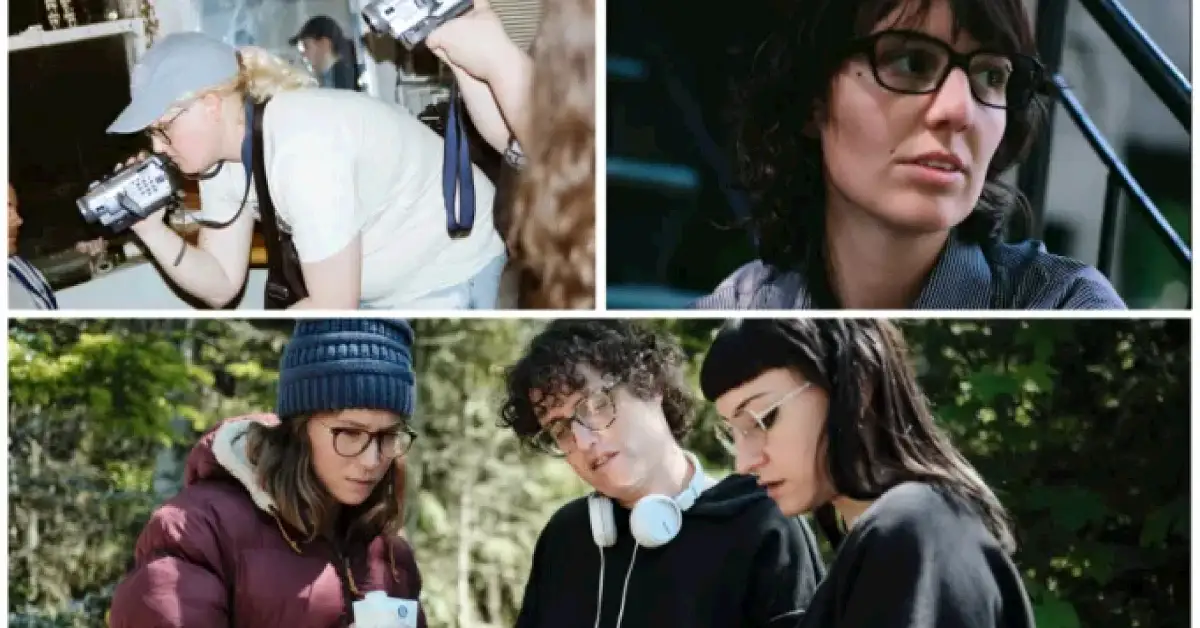

The traditional Hollywood studio system has rarely made space for trans and nonbinary filmmakers. But a new generation of directors is changing that by creating their own paths. Vera Drew, Louise Weard, and Jane Schoenbrun are among the artists who are making movies on their own terms, often working outside the major studio system entirely.
When Vera Drew made her first movie The People’s Joker, she did not know if anyone would understand it. The film is a personal superhero parody about her experience of transitioning. Drew told Variety that she thought she was “making a movie for myself”. But after showing it at festivals like Toronto International Film Festival and Fantastic Fest, she started meeting other trans and nonbinary filmmakers who were doing the same thing.
These filmmakers are now a growing community. They appear in each other’s projects and support one another. Drew said: “You get these communities together where we cannot only cheer each other on, but inform each other’s work and inspire one another”.
The Numbers Show a Big Problem in Hollywood
A recent report from GLAAD titled “Where We Are in Film” found that in 2025, there were zero trans characters in movies from the top 10 U.S. distributors. The report looked at 225 films and found no transgender characters at all. This lack of representation comes from a lack of trans directors making big-budget movies.
Raina Deerwater, GLAAD’s associate director of entertainment research, said: “Executives have to step up, not only to increase representation, but to maintain relevance with audiences. Gen Z is largely saving the box office and movie theaters, and they are the queerest generation of all time”.
Jane Schoenbrun: Making Movies at a Higher Budget
Jane Schoenbrun is one trans filmmaker who has been able to work with bigger budgets. Their horror comedy Teenage Sex and Death at Camp Miasma stars Gillian Anderson and Hannah Einbinder. The film started its theatrical run after a premiere at the Cannes Film Festival. It is being released by Mubi and will go wide later this month.
Schoenbrun is aware of being one of the only trans filmmakers working at the $10 million budget level. They said: “I carry a lot of guilt about taking the money that I am obviously desperately clutching for from Hollywood”. They added: “Being the only trans filmmaker making movies at this budget level — that’s not my fault, but it would be a lot better, in general, if I wasn’t the only one”.
Schoenbrun also talked about what it is like being trans in meetings with Hollywood executives. They explained: “Anytime I’m on a Zoom with Hollywood, with people who I’m maybe going to work with on something, or doing a general, my transness is going to be in the room”. They noted that there are usually no other trans people on the other side of the call.
Schoenbrun has also helped other filmmakers. Eva Victor shadowed on I Saw the TV Glow before making her own movie Sorry, Baby. Alice Maio Mackay shadowed on Camp Miasma before directing The Serpent’s Skin and Our Effed Up World.
Vera Drew: Finding Success Outside the Studio System
Vera Drew said she would “love” to make a studio movie. But getting a second movie made has been hard. She said: “My first movie was a huge critical success, got a ton of buzz out of its festival run, had a Streisand effect because of its legal baggage, it won multiple awards”. She added: “In another era, that probably could have meant that Disney or Paramount or fucking Star Wars, one of these people would be coming to me and saying, ‘We have this thing we want you to shepherd’”.
She continued: “I don’t know if I’m just too aggressive and trans and hairy-arm pitted for that to happen, but I do know that didn’t happen to me”. She believes part of the reason is media consolidation and the subject matter of her first movie.
Drew’s next movie is a horror comedy called Trandemic. It recently won a $25,000 cash grant from the Duplass Brothers’ Found Footage Feature Fund. The movie is described as a “cosmic found-footage horror comedy”.
Louise Weard and the ‘Castration Movie’ Anthology
Louise Weard is a Canadian filmmaker known for her Castration Movie anthology series. The series has become a central project for many trans artists. It features Schoenbrun, Drew, Alice Maio Mackay, and others in various roles. Lilly Wachowski even executive produced the third chapter.
Weard’s movies are made with a DIY approach. She has made all three Castration films available online with a “pay what you wish” model. She said the project was “always designed for online first. Anything else has been a fun bonus”.
Weard has noticed more hope among trans filmmakers now. She said: “I was just at the Cannes Film Festival and I saw so many trans people walking around at the market and at these pavilions. I was so blown away. That was not an experience I was seeing at all at film festivals a few years ago”.
A Community That Supports Each Other
These filmmakers often work together. Schoenbrun appears in the third Castration Movie and Jack Haven’s short films. Weard has a role in Camp Miasma. Avalon Fast acts in both Castration Movie and The Serpent’s Skin.
Alice Maio Mackay, who is 22 years old, has already directed seven features. Her movie Our Effed Up World was produced by Schoenbrun. Many of Mackay’s films are streaming on Shudder. She said: “I feel very grateful to have been able to make the films I have made, but it’s been at such a micro scale”.
Avalon Fast made their first movie Honeycomb for just $5,000 with a group of friends. Their recent film Camp was distributed by Dark Sky Films. Fast said they do not want to work with more money on future projects. They explained: “I really want to have a good life and I don’t want my life to become industrialized”. They added: “If I can continue making films for micro budgets with my friends, these are the things that I find inspiring and that I get real joy out of”.
Mackay shared a similar view: “We’re not competing with each other; we’re all trying to do our own thing but have this community to lean back and be supported on”.
Related Stories




View all articles about
Muscle Distribution: A Trans-Owned Label
Muscle Distribution was founded in 2025 as the only trans-owned distribution label. It was created by filmmaker and programmer Elizabeth Purchell. The label distributes micro-budget films from trans filmmakers, including Castration Movie and two of Fast’s films.
Purchell said: “The ultimate gimmick is seeing a trans movie in a theater because they’re not really being made, programmers aren’t showing them and no one wants to get behind them in a meaningful way”. But she added: “Now we’re in this moment where there is this opening for people to find stuff online, for DIY groups to put together screenings, for theaters and festivals to start taking notice. Something really is happening”.
Cisgender Directors and Trans Stories
The article also discusses how cisgender directors have told trans stories in the past. Movies like The Danish Girl starring Eddie Redmayne and Boys Don’t Cry starring Hilary Swank won Oscars. But these films were made by cisgender directors.
More recently, Jacques Audiard’s musical Emilia Pérez earned 13 Oscar nominations but faced pushback from the LGBTQ+ community. Jack Haven said: “It’s a film from the voyeuristic perspective, and so it makes transness into something that is fascinating, titillating, perverse”.
Sepi Mashiahof added that when cisgender directors tell trans stories, they align with the “strange imagination” that a man is pretending to be a woman. In contrast, movies like I Saw the TV Glow show transness as “just this feeling that is the world”.
Creating a New Industry
Jack Haven said that this community of filmmakers is “creating a new industry”. They added: “I think there’s a lot of power in it because it can’t be co-opted and it can’t be bought”.
Vera Drew said: “The benefit of mostly existing in these indie spaces is that we get to tell our own story and get to control the narrative a little bit. I make the movies that only I could make. Louise makes the movies that only she could, and Alice is the same way”.
Alex Schmider, GLAAD’s senior director of entertainment, said he is “inspired” by contemporary trans artists: “They are undeterred by lack of funding, institutional support, and traditional distribution. In fact, they’re more creative and collaborative in their approach and strategies than ever”.
For more entertainment news and updates, keep reading VvipTimes for the latest stories from the world of film and television.








Leave a Reply