

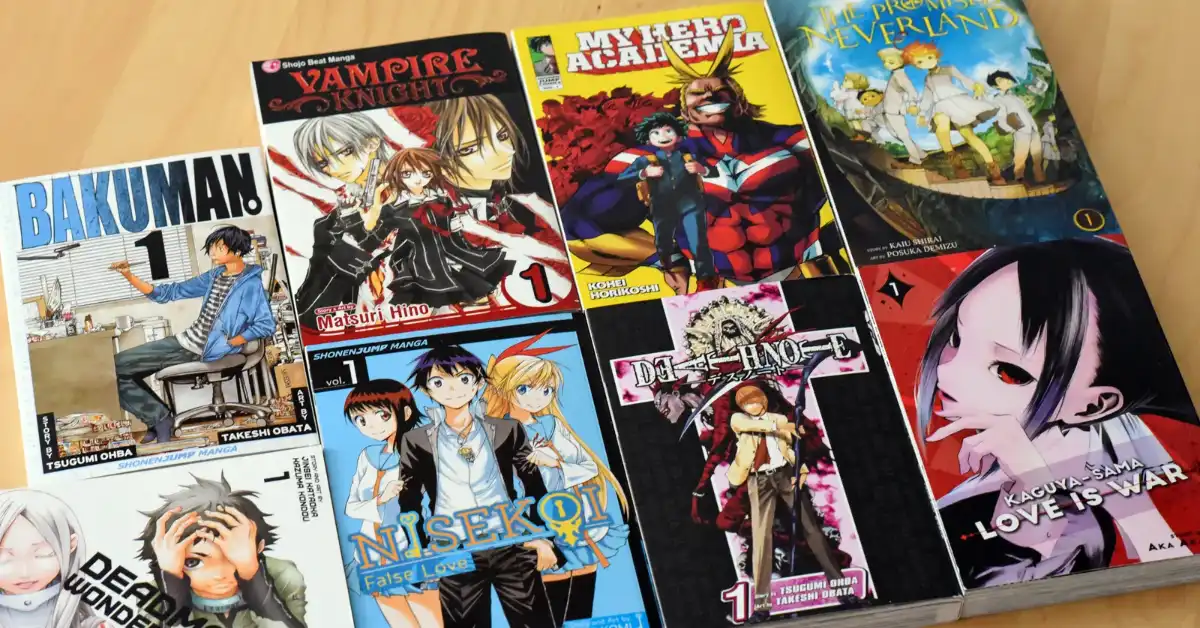

Manga is no longer a niche hobby for Indian fans. A wave of local publishing deals, digital reading platforms, and record-breaking anime releases is turning a devoted online fandom into a mainstream entertainment market worth billions. The change is happening fast, and the numbers explain why.
Kodansha, one of Japan’s largest publishers, set up Kodansha India in July 2026, becoming the first major Japanese publisher to print manga locally in the country. The company plans to release around 200 manga titles every year in English and Hindi . Its first lineup, announced in October 2026, includes global hits like Attack on Titan, Blue Lock, Witch Hat Atelier, Gachiakuta, and A Silent Voice .
The move matters for a simple reason. Until now, most official English manga sold in India were imported from the United States, which pushed prices well beyond what most readers could comfortably spend . Local printing changes that math. It allows publishers to set prices for Indian buyers and build a legitimate market that can compete with bootleg copies and unauthorised online scans.
India Is Already One of the World’s Biggest Anime Markets
The manga push is not happening in isolation. India currently ranks third globally in anime viewership penetration, behind only Japan and China, according to the GEM Partners Anime Global White Paper 2026. The report measured 41% viewership penetration in India, with a growth rate of more than 30% between 2020 and 2025 .
Market researchers put the value of India’s anime products market at over $1.2 billion in 2025, with projections pointing to $3.3 billion by 2034 . Separate estimates from Grand View Research place India’s manga market on a path to $1.35 billion by 2030, driven largely by demand for physical books .
Those figures reflect a change in who watches anime and how they watch it. A July 2026 Hakuhodo India study of 1,200 respondents aged 15 to 39 across eight Indian cities found that 95.9% of viewers watch anime on smartphones . Dubbed versions were preferred by 61.1% of respondents, and among those, 73.1% chose Hindi .
Streaming and Dubbing Broke the Language Barrier
Streaming platforms did the heavy lifting in the early years. Netflix India began systematic Hindi anime dubbing in 2020, starting with Studio Ghibli films like My Neighbor Totoro and Spirited Away . Crunchyroll expanded regional-language dubbing for most of its library in 2023, and its Asia Pacific and India marketing director, Akshat Sahu, later said that for popular titles like Jujutsu Kaisen and Chainsaw Man, Hindi dub audiences have surpassed English audiences in the country .
Streaming remains the primary gateway. The Hakuhodo study found that Netflix was the most-used platform among anime viewers at 74%, followed by Jio Hotstar/Disney+ at 69.1%, YouTube at 68.8%, and Amazon Prime Video at 56.4% . Television still holds a meaningful place, with 48% of respondents watching anime through channels like Cartoon Network .
Social Media Turned Anime Into Everyday Conversation
Anime has become a shared language for young Indians. 66% of respondents in the Hakuhodo study said they regularly discuss anime with friends, 44% post anime-related content on social media, and 43.4% follow anime creators or influencers online .
That social layer is not a side effect. It is a discovery engine. Clips, fan edits, and memes carry series into feeds where they can reach people who have never watched a full episode. Once a show becomes a talking point, the step to reading the original manga becomes smaller.
Crunchyroll Manga Brings 250-Plus Titles to Indian Screens
Digital reading is the second front. Crunchyroll Manga launched in India on 8 October 2026 with more than 250 English-language titles from publishers including J-Novel Club, Square Enix, and Yen Press . The service is available on iOS, Android, and web, and includes series like The Apothecary Diaries, My Dress-Up Darling, Delicious in Dungeon, and Bocchi the Rock! .
In India, the service is bundled into the Ultimate Fan membership, priced at ₹299 per month or ₹999 annually, with access across six devices . Crunchyroll reports that 81% of Indian anime fans read digital manga at least monthly, and 56% read it weekly .
Crunchyroll chief content officer Asa Suehira said:
“For years, fans have asked us to bring manga closer to their Crunchyroll experience, and we are excited to make that a reality for more fans around the world. Expanding into new territories and languages is an important step toward making Crunchyroll an even more complete home for anime fans everywhere.”
Theatres Proved Anime Can Compete With Mainstream Cinema
The September 2025 release of Demon Slayer: Infinity Castle in India showed what happens when a devoted fan base meets a wide theatrical rollout. The film became the highest-grossing anime film in Indian history, collecting ₹89 crore in gross box office within its run . The Hindi dub alone earned ₹15 crore, while the Japanese dub led with ₹42 crore .
That performance was not a one-off accident. It followed years of streaming growth, social media buzz, and fan events that built familiarity with the characters and story. A theatrical release gave fans a shared experience that a phone screen cannot replicate, and it signalled to exhibitors that anime content can fill seats beyond the biggest cities.
Local Publishing Changes What Readers Can Afford
Kodansha’s local printing plan directly targets the price problem. Kodansha India is a joint venture with Dai Nippon Printing and IJ Kakehashi Services, with Kodansha holding an 81% stake . The company will publish physical manga and children’s books, sell merchandise, and organise events around its titles .
The timing reflects a wider shift in how Japanese publishers view international markets. Localised printing lets them set regional prices, respond to local demand, and build a legal alternative to piracy. Small shops and street vendors have long sold bootleg copies of popular titles at a fraction of the original price, and official local editions are the most direct way to compete with that supply .
Simon & Schuster India, the official distributor for VIZ Media manga titles in the country, has also expanded its manga offerings in response to rising demand . Penguin Random House India has distributed Kodansha titles through imported editions, and the new local operation is expected to change that arrangement over time .
A Younger Readership Is Exploring More Than Action
The Indian manga audience is not sticking to one genre. A Courrier Japon study found that readers are moving beyond dominant shonen titles into seinen, slice-of-life, and manga novels . 76% of manga readers in India are between 18 and 34 years old .
Interest in Japanese culture more broadly is helping. Penguin Random House India senior vice president Manoj Satti said the English translation of the book IKIGAI: Living Simply and Richly has sold 2 million copies in India, and that this wider curiosity about Japanese philosophy and lifestyle is creating a supportive context for manga .
Quick-commerce services like Blinkit are also making physical manga easier to buy, addressing a supply chain that once made finding specific volumes difficult outside large book fairs and specialist stores .
What Still Stands Between Fandom and a Mature Market
The growth is real, but the market is not yet fully formed. Manga volumes are still largely available only in English, which limits reach beyond urban English-speaking readers . Official editions will need to be priced low enough to compete with imports and free scans that many readers already use .
Spending on anime-related activities also remains modest. Among working professionals surveyed by Hakuhodo, the largest group, 35.3%, reported spending between ₹1,500 and ₹2,000 over six months. Students and homemakers most commonly spent between ₹500 and ₹1,000 . That gap between cultural engagement and actual spending is the next test for publishers and platforms.
Related Stories











View all articles about
Kodansha India has already begun hosting events, including a booth at MMAJ 2026 in New Delhi on October 3 and 4, where readers could see the first locally printed titles . The company has also opened an official Instagram account for Indian readers .
Also Read: Nue’s Exorcist TV Anime Confirmed For Summer 2027, Studio Hibari To Adapt Kōta Kawae’s Manga
The manga boom in India is no longer a question of whether Japanese comics can find an audience. The audience is already here, watching on phones, talking on social media, and filling cinemas for the biggest releases. The open question is whether local publishing, digital subscriptions, and fair pricing can turn that enthusiasm into a sustainable reading culture. For more entertainment news and analysis, keep reading VvipTimes.































Leave a Reply