
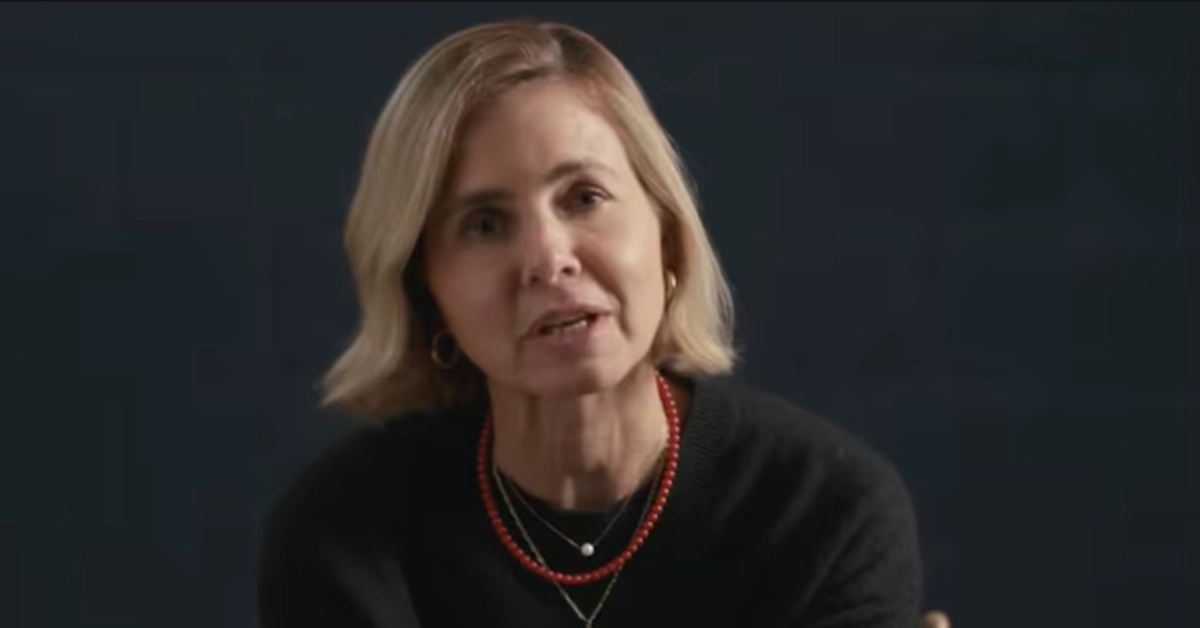

Emmy Award-winning journalist Mariana van Zeller has spent years reporting from inside the world’s most dangerous black markets. For her latest National Geographic special, Super Scam Me, she turned the camera on a crime that hides in plain sight: online romance fraud. The one-hour documentary, directed by Jeff Plunkett and produced by Muck Media, premiered on October 17, 2026, at 9:00 p.m. EDT on National Geographic and streams on Disney+ and Hulu. The special follows van Zeller as she builds a fake dating profile, draws in scammers, and tracks one of them all the way to Ghana for a face-to-face confrontation. Along the way, viewers meet Leslie Pickett, a Louisiana woman who lost more than $10,000 to a scammer using AI-generated videos to pose as Jon Bon Jovi. The documentary arrives as romance scams are pulling in record losses, with American victims alone reporting more than $1 billion stolen in 2025.
What Super Scam Me Sets Out to Prove
The core argument of Super Scam Me is simple and uncomfortable. Romance scams are not a niche problem for people who are easy to fool. They are a fast-growing, highly organised criminal business that uses technology, patience, and emotional manipulation to drain victims of money and confidence.
Van Zeller says the question she hears most often is why anyone would fall for such a scheme. Her answer is that it can happen to anyone.
“I’ve spent years reporting on scams, and the reaction I hear most is ‘How could anyone be so stupid? That would never happen to me.’ But it can, and it does happen to anyone,” said van Zeller. “So this time, I made myself the target.”
The documentary is built as a real-life social experiment. Van Zeller does not simply interview victims from a distance. She creates a fictional online identity and waits for scammers to find her. The point is to show how the fraud works from the inside, not just from the police report or the courtroom.
How Mariana van Zeller Became the Bait
To understand how scammers operate, Mariana van Zeller put on a wig, oversized glasses, and a prosthetic nose. She introduced the internet to “Mary Zelle,” a divorced woman in her fifties, a mother of college-age children, and a lonely romantic looking for a partner. The disguise was practical. It made her harder to identify through reverse-image searches if a scammer grew suspicious.
The response was immediate. Within minutes of posting the profile on dating apps and social media, messages began arriving. Some came from men claiming to be George Clooney, Keanu Reeves, or Brad Pitt. Others came from ordinary-looking profiles with extraordinary stories.
One scammer stood out. He called himself “Mark Turner,” a four-star general serving overseas. He sent flowers, wrote daily messages, and built a relationship with “Mary” over weeks. He also sent videos designed to prove his identity. When the time came, he asked for money. Van Zeller had hooked her target.
The Jon Bon Jovi Scam That Nearly Cost a Woman Her Home
At the emotional centre of Super Scam Me is Leslie Pickett, a 55-year-old woman from Louisiana who had been a Jon Bon Jovi fan since she was 14. In late 2024, she commented on Bon Jovi’s verified Instagram account. Minutes later, an unverified account messaged her, claiming to be the rock star himself. The account said Bon Jovi wanted a private way to connect with fans. It warned that management would shut the account down if anyone found out.
For months, Pickett exchanged messages with the impostor several times a day and late into the night. He remembered small details from their conversations. He told her he loved her. He sent flowers to her home. He also sent videos that were convincing enough to fool her relatives. Pickett later learned those videos were created with generative AI. The scammer even claimed that Bon Jovi and his wife had quietly filed for divorce to protect his public image.
“My 14-year-old self was just giddy when he replied,” Pickett told ABC7. “I’ve been in banking and finance for 30 years, so I’m not a dumb person, and I did get scammed. I was a lonely person, and I got scammed.”
The scammer waited seven months before asking for money. The requests started with smaller payments and grew. By the time the deception fell apart in July 2025, Pickett had lost more than $10,000. She was also facing foreclosure on her home.
“My heart was shattered,” Pickett told Fox News Digital. “I was still willing to give him the benefit of the doubt. But there was nothing but ill intent. That’s what hurt the most.”
Working with van Zeller and a former hacker, Pickett traced the suspected scammer’s IP address to Lagos, Nigeria. Google Earth images helped identify a property connected to the operation. The trail showed how far these schemes reach and how difficult they are for local police to pursue.
AI Is Making the Lie Easier to Believe
The Super Scam Me team argues that artificial intelligence has changed the game for romance fraudsters. Generative AI can produce video and voice that look and sound like real people. It can imitate celebrities, public figures, and even ordinary individuals with enough accuracy to fool family members.
Van Zeller experienced this directly. During her undercover work, she communicated with three men claiming to be George Clooney, two claiming to be Keanu Reeves, and several claiming to be Brad Pitt. She noted that the technology has improved significantly since she filmed the documentary.
“They’re really good. And this was a year ago. And since, generative AI has even gotten better,” she said. “So we’re only going to see this getting harder and harder to sort of spot.”
The FBI’s 2025 Internet Crime Report recorded more than $19 million in romance scam losses with a likely AI connection. The agency also logged over 22,000 complaints that referenced AI across all fraud categories, a sign that the technology is spreading across the scam economy.
The Scale of the Problem: $1 Billion Lost in a Single Year
Romance scams are not a small-time crime. National Geographic cites estimates that one in seven adults has lost money to this form of deception. In 2025 alone, romance scammers stole more than $1 billion from American victims.
FBI figures put the number of confidence and romance fraud complaints at 23,159 in 2025, with reported losses of approximately $929 million. That is up from roughly $672 million in 2024. Victims aged 60 and older reported around $584 million of those losses.
The numbers tell only part of the story. Many victims never report the crime. Shame, embarrassment, and fear of ridicule keep them silent. Van Zeller says that reaction from families, friends, and even authorities is part of the problem.
“We’re not just talking about, you know, losing money, but we’re talking about somebody who goes through a real emotionally traumatic moment of their lives,” van Zeller explained. “Their heart is broken. But then when they decide to talk about this, to go to the authorities or tell their loved ones what has just happened to them, usually the response they get is laughter and shame and ridicule, and that is not okay.”
Tracking a Scammer to Ghana
The documentary does not stop at describing the problem. Van Zeller and Arman the Cyber, a white-hat hacker she met at the DEF CON conference in Las Vegas, work to unmask her own scammer. The trail leads to Ghana, where “Mark Turner” is allegedly based.
Van Zeller travelled to Accra and distributed flyers in the scammer’s neighbourhood. The flyers featured a mash-up photo of “Mary Zelle” and “Mark Turner,” the same image the scammer had used to build the relationship. The move was designed to pressure him into a meeting. It worked. Van Zeller confronted him on camera.
The confrontation is tense. The man continues to insist he loves “Mary” even after his deception is exposed. The scene captures the strange psychology of these scams, where the line between performance and emotion blurs on both sides.
Who Is Mariana van Zeller?
Mariana van Zeller was born in Cascais, Portugal, on May 7, 1976. She began her journalism career at the Portuguese network SIC before moving to New York to attend Columbia University’s Graduate School of Journalism. She hosted and executive-produced Trafficked with Mariana van Zeller on National Geographic, a series that took her inside criminal economies around the world.
Trafficked earned a record-setting 88 Emmy nominations and 16 wins across its run. The series ended on a high note with 25 nominations at the News & Documentary Emmys for its final season. Van Zeller’s husband, producer Darren Foster, has worked with her at Muck Media, the company behind both Trafficked and Super Scam Me.
You May Also Like:




View all articles about
Where to Watch Super Scam Me
Super Scam Me premiered on October 17, 2026, at 9:00 p.m. EDT on National Geographic. The special streams on Disney+ and Hulu for viewers in the United States and other supported markets. The documentary runs for one hour and is produced by Muck Media for National Geographic.
Van Zeller’s podcast, The Hidden Third, released special episodes tied to the documentary during the week of October 12, 2026. The episodes include interviews with the white-hat hacker and the victim featured in the special.
For more reporting on the documentaries and true-crime stories shaping the conversation, stay with VvipTimes.






















Leave a Reply