
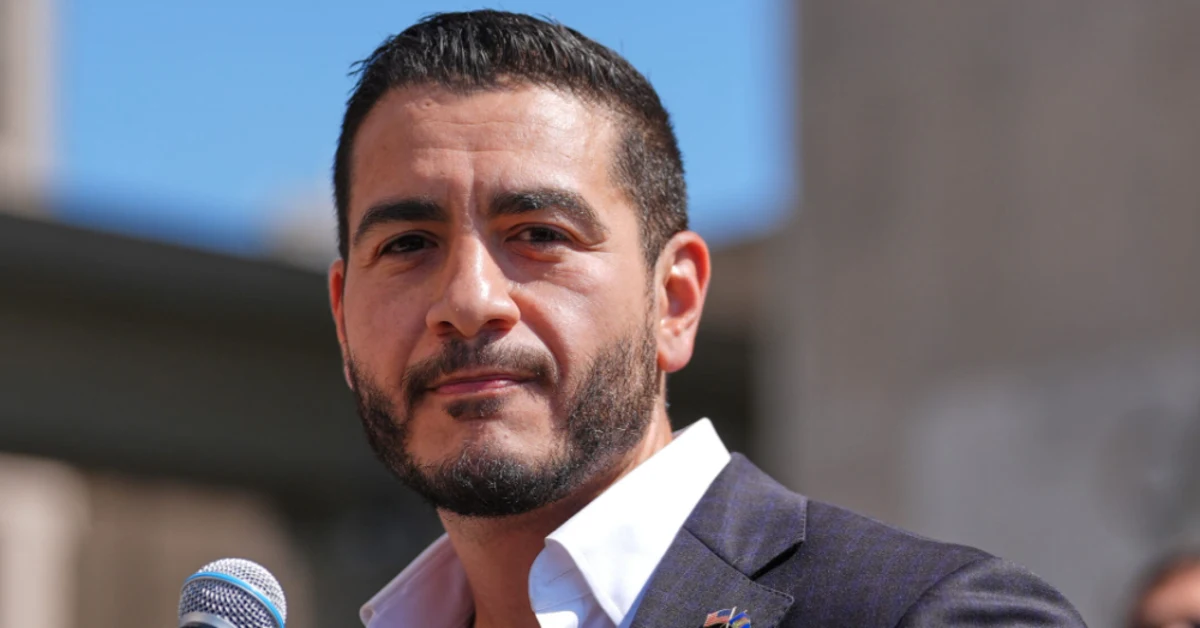

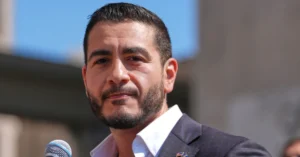
Two days before Michigan voters pick their next U.S. senator, the family of Muhammad Ali walked into a Detroit church and made their choice plain. Khaliah Ali, the late boxing champion’s daughter, and her son, Jacob Ali-Wertheimer, endorsed Democrat Abdul El-Sayed on Sunday, saying the candidate carries forward the values Ali fought for across his life. The endorsement happened at Greater Emmanuel Institutional Church of God in Christ in Detroit, where El-Sayed attended service with his wife, Sarah Jukaku, and several Democratic leaders.
The timing carried weight. Michigan’s Senate race is one of the most closely watched contests in the country, and the Ali family’s support landed on the same morning that another prominent Michigan Democrat, Rep. Haley Stevens, stunned her party by endorsing El-Sayed’s Republican opponent, Mike Rogers. Two events, hours apart, showed a Democratic Party pulled in two directions during the final stretch of the campaign.
The Endorsement Came at a Church Service in Detroit
The Ali family made its announcement during Sunday morning worship at Greater Emmanuel, a church service that had been planned as a show of Democratic unity. El-Sayed sat with his wife and a group of Democratic figures, including Rep. James Clyburn of South Carolina, Rep. Debbie Dingell of Michigan, and Sen. Angela Alsobrooks of Maryland, according to the Associated Press.
Khaliah Ali and Jacob Ali-Wertheimer used the church setting to connect El-Sayed’s Senate bid to Muhammad Ali’s public life. Their words were direct and personal, not written like a standard political endorsement.
Muhammad Ali died in 2016 at age 74. He was known around the world as a three-time heavyweight boxing champion, but his family has spent years reminding people that his legacy was never only about the ring. Ali refused to be drafted into the Vietnam War in 1967, was stripped of his boxing titles, and became a symbol of resistance for people facing discrimination. His daughter and grandson framed El-Sayed’s campaign as a continuation of that same work.
What Khaliah Ali Said About Her Father’s Fight
Khaliah Ali told El-Sayed that her father always showed up when a fight mattered. Her comment drew a straight line between the boxing ring and the Senate race.
“You know Ali had to show up if there was a fight. What made you think this was going to go down without one of us showing up? You got two of us. This is what legacy is,” Khaliah Ali said, according to Al Jazeera.
She described her father as a man who fought to open doors for other people. Supporting El-Sayed, she said, was part of that same mission. Her words carried the weight of a daughter who has spent much of her adult life speaking about her father’s beliefs and his impact beyond sports.
Khaliah Ali is a fashion designer, author, and social justice advocate. She serves on the board of the Philadelphia Juvenile Law Center, a national children’s rights organization. Her public work has often focused on young people and families facing difficult circumstances, themes that sit close to the civil rights work her father championed.
Muhammad Ali’s Grandson Called El-Sayed ‘Part of the Legacy’
Jacob Ali-Wertheimer, Khaliah Ali’s son, spoke after his mother and made the family’s reasoning even more specific. He said El-Sayed understands what it feels like to be judged for his race or his religion.
“Abdul El-Sayed is a part of Muhammad Ali’s legacy. A man who understands what it means for people to be talked down to for the color of your skin or for the faith you believe in,” Jacob Ali-Wertheimer said, according to Al Jazeera.
He also pointed to the rising cost of living and what he described as a rising tide of hatred. El-Sayed, he said, is “another fighter in our corner.”
Jacob Ali-Wertheimer is a Harvard Law School graduate and has spoken publicly about his grandfather’s influence on his own sense of purpose. He repeated one of Muhammad Ali’s best-known lines during the church service: “Service to others is the rent you pay for your room here on earth.” The line, often quoted by Ali himself, gave the endorsement a personal, family-centered tone rather than a purely political one.
Why the Family Sees El-Sayed as Ali’s Continuation
The comparison between El-Sayed and Muhammad Ali is not random. El-Sayed is a Muslim American of Egyptian descent, born in Michigan to an immigrant father. He has faced public attacks on his faith during the campaign, including accusations that he has repeatedly denied. Ali, who changed his name from Cassius Clay and joined the Nation of Islam in the 1960s, faced similar scrutiny and hostility during his career.
Ali’s refusal to fight in Vietnam cost him nearly four years of his prime as a boxer. He was convicted of draft evasion in 1967, and the U.S. Supreme Court overturned that conviction in 1971. The case made him a global figure in the fight for civil rights and religious freedom. His daughter and grandson see El-Sayed’s political rise as part of the same story, a Muslim American running for high office while facing questions about his identity and his loyalty.
The endorsement also came with a practical political purpose. El-Sayed has been working to build support among Black voters in Detroit, a key part of the Democratic base in Michigan. The Ali family’s name carries deep respect in Detroit and in Black communities across the country. Muhammad Ali was not just a boxer to those communities. He was a figure who used his fame to speak about race, war, and justice when doing so was costly.
The Same Morning, a Democratic Rift Widened
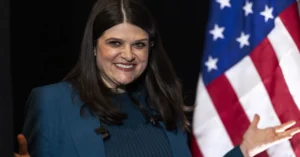
While the Ali family endorsed El-Sayed at Greater Emmanuel, Rep. Haley Stevens appeared at Perfecting Church, another Detroit church, alongside Republican Mike Rogers. Stevens lost the Democratic primary to El-Sayed in August and had been expected to attend the unity service with him. El-Sayed’s campaign asked her to stay away after a public dispute, and she responded by endorsing Rogers.
Stevens said in a video that she did not belong in El-Sayed’s campaign. Her decision drew sharp criticism from Democratic leaders. Sen. Chuck Schumer of New York called it a “despicable betrayal” and said Senate Democrats were united behind El-Sayed, according to CNN. Former House Speaker Nancy Pelosi said El-Sayed “must win” and described Stevens’s endorsement of Rogers as a dangerous choice for Michigan families.
The defection did not slow El-Sayed’s fundraising. His campaign raised $2.4 million in a single day on Sunday, according to CNN, one of his strongest fundraising days since winning the primary. The money and the Ali family endorsement gave El-Sayed two different kinds of support on the same day: financial momentum and a cultural legacy that reaches far beyond Michigan.
Who Is Abdul El-Sayed?
El-Sayed is 42 years old and was born in the Detroit area. He is a physician and epidemiologist who studied at Columbia University and earned a doctorate in public health from Oxford University. He served as executive director of the Detroit Health Department and later as director of Wayne County’s Health, Human and Veteran Services Department.
He ran for Michigan governor in 2018 and lost in the Democratic primary. Sen. Bernie Sanders endorsed his Senate campaign, and El-Sayed has built a progressive platform centered on healthcare, economic fairness, and the cost of living. If he wins on Tuesday, he would become the first Muslim U.S. senator in American history, a fact that has drawn national and international attention to the race.
His wife, Dr. Sarah Jukaku, is a psychiatrist. The couple met at the University of Michigan. She attended the church service with him on Sunday, according to the Associated Press.
The Numbers Behind the Race
The final New York Times/Siena College poll before Election Day put El-Sayed ahead of Rogers by 11 points, 53% to 42%. The poll was conducted from Oct. 23 to Nov. 1, before Stevens endorsed Rogers. The margin was outside the poll’s margin of error, and it was one of the largest Democratic leads among the seven Senate battleground states surveyed.
Rogers is a former Republican congressman who represented Michigan in the U.S. House. The Senate seat is open because Democratic Sen. Gary Peters is retiring. Michigan voters go to the polls on Tuesday, Nov. 3.
Muhammad Ali’s Fight Beyond the Ring
Muhammad Ali’s boxing record is part of sports history, but his cultural footprint extends far beyond it. He won the heavyweight title in 1964 at age 22, shocking the world by defeating Sonny Liston. He later refused induction into the U.S. Army during the Vietnam War, citing his religious beliefs. The decision cost him his titles and his ability to box for more than three years.
Ali returned to the ring in 1970 and reclaimed the heavyweight title in 1974 by defeating George Foreman in Zaire. He fought until 1981 and was diagnosed with Parkinson’s syndrome in 1984. He spent the later years of his life working on humanitarian causes, including hunger relief and civil rights. He received the Presidential Medal of Freedom in 2005.
His daughter and grandson have carried that legacy into public life. Khaliah Ali has spoken at rallies and in interviews about racial injustice, policing, and the need for social change. Jacob Ali-Wertheimer has described his grandfather as a model for using education and law to create change. Their endorsement of El-Sayed places the family’s name behind a candidate who is asking voters to see him in the same tradition.
What the Endorsement Adds in the Final Hours
The Ali family’s support gives El-Sayed a cultural argument that goes beyond policy. In the final hours of a race defined by party divisions, the endorsement reminds voters that Muhammad Ali’s legacy is not owned by one party or one generation. His daughter and grandson chose to attach that legacy to a Muslim American candidate running for national office, a decision that carries symbolic weight for Muslim, Arab, and South Asian communities in Michigan and across the country.
You May Also Like


View all articles about
El-Sayed’s campaign has focused on healthcare and economic issues, and he has worked to bring together a coalition of Black, Muslim, Arab, and progressive voters. The Ali family’s endorsement adds a civil rights name to that coalition. Whether it changes votes will be known after Nov. 3, when Michigan voters decide who fills the open Senate seat.
Also Read: Prime Video’s Muhammad Ali Series ‘The Greatest’ Drops First Teaser, Sets November Release
For more stories that connect sports legends, culture, and the people shaping today’s headlines, keep reading VvipTimes.
Sources: Al Jazeera and The Associated Press reported the endorsement and the Detroit church service. CNN reported the Stevens defection, Democratic reaction, and El-Sayed’s fundraising.
































Leave a Reply