
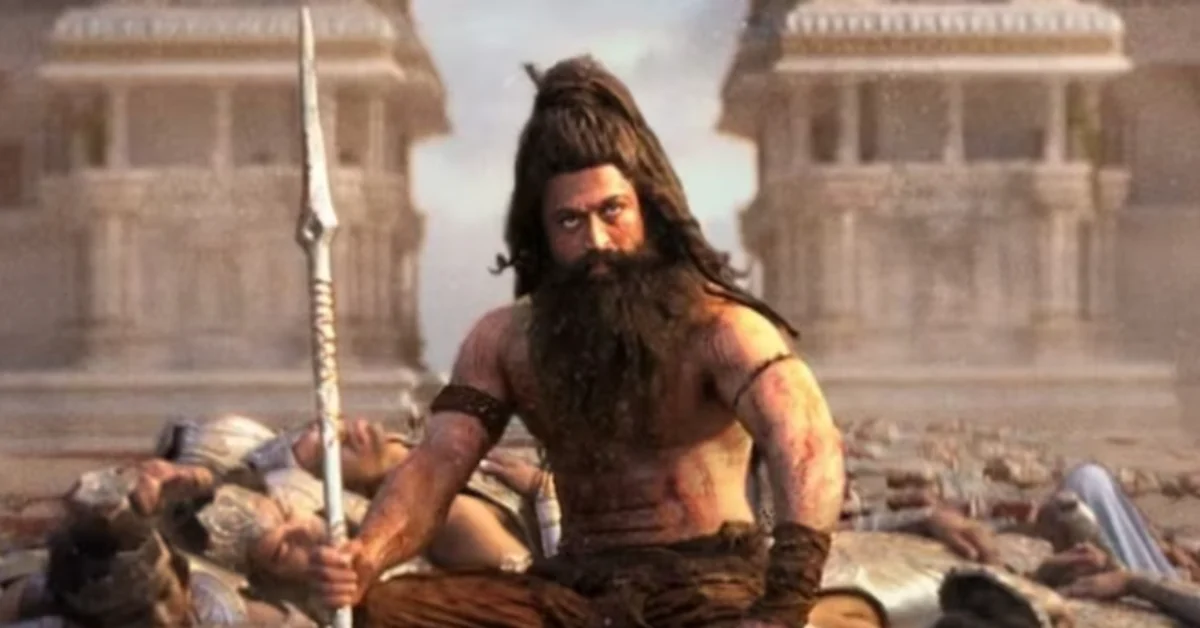

Nitesh Tiwari’s two-part adaptation of the Hindu epic, led by Ranbir Kapoor, Sai Pallavi, and Yash, has locked its post-theatre streaming home in India. The film will arrive on JioHotstar through a pay-per-view model, marking a first for a major Indian release on the platform. The theatrical run began worldwide on November 5, 2026, and the digital window is expected to open around Christmas, though the exact date and rental price remain under wraps.
The Streaming Deal: JioHotstar Locks Digital Rights
The digital rights for Ramayana: Part One have been secured by JioHotstar in India through a partnership with producer Prime Focus Studios. The announcement was made on October 22, 2026, just ahead of the film’s Diwali theatrical debut. The deal, reported by industry sources, is valued at an estimated ₹450 crore for the combined digital and satellite rights of the first instalment. This figure, if confirmed, would place it among the biggest pre-release commercial agreements for an Indian film.
The arrangement is not a standard subscription-based streaming release. Instead, the film will be offered as a dedicated on-demand purchase on JioHotstar, separate from the platform’s regular movie catalogue. This means that even viewers with an existing JioHotstar subscription will need to pay an additional fee to watch the film online.
How the Pay-Per-View Model Works for Viewers in India
The pay-per-view (PPV) model allows viewers to rent or purchase access to a specific film for a set period, without it being included in a monthly or annual subscription package. For Ramayana: Part One, this means that after the film’s exclusive theatrical window ends, audiences in India can buy access to the movie on JioHotstar. The platform has stated that the film will stream in the best quality each supported device can handle.
The exact rental price and the length of time a viewer can access the film after payment have not been disclosed by the makers or the platform. Reports have circulated with unconfirmed figures, but no official announcement has been made regarding the cost. More details on the pricing and the on-demand offering are expected closer to the digital release.
Theatrical Release and Global Rollout
Ramayana: Part One opened in cinemas worldwide on November 5, 2026, timed for the Diwali festival holiday. The film released in six languages: Hindi, Tamil, Telugu, Kannada, Malayalam, and English. IMAX 3D is among the premium formats in which the film was released. The global release was handled by Sony Pictures Entertainment, while Dharma Productions oversaw distribution in the Hindi-speaking market.
The film opened on an estimated 59,000 screens worldwide, with around 9,000 in India and 50,000 abroad, according to trade data. Advance bookings in India commenced on October 20, 2026, coinciding with Dussehra.
A Star-Studded Cast Bringing the Epic to Life
The film features an ensemble cast led by Ranbir Kapoor as Lord Rama, Sai Pallavi as Sita, and Yash as Ravana. Sunny Deol plays Hanuman, with Ravie Dubey as Lakshman. The supporting cast includes Arun Govil as King Dasharatha, Lara Dutta as Kaikeyi, Kajal Aggarwal as Mandodari, Rakul Preet Singh as Surpanakha, and Vivek Oberoi in a key role.
The production brings together an international crew. The music is composed by Oscar winners Hans Zimmer and A. R. Rahman. Production design is handled by Ravi Bansal and Ramsey Avery, while the action sequences were choreographed by Terry Notary and Guy Norris. The film is produced by Namit Malhotra under Prime Focus Studios, DNEG, and Yash’s Monster Mind Creations.
The Vision Behind the Digital Release
The decision to adopt a pay-per-view model was framed by the makers as a way to reach audiences who may not have access to premium cinema screens. Namit Malhotra, the producer and founder-CEO of DNEG, said the film was designed for the biggest possible screen but acknowledged the limits of India’s cinema infrastructure.
“I believe Ramayana should be experienced on the biggest screen possible, in IMAX 3D. But our country’s cinema infrastructure cannot reach everyone who holds this epic close. Ramayana belongs to every Indian, and our ambition must reflect that. JioHotstar has time and again shown how technology can bring a nation together through its sports and entertainment offering. That made them a natural partner to take Ramayana into people’s hands and living rooms, after its theatrical run.”
Nita M. Ambani, chair of JioStar, also commented on the partnership, linking the film’s release to the platform’s broader mission of accessible storytelling.
“Ramayana is one of India’s greatest civilizational treasures – a story that has shaped our conscience, inspired our imagination, and guided the way we live for centuries. At JioHotstar, our vision is to use technology to bring the finest stories within reach of every Indian. It is our privilege to present this grand cinematic vision of Ramayana to families across the country, and introduce a new generation to its eternal values of duty, love, courage, and goodness.”
When Will the Film Arrive on JioHotstar?
A confirmed digital premiere date for Ramayana: Part One has not been announced by JioHotstar or the filmmakers. The film is expected to follow a six-to-eight-week theatrical window before arriving on streaming. Reports citing sources close to the project indicate that the digital premiere is being planned around Christmas 2026. An exact date, however, remains pending official confirmation.
What About Viewers Outside India?
For audiences in the United States, the film is not currently available on any streaming platform. Ramayana: Rise of a Legend is playing exclusively in theatres across the U.S., where it opened on Friday, November 6, 2026. The film is being released in the U.S. through Sony Pictures Releasing, which has led to expectations that it will eventually arrive on Netflix for American viewers, though no deal has been confirmed. A digital purchase or rental option on Prime Video is also expected at a later stage, but the film will not be part of a standard Prime subscription.
For viewers in the UK, Canada, Australia, and other international markets, streaming details are similarly unconfirmed. The global digital rollout is expected to follow the pattern of the Indian release, but no official announcements have been made for these territories.
The Scale of the Production and Its Box Office Stakes
Ramayana: Part One is reported to be the most expensive Indian film ever made, with a budget estimated at ₹2,000 crore (around $420 million). The film is a two-part project, with Part Two scheduled for release during Diwali 2027. The screenplay is adapted from Valmiki’s epic by Shridhar Raghavan.
Related Stories

Recovering the investment depends heavily on theatrical performance. Non-theatrical revenue, including the reported digital deal and music rights sold to T-Series for ₹75 crore, is expected to bring in ₹475–500 crore. Analysts suggest that the film would still need worldwide gross collections in the range of ₹3,000–4,000 crore to generate sufficient theatrical revenue to cover the remaining shortfall.
For more updates on the biggest releases and where to watch them, keep reading VvipTimes.




























Leave a Reply