

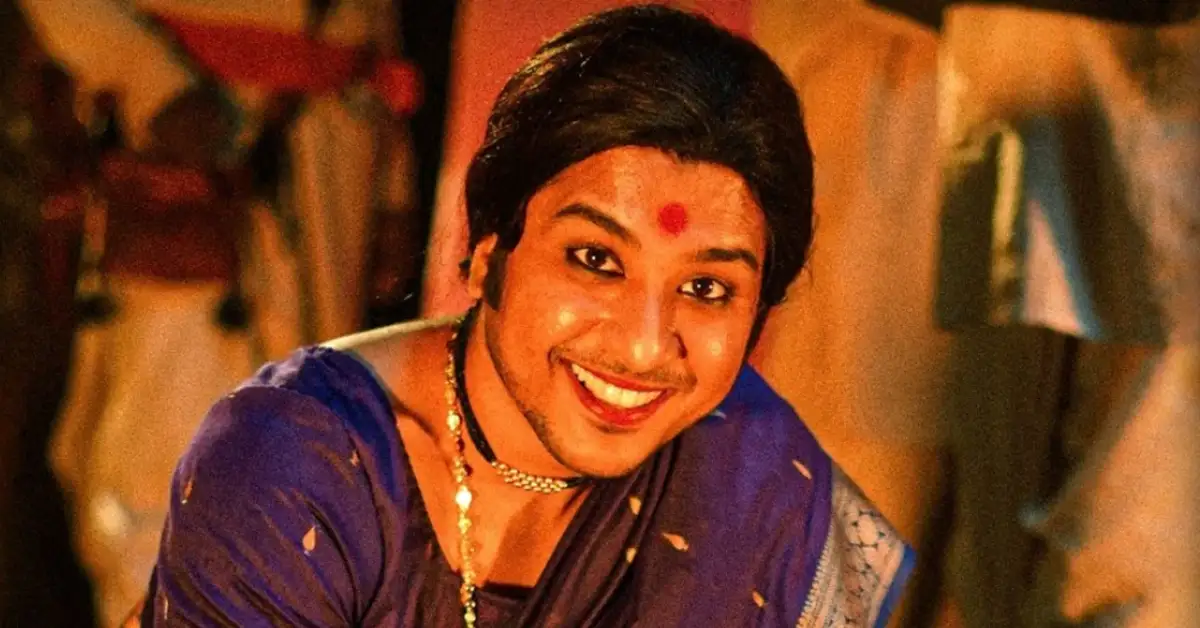
Gondhal, a Marathi psychological thriller written and directed by Santosh Davakhar, has been selected as India’s official entry for the 99th Academy Awards in the Best International Feature Film category. The Film Federation of India announced the decision on September 18, 2026, choosing the film from a field of 33 submissions. The film brings a centuries-old Maharashtrian ritual performance to a global audience, weaving it into a story of desire, deception and survival that unfolds over a single night.
What Is the Gondhal Ritual
Gondhal is a traditional Maharashtrian ritual performance that combines devotional singing, music, dance and the worship of deities. Performed by a community known as the Gondhalis, the ritual typically involves traditional instruments, rhythmic movements and devotional songs that create an atmosphere which is both spiritual and celebratory.
The tradition has a strong connection with night-time performances. It is often associated with important family occasions, including weddings. Historical accounts in the Maharashtra Gazetteer describe Gondhal performances being held at night after joyful family celebrations, with dancers singing and performing before an image of the goddess and a lamp.
A traditional Gondhal can feature instruments such as drums and the tuntune, a single-stringed instrument, along with metal instruments and a torch or lamp. The performers invoke the deity through songs and dance, with the ritual eventually concluding with an aarti. The exact form of Gondhal can vary, but its combination of music, movement, storytelling and devotion remains central to the tradition.
The ritual is dedicated to deities such as Renuka and Bhavani, and sometimes Khandoba. Some literary sources mention Gondhal as a ritual in honour of Renuka, mother of the warrior-sage Parasuram. The dance is composed of dynamic movements, and the dancers are brightly dressed and ornamented.
Beyond being a form of entertainment, Gondhal has traditionally been part of community and family celebrations in Maharashtra. The ritual brings people together through prayer, music and performance, often continuing through the night. Actor Kishor Kadam, who features in the film, has spoken about growing up with the ritual in his village. He recalled it as a community gathering where people came together to pray and celebrate through the night.
Why Gondhal Was Chosen Over Dhurandhar
The Film Federation of India’s selection committee reviewed 33 titles for India’s entry to the 99th Academy Awards. The list spanned several Indian languages and also included one silent film. Hindi had 14 entries, while Marathi, Telugu and Gujarati had four submissions each. Tamil had three submissions, and Malayalam and Nagamese had one entry each.
The jury was chaired by P Sheshadri. Its members included Vijay Patkar, Hutu Kanodia, Shanti Kumar, Sandeep Parashar, Sanjay Patil, Sabu Joseph, Anil Thomas, Vivek Vaswani, Bijon Dasgupta, Haasan Vasan and Tannishtha Chatterjee.
Gondhal left behind films such as Main Vaapas Aaunga, Border 2, Dhurandhar, Dug Dug, Haq, Balan The Boy, Deool Band 2 and Shape of Momo, among others. Ranveer Singh’s box-office juggernaut Dhurandhar was among the most discussed contenders, but jury member Vivek Vaswani told NDTV that the film did not represent Indian culture in the way the jury was looking for. When asked how many of the 14 jury members voted in favour of Dhurandhar, Vaswani responded, “Four”.
The jury’s final three films were Gondhal, Angh and Maine Vaapas Aayunga, with the Marathi film eventually being selected. The film’s cultural setting and representation of Indian culture were among the factors that appealed to the jury.
Gondhal Movie Cast and Characters
Ishita Deshmukh plays Suman, the central character in the film. Suman is a woman trapped in an outwardly comfortable but unfulfilling marriage to the affluent Anand, portrayed by Yogesh Sohoni.
The cast also includes Kishor Kadam as Bhivaba, Nishad Bhoir as Sarjerao, Anuj Prabhu, Dhru Thoke, Suresh Vishwakarma, Vitthal Kale, Pravin Dalimbkar and Kailash Waghmare.
The film’s music has been composed by the legendary Ilaiyaraaja. Songs from the film include “Malhari” and “Chandan” .
The 117-minute feature was produced by Santosh Davakhar and Diksha Davakhar under the banner of Davakhar Films. The cinematography is by Amalendu Chaudhary.
Plot of Gondhal: A Night of Ritual and Revenge
The story unfolds during a midnight Gondhal celebration in rural Maharashtra. Suman, a woman trapped in a wealthy marriage, becomes involved with Saheba, a charismatic Gondhali performer. What begins as an attempt to escape her circumstances soon draws Suman into a web of manipulation, deception and a murder plot involving her husband’s cousin, Sarjerao.
Suman manipulates Anand’s obsessed cousin Sarjerao into committing a murder, and the story unfolds through a tense mix of love, deception, ritual, faith and escape. As the night-long Gondhal unfolds, devotion, relationships, betrayal and danger become intertwined.
According to the official IFFI synopsis, the film uses the traditional performance as an integral part of its narrative rather than simply as a visual element.
Release and Streaming Details
Gondhal was released theatrically in Maharashtra on November 14, 2025. As of September 18, 2026, the film is not available for streaming on any major OTT platform in India. An official streaming platform or premiere date has not been announced yet.
Director Santosh Davakhar has said the film is set to release in Hindi, Malayalam and Kannada soon. He has also expressed that the film is best experienced in theatres rather than on mobile or OTT platforms.
Awards and Festival Recognition
Gondhal had already made an impact on the festival circuit before its Oscar selection. At the 56th International Film Festival of India (IFFI) in 2025, Davakhar won the Silver Peacock for Best Director. The film went on to receive the FIPRESCI Award at the 17th Bengaluru International Film Festival in 2026. At the Pune International Film Festival the same year, the film won awards for Best Director and Best Cinematographer. It also received the Best Director award at the 22nd Third Eye Asian International Film Festival.
You May Also Like:








India’s Oscar History in the Category
Gondhal is the fourth Marathi film to be chosen as India’s official Oscar entry. The earlier Marathi films chosen were Shwaas in 2005, Harishchandrachi Factory in 2009 and Court in 2015.
India has not yet won an Academy Award for Best International Feature Film, formerly known as Best Foreign Language Film. Only three Indian submissions have secured nominations in the category: Mother India, Salaam Bombay and Lagaan. Deepa Mehta’s Water, starring John Abraham and Lisa Ray, was also nominated, but represented Canada after being selected as the country’s official entry.
Last year, India selected Neeraj Ghaywan’s pandemic drama Homebound as its official entry for the Oscars, but the film did not make it to the final nominations.
The 99th Oscars are scheduled to take place on March 14, 2027, at the Dolby Theatre in Hollywood, with Conan O’Brien set to host the ceremony.
Director Santosh Davakhar has already begun preparations for the Oscar campaign. A PR team in Los Angeles and a Finland-based social media team have been hired. Davakhar told India Today, “I’m feeling really proud. We had already started our Oscar campaign. By any means, we were convinced that we would take our film to the Oscars this year. So, this is really great news. We are extremely thankful to the Government of India, the Federation of India and the FFI jury for selecting Gondhal as India’s official entry. It’s a very proud feeling for the entire team”.
Also Read: Marathi Film Gondhal Is India’s Official Oscars 2027 Entry, Check Cast, Plot, and Release Details
For more updates on Indian cinema’s global journey and the road to the 99th Academy Awards, stay tuned to VvipTimes.


Leave a Reply