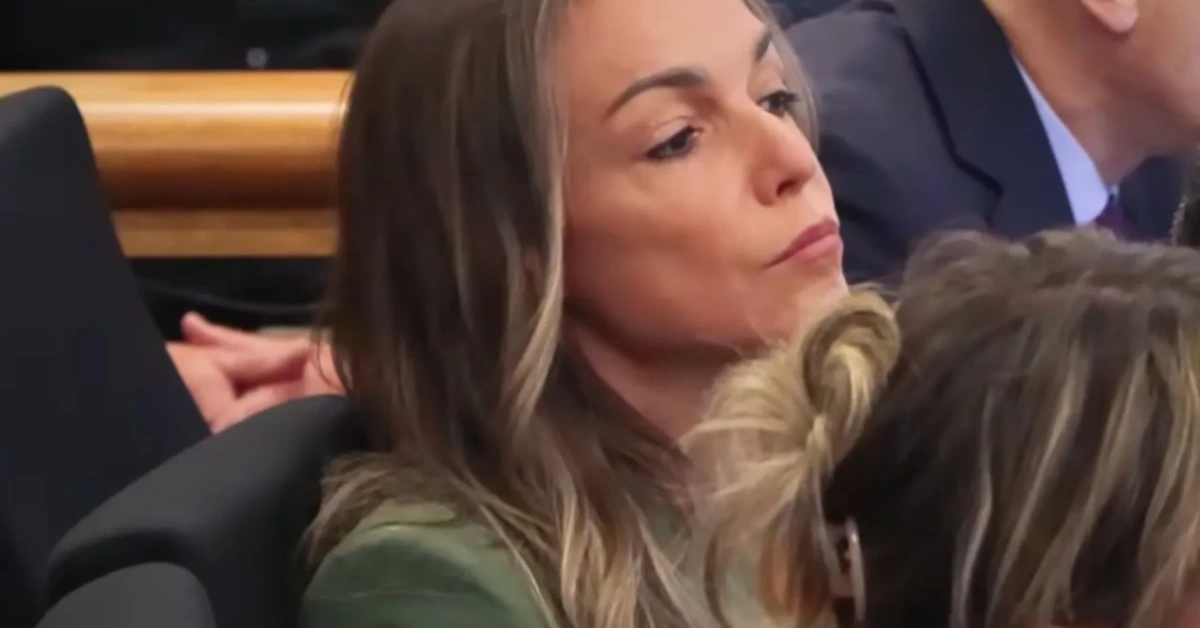

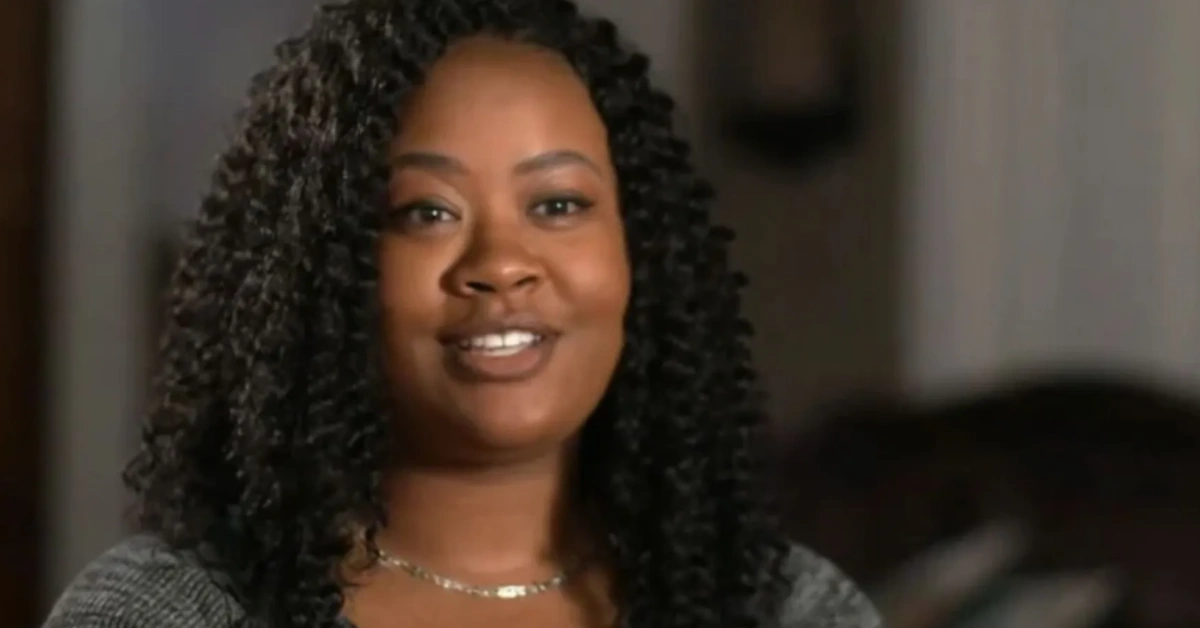
A juror who helped acquit Karen Read of murder in her 2025 retrial says she personally believed Read was responsible for the death of Boston police officer John O’Keefe. But under the rules of the American legal system, that personal belief was not enough to convict. Janet Jimenez, known during the trial as Juror No. 12, explains her reasoning in a new three-part Netflix docuseries, The Trials of Karen Read, which began streaming on Nov. 23, 2026.
Her admission puts a human face on a legal principle that often confuses people outside the courtroom: the difference between thinking someone probably did something and proving it beyond a reasonable doubt.
What Juror No. 12 Said in the Netflix Series
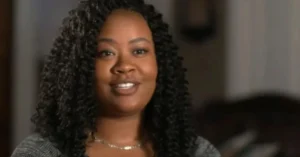
Jimenez, a personal trainer from Medfield, Massachusetts, did not seek attention after the verdict. She sat for an interview with WCVB-TV in June 2025, shortly after the trial ended, and her remarks are featured in the Netflix series. In the docuseries, she states her personal view of the evidence clearly.
“Most likely she did it”.
But she immediately followed that with the reason she could not vote to convict.
“But I think by our legal system’s standards, she’s not guilty, because there’s so many different possibilities. He could have gone into the house. He could have gotten beaten up”.
Those words capture the core of the jury’s decision. Jimenez did not say she believed Read was innocent. She said the prosecution’s case left open too many other explanations for how O’Keefe died. Under the law, a guilty verdict requires proof that leaves no other reasonable explanation. When multiple possibilities remain, the standard of reasonable doubt has not been met.
Jimenez told WCVB in 2025 that she entered deliberations leaning toward guilt. She had filled a notebook and a half with notes over the eight-week trial and wanted to hear what the other eleven jurors thought. What changed her mind was searching through more than 200 pieces of evidence for one specific item and not finding it. She did not name the item in the interview, but she said the gap created a large amount of doubt.
The Case That Divided a Town and Gripped the Nation
The death of John O’Keefe on Jan. 29, 2022, produced two criminal trials and years of online debate. O’Keefe, 46, was found unresponsive in the snow outside a home in Canton, Massachusetts, after a night of drinking. He was later pronounced dead at a hospital. A medical examiner determined the cause was blunt force trauma and hypothermia.
Prosecutors argued that Karen Read, O’Keefe’s girlfriend at the time, hit him with her Lexus SUV and left him outside. Read’s defense team argued that she was framed and that O’Keefe was injured inside the home before being placed outside.
The first trial ended in a mistrial on July 1, 2024, when the jury could not reach a unanimous verdict. A second jury delivered its decision on June 18, 2025: not guilty of second-degree murder, manslaughter while operating under the influence, and leaving the scene of a crash resulting in death. Read was convicted of a lesser charge of operating a vehicle under the influence of alcohol and sentenced to one year of probation.
Jimenez was not the only juror who struggled with the evidence. Another juror, Paula Prado, told NBC News after the verdict that she first thought Read might be guilty of manslaughter but later saw too many holes in the investigation. Prado said she did not believe the car killed O’Keefe and that it was possible he went inside the house and something happened there.
Why the O’Keefe Family Is Speaking Out
The Netflix series also gives space to the family of the victim. Paul O’Keefe, John’s brother, said he was satisfied with how the documentary turned out.
“I think that Sandpaper Films did a great job and I was glad to be part of it and be heard. They were also great to work with. It’s difficult to get everything into just three episodes, but I was satisfied with the final result”.
Paul O’Keefe said no family members were paid to appear in the series. They participated, he said, because they “just wanted to get the truth out”.
His niece, Kayley Furbush, who was 14 when O’Keefe died, offers a sharper view in the documentary. She describes the pain of watching Read smile and take pictures outside the courtroom.
“I’m just disgusted”.
Furbush also says she hopes viewers understand that the case was not just an internet story.
“This was about actual human beings with real emotions, their jobs, community, close friends ripped apart because of lies that have been spread”.
The Reasonable Doubt Debate in Plain Terms
The American legal system does not ask jurors to decide what probably happened. It asks whether the prosecution proved its case beyond a reasonable doubt. That standard is intentionally high because a criminal conviction takes away a person’s liberty.
Jimenez’s comments show how that standard works in practice. A juror can hold a personal opinion about what likely happened and still be required to vote not guilty if the evidence leaves room for other explanations. Her vote was not a statement that Read was innocent. It was a statement that the prosecution had not closed off every other possibility in the jurors’ minds.
The documentary places that legal question inside a larger cultural one. The Karen Read case became a national obsession partly because social media accounts, led by blogger Aidan Kearney (known online as Turtleboy), promoted alternative theories about a police cover-up. Millions of people who never sat in the courtroom formed strong opinions about the case. Jimenez’s interview brings the conversation back to the twelve people who actually had to apply the law to the evidence.
What Else the Docuseries Covers
The Trials of Karen Read runs for three episodes and is rated TV-MA. It was directed by Danielle Johnson Cutts and produced by Sandpaper Films. The series features interviews with people who were inside the Canton house that night, including Jen McCabe, Brian Albert, Colin Albert, and Brian Higgins. Former Massachusetts State Police trooper Michael Proctor, the lead investigator, also appears.
Proctor’s presence has drawn criticism. He was fired from the state police in March 2025 after an internal disciplinary process. The department cited crude text messages he sent about Read, sharing confidential case information, and drinking while on duty. Some viewers questioned why Netflix gave him a prominent platform without clearly noting his dismissal in the series.
You May Also Like

Karen Read declined to be interviewed for the documentary. The filmmakers instead used audio from a 2023 interview she gave to Boston Magazine, including parts that had not been released before.
All three episodes of The Trials of Karen Read are streaming on Netflix. The legal fights connected to the case are still active: O’Keefe’s family filed a wrongful death lawsuit against Read and two Canton bars in 2024, and several people connected to the case have filed defamation suits.
Also Read: ‘Love in Disguise’ Finale: A CEO Takedown, Two Sets of Rings, and a Kim Sejeong Surprise
For more updates on true-crime series and streaming releases, keep reading VvipTimes.