
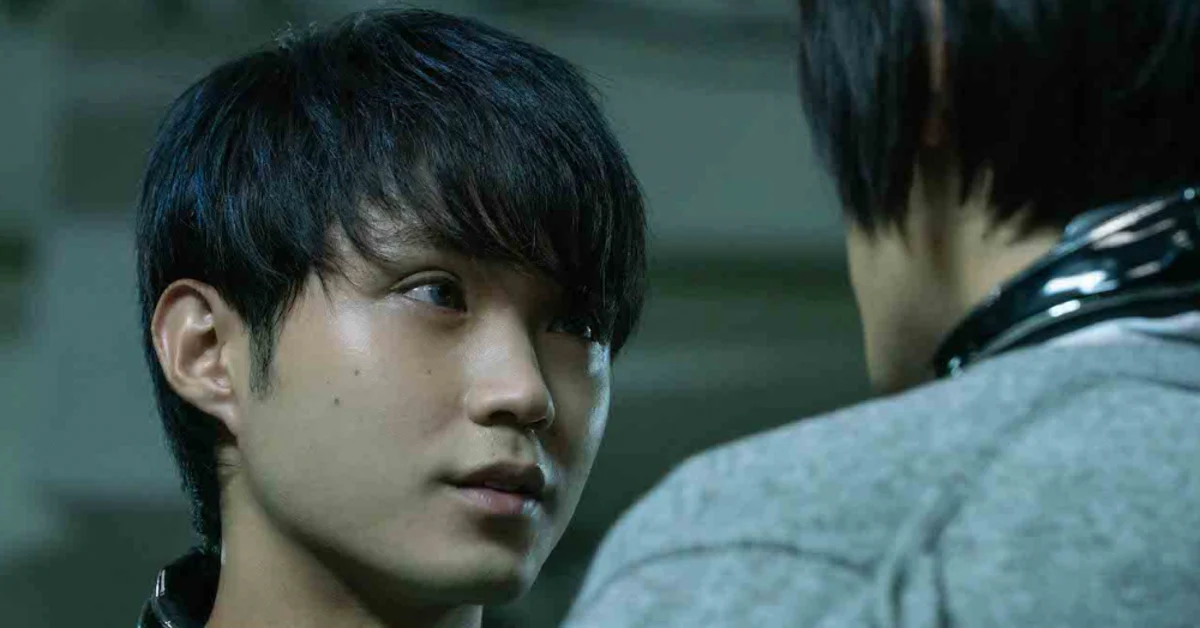

Isomura Hayato has built a career playing characters that many actors would avoid. The 33-year-old Japanese star, known globally as the chilling Sunato Banda in Netflix’s Alice in Borderland, recently spoke with Variety about a film role that people close to him actively tried to stop him from taking. That role ended up winning him one of Japan’s highest acting honors. He also served as the head of the jury for the Ethical Film Award at the 39th Tokyo International Film Festival, which ran from October 26 to November 4, 2026 . In the same interview, Isomura made a direct call for more government support for Japanese entertainment and film .
The Role He Was Told to Turn Down
Before The Moon became the film that earned Isomura the Japan Academy Film Prize for Best Supporting Actor, the people around him worried about what the role could do to his career . The film, directed by Ishii Yuya, is drawn from a real incident at a facility for people with disabilities in Japan . The events were still fresh in the public memory, and those close to Isomura feared that taking the part could hurt his standing in the industry .
Isomura took the role anyway. Looking back, he explained that walking away would have felt like avoiding the very subject the film was trying to confront.
“So if I didn’t take this role, I thought probably it’s like I’m kind of running away from the theme or this subject,” Isomura told Variety. “I didn’t want to deny like dignity or the meaning of existence that was depicted in this film. So I thought I wanted to challenge that role, and that’s why I took this role in that movie, ‘Moon.’”
What The Moon Is Actually About
The Moon is based on a 2016 incident in Japan in which 19 mentally disabled people were killed at a care home by a former employee . The film follows a woman who begins working at the facility and witnesses the harsh reality of how residents are treated . Isomura plays a young care worker named Sato .
The film does not soften its subject. It asks difficult questions about how society decides whose life matters. Isomura’s performance in that role won him the 47th Japan Academy Film Prize for Best Supporting Actor in 2024 . The same performance also earned him supporting actor prizes at other Japanese film awards .
Leading the Ethical Film Award Jury in Tokyo
At this year’s Tokyo International Film Festival, Isomura was named Jury President of the Ethical Film Award . The award was established in 2023 with sponsor Sumitomo Corporation and highlights films that address issues such as the environment, poverty and discrimination .
Isomura did not work alone. He judged alongside three students from the festival’s student PR team . The jury did not choose the nominees. It received three very different films — an animation, a documentary and a realistic fiction feature — and had to pick one winner .
“I was thinking which film was, which film was sincerely facing these people or the environment or the society, and how they are putting those messages into form,” Isomura said about the judging process .
The Film That Won the Ethical Film Award
The prize went to I Rarely Wake Up Dreaming, a drama from German director Isabelle Stever . The film is a Germany-Ukraine co-production that begins in Kyiv at the end of 2021, months before Russia’s full-scale invasion of Ukraine . It follows Oleh, a trans man who tries to leave the country to escape the coming war but is stopped because of the gender listed on his documents . He stays behind with his partner Olya, and the couple struggle to hold on to their relationship and their sense of self as the bombing draws closer .
Isomura said the jury rated the film highly for taking on gender against the backdrop of the current war between Russia and Ukraine . He noted that pairing gender with war was new to him.
“And in Japan, if you live in Japan, war is something far away,” he said. “Of course, in the history there was war and we were always fighting in the war, but nowadays, the war is kind of far away for me. So, I could find, I could discover from this film new values and new kind of sensibility.”
The other two nominees were Amadeo and the Hypothetical New World, a Brazilian animated feature directed by Brenda Lígia and Edu Felistoque, and Time and Tide, an Australian film directed by Vee Shi . Deliberations came down to the winner and Amadeo until the very end . The festival will send Stever a certificate and a cash prize of JPY200,000 (about $1,270) at a later date .
Stever could not travel to Tokyo and accepted the award in a video message recorded during a break from teaching at a film school.
“Queer is not only referring to LGBTQ+,” she said. “It is, as well, referring to something that is not normalized. And we all know if everything would be normalized, we would stop breathing.”
How Student Jurors Saw the Films Differently
Isomura was struck by how the student jurors weighed the three films . Their main question was often whether a film left room for hope and whether viewers would walk out feeling lighter . That way of looking at films, Isomura said, is different from his own .
The experience gave him a new view on how younger audiences connect with stories about social issues. The festival’s official statement said the student jurors were included to bring younger perspectives into the judging room .
What Isomura Looks For in a Role
Social themes, including political ones, are an important consideration for Isomura when he weighs a film role . He does not require himself to agree with a film’s subject before taking a part.
“So, if I can agree with the subject, of course I’ll do the role, but even if I cannot agree with the subject, sometimes I’ll try the role because I want a new way of thinking, a new point of view that, that I didn’t have in the past,” he said .
That approach has not changed as his career has grown. Television works differently for him. Japanese TV drama cannot go as deep into ethical territory as cinema, he said, so when choosing series he weighs how entertaining they will be . Blockbusters and smaller films both allow for creative expression, which Isomura called the peaceful answer . Personally, he finds that films like The Moon and Plan 75 let actors and directors say what they actually think, even if the result is edgier .
The Kind of Japanese Films He Wants to See More Of
Isomura would like to see more Japanese entertainment that carries political satire and black humor . He pointed out that such films are easier to find in the United States than in Japan.
“We can find those kind of films in the United States, but not as much in Japan, because probably Japanese people are serious, so they’re kind of dividing entertainment films and like social films,” he said .
Why He Says Japanese Cinema Needs Government Support
Japanese content has been reaching more viewers overseas, and Isomura said comments from international fans make him want to thank them in person . He wants to take on work abroad when the chance comes.
“I’d like to kind of battle with the world with Japanese films,” he said .
On the state of the industry, Isomura has great hope for Japanese film. He admitted to wishing he had acted during the golden age of Kurosawa and Ozu, but he pointed to Kore-eda Hirokazu and a wave of younger directors now competing at international festivals, many of them determined to work beyond Japan .
Then he made his call for government action.
“If you think about Japan, I think we need more funds, more support from the government for the entertainment and for the films,” Isomura said. “And I want the government to be more interested, interested in entertainment and films.”
He pointed to South Korea, where a change of government shifted the climate around film . His comments come as Japan’s government has been increasing its focus on content exports. The administration of Prime Minister Sanae Takaichi has pledged to boost overseas sales of Japanese content to $127 billion (JPY20 trillion) by 2033 under its IP360 initiative . The government has requested roughly JPY250 billion ($1.67 billion) across ministries in its fiscal 2027 budget to support growth investment in the content industry . A public-private investment roadmap drawn up in July targets the same JPY20 trillion figure in overseas sales by 2033 .
For Isomura, the issue is not only money for production. He has spoken about the broader need to keep film culture alive in Japan, where fewer people are going to movie theaters .
Bringing Cinema Back to His Hometown
Isomura is not waiting for the government to act. He runs the Shizuoka Film Festival in his home prefecture, an event he intends to keep running every year . He started it to give something back to the region and to nurture film culture .
“There are less people in Japan who are going to movie theaters and see movies in with screen,” he said, “so I wanted more and more people to see the movies in screen.”
The festival has drawn major Japanese film figures. Actor Yakusho Koji and actress Toda Erika were among those who took part in the first full edition of the event in May 2026 . Isomura has described the festival as a way to repay the community that raised him .
Isomura’s Current Film and Series Work
Isomura is currently in Japanese theaters in Yoshida Keisuke’s Mentor, which was released on October 16, 2026 . He stars in the film alongside Suezawa Seiya and Ayano Go . He also has another, still-unannounced film that he expects will be released overseas .
On the streaming side, Isomura appears opposite 2PM’s Ok Taecyeon in the Netflix series Soul Mate . His role as Sunato Banda in Alice in Borderland remains his most widely recognized international part. The third season of the Netflix series premiered worldwide on September 25, 2025 .
You May Also Like


View all articles about
Isomura said he would like to try directing once his acting career settles down . For now, he is focused on acting, producing the Shizuoka Film Festival and pushing for a Japanese film industry that takes more creative risks and receives stronger public support.
Stay with VvipTimes for more updates on Japanese cinema, international film festivals and the stars shaping the global screen.

































Leave a Reply