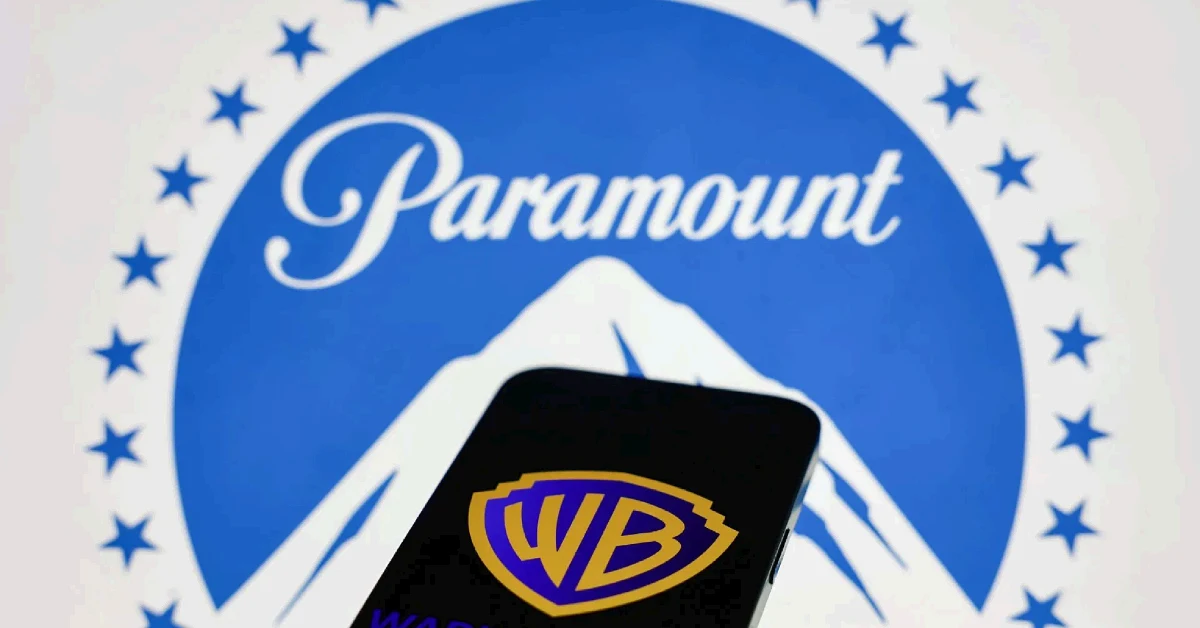

A months-long legal standoff that threatened to delay one of Hollywood’s biggest deals has come to an end. Paramount Skydance has settled an antitrust lawsuit with 12 US states, removing the final major hurdle for its $110 billion acquisition of Warner Bros. Discovery. The settlement was announced on Monday, September 21, 2026, by California Attorney General Rob Bonta.
What Happened With the Lawsuit
A coalition of 12 states, led by California, sued to block the merger in July 2026. The states argued that combining two of Hollywood’s last remaining legacy studios would “extinguish competition” and lead to fewer movies in theaters and higher cable prices for consumers.
The lawsuit was filed alongside separate challenges from the Writers Guild of America (WGA) and a group of consumers. A federal judge granted the states a temporary restraining order on July 20, 2026, pausing the deal while the case moved forward. A full antitrust trial was scheduled for March 2, 2027.
The states included California, Oregon, Arizona, Colorado, Connecticut, Massachusetts, Minnesota, Nevada, New Jersey, New Mexico, New York, and Washington. Paramount and Warner Bros. Discovery have denied that the merger violates any applicable law.
What Paramount Agreed to in the Settlement
The settlement includes a set of court-enforceable commitments that Paramount must follow once the merger closes. A proposed consent decree was filed in federal court on Monday, September 21, 2026.
The key terms include:
- Film output requirement: The merged company must release at least 30 films per year in US theaters during the first two years of a five-year commitment period, rising to at least 32 films annually in the following three years. At least 20 wide releases are required in the first two years, and 21 wide releases in years three, four, and five.
- Independent films: Paramount must release at least four independent films each year of the commitment period.
- Domestic production spending: The company must spend at least $300 million more each year on US film production compared to what the two companies spent in 2025, for a total increase of at least $1.5 billion over five years.
- Penalties for shortfalls: For each film below the annual target, Paramount must pay $30 million into designated funds, including health care and retirement trusts for the WGA, IATSE, DGA, IBT, and the Motion Pictures & Television Fund. If a shortfall is not fixed within six months, the company could be required to divest its entire interest in Miramax Studios.
- Studio lot protection: The Paramount studio lot in Los Angeles and the Warner Bros. lot in Burbank, California cannot be sold or closed during the five-year commitment period.
- Cable channel rules: Paramount must offer its basic cable channels to distributors separately. A major breach of these rules could trigger the sale of channels including BET, VH1, and Comedy Central.
- Workforce fund: A $47.5 million fund will be created over five years to support workers displaced by the merger.
- Independent film fund: An annual contribution of $5 million per year, totaling $25 million, will go toward purchasing independent films.
- Editorial independence board: A five-member News Editorial Independence Board will oversee CNN and CBS News. The board must be established within 180 days of the merger closing.
Bonta Says Settlement Is Not Support for Merger
California Attorney General Rob Bonta made it clear that the settlement does not mean the states approve of the merger.
“The settlement is not a vote of support for this merger,” Bonta said at a press conference. “I don’t think these two companies should merge.”
Bonta also said the agreement would turn what could have been a “falling off a cliff in domestic production into a huge increase,” leading to more movies, jobs, and economic activity. He estimated the deal would create “$300 million to $1.5 billion more, at minimum, for film and TV production” in the US.
David Ellison Welcomes the Deal
Paramount CEO David Ellison welcomed the settlement in a statement.
“Our shared aim was an outcome that best serves consumers, workers and – most importantly – the creative community so vital to the art of visual storytelling,” Ellison said. “We have complete clearance for this merger and look forward to putting these commitments into action.”
Ellison had previously threatened to move the studio’s operations out of California if a deal was not reached by October 1, 2026, when a $7 million per day “ticking fee” was set to begin accruing. The settlement allows Paramount to avoid that cost if the deal closes within roughly 10 days.
What Happens With the WGA Lawsuit
The Writers Guild of America filed its own lawsuit to block the merger in July 2026. The WGA settled its case alongside the states. The guild said it continues to believe the merger “will cause damage to writers and the industry at large” but said it could not afford to fight the case alone as a non-profit without government support.
Paramount agreed to pay $17.5 million into the WGA health fund, cover legal fees, and prohibit writer layoffs at CBS News Broadcast for five years.
States That Held Out and What Changed
Four states — Massachusetts, New York, Connecticut, and Minnesota — held out on a settlement until the weekend of September 19-20, 2026. The holdouts were particularly concerned about editorial oversight of CNN and CBS News. The final agreement included the creation of the News Editorial Independence Board to address those concerns.
Colorado and Washington did not join the editorial-board provisions. Colorado also did not join the studio-lot commitment.
Connecticut Attorney General William Tong said his state had sought full divestiture of CNN and CBS News and was “deeply disappointed” that the coalition could not obtain more.
You May Also Like:




View all articles about
Where the Merger Stands Now
The settlement still needs final approval from a federal judge before it takes effect. The proposed consent decree does not constitute an admission of wrongdoing by Paramount or Warner Bros. Discovery.
The merger has already received clearance from regulators in 68 jurisdictions, including the US Department of Justice in June 2026, the European Commission in July 2026, and the Federal Communications Commission (FCC) on September 17, 2026, which approved foreign investment with the condition that investors cannot hold voting stock.
The deal, first agreed upon in February 2026, will bring together Paramount+ and HBO Max, plus dozens of television networks including CBS, CNN, MTV, Nickelodeon, and Comedy Central. It also combines major film franchises like Harry Potter, DC superheroes, Game of Thrones, Top Gun, and The Godfather under one owner.
Also Read: Channing Tatum Denies Viral Burner Account Theory That He Trolled Ex Zoë Kravitz Online
Stay tuned to VvipTimes for more updates on the biggest entertainment industry deals and what they mean for viewers worldwide.

















Leave a Reply