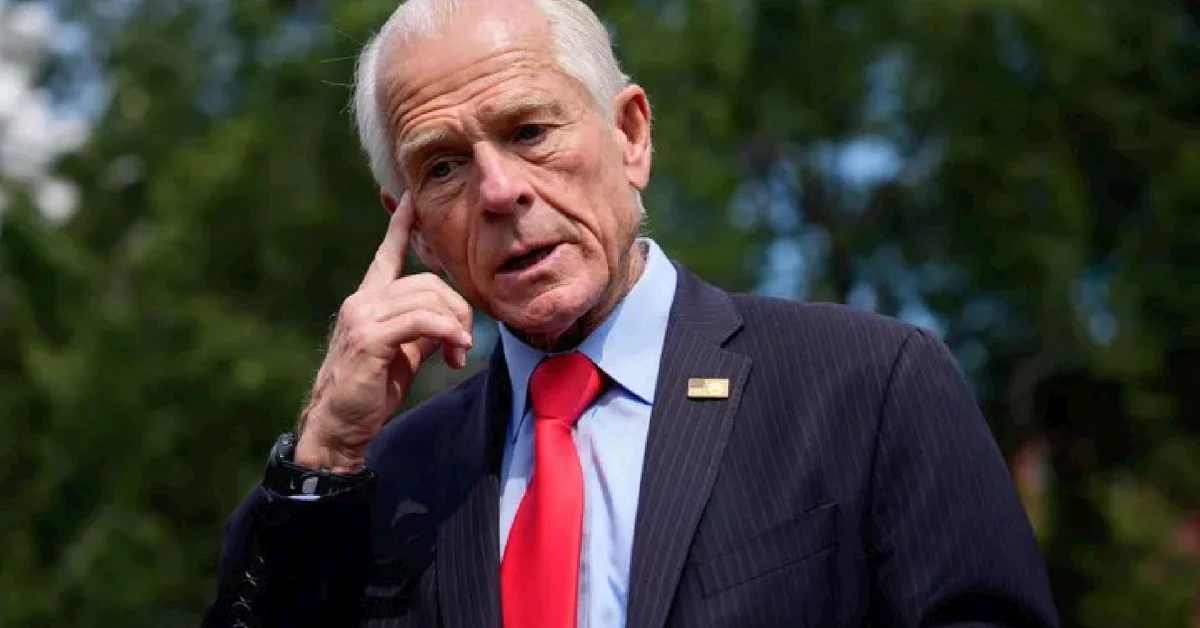

Peter Navarro turned a guest-hosting slot on Steve Bannon’s “War Room” podcast into a full-blown political performance on November 25, 2026, delivering a 16-minute monologue that mixed a “civil war” warning with references to Chile in 1973, a Soviet police chief, and a promise to prosecute Democrats. The episode has since become the most talked-about political podcast moment of the week, drawing attention not just for what Navarro said, but for how he said it—and where he said it.
The Monologue That Had Listeners Glued
Navarro, 77, is not a newcomer to the podcast circuit. He hosts his own short-form show, “The Navarro Express,” and has been a frequent voice on conservative media. Filling in for Bannon on Wednesday’s episode of “War Room,” however, he abandoned the quick-briefing format and went long, according to a review of the episode by The Daily Beast. The result was a sprawling, theatrical segment that one outlet described as a “bonkers 16-minute monologue” on the incoming Democratic investigations into the Trump administration.
The core of his argument arrived early. Democrats won both chambers of Congress in the November 3 midterms, and Navarro framed their planned oversight as an act of aggression rather than routine congressional duty.
“Congressional Democrats won the midterms on gas and grocery prices. Now they promise to spend the next two years waging lawfare against Trump officials. That’s a recipe for either a Republican president in 2029 or civil war.”
That line—“a Republican president in 2029 or civil war”—became the soundbite that traveled fastest across social media and news aggregators. Newsweek published the quote within hours, and HuffPost led its coverage with the “civil war” framing.
Who Navarro Was Talking To—and Why It Mattered
Navarro’s target was not an abstraction. He named California Representative Robert Garcia, the Democrat expected to chair the House Oversight Committee when the new Congress convenes in January. Garcia has already sent document preservation notices to several senior Trump administration figures, including White House Chief of Staff Stephen Miller, Vice President JD Vance, and Attorney General Todd Blanche.
Those notices are standard practice ahead of formal investigations, but Navarro treated them as evidence of a predetermined campaign. “None of these threats names a crime first,” he said, arguing that Democrats were working backward from a target rather than forward from evidence. He called the subpoena power “both a cudgel and a fishing expedition” meant to “bully, harass and terrorize” Republicans.
Garcia’s office has framed the oversight differently. In a November 18 statement, Garcia said the investigations would examine corporate corruption, misconduct within the Department of Homeland Security, and the administration’s handling of files related to Jeffrey Epstein. “Oversight Democrats are fighting to put an end to this administration’s self-dealing, misconduct and abuse,” Garcia said. “These investigations will lay the groundwork for legislation which helps all Americans. This is just the beginning.”
The ‘Lawfare’ Claim That Sparked a Back-and-Forth
Navarro’s monologue leaned heavily on his own legal history. He served four months in prison in 2024 after being convicted of contempt of Congress for refusing to comply with a subpoena from the House committee investigating the January 6, 2021, Capitol riot. He now describes himself as the “poster child” for what he calls the weaponization of the justice system.
“I hit the lawfare exacta. A massive $2 million legal bill and prison. A Democrat-controlled House held me in contempt. A Democrat attorney general prosecuted me, a Democrat-appointed judge denied me any defense. A jury drawn from a deep-blue D.C. pool found me guilty. And three Democrat-appointed appeals judges refused to free me pending appeal.”
That personal narrative formed the emotional backbone of the segment. It also served a strategic purpose: by casting himself as a victim, Navarro positioned any future Democratic subpoena as part of the same pattern. He warned that Republicans would respond in kind. “Make no mistake about it. We are at war with the Democrats now,” he said. “We will fight back … You come at us, we come at you. That’s how it’s going to go.”
What the Other Side Said
The White House did not wait for the podcast cycle to end before pushing back. White House counsel William Scharf sent Garcia a three-page letter reminding him of the constitutional limits of congressional investigations, which Scharf said the incoming Congress had “evinced a clear intent to transgress.” Scharf added that the administration was “monitoring the abusive and capricious threats” from Democratic legislators and would fight “tooth and nail” if the probes moved forward.
Garcia, for his part, has kept his public messaging short. After the midterms, he posted two words on social media: “Lawyer up.” Oregon Senator Ron Wyden posted a single word: “Subpoenas.” Those brief statements became part of Navarro’s monologue, which he used to argue that Democrats were not interested in facts but in political damage.
The Chile Reference That Raised Eyebrows
The most unusual moment in Navarro’s monologue came when he invoked Chile’s 1973 military coup. He compared the incoming Democratic majority to Salvador Allende’s government, which a divided Chilean legislature accused of breaking the constitutional order shortly before the military intervened. “Weeks later, the tanks rolled, to the relief of much of the country,” Navarro said, adding that Chile’s middle class largely “looked away, relieved, as tens of thousands of real and suspected leftists were tortured, murdered or disappeared over 17 years of military rule.”
He closed that passage with a direct address: “That is where it ends when one side decides the rules no longer bind it. Are you listening, Democrats?”
The comparison drew immediate criticism from media observers who noted that Navarro was describing a violent coup as a cautionary tale while warning of a “civil war” at home. The Daily Beast characterized the segment as “tinfoil hat” territory, while HuffPost described Navarro as “ranting” about the Democratic majority.
The Numbers Behind ‘War Room’s’ Reach
“War Room” is not a niche operation. The podcast, which Bannon launched in October 2019, produces four hours of programming six days a week from a studio in Washington, D.C. Audience estimates place its monthly listenership between 100,000 and 500,000, with one advertising platform estimating roughly 320,000 listeners. The show holds a 4.5-star rating from more than 16,000 reviews on Apple Podcasts and Spotify, and approximately 94% of its audience is based in the United States.
Navarro’s own podcast, “The Navarro Express,” takes a different approach. Episodes run under five minutes, delivering what the show describes as “fast, fierce, no-nonsense briefings” on trade and economic policy. The contrast between that format and his 16-minute “War Room” monologue is part of what made the episode stand out. A host accustomed to five-minute bursts used a guest-hosting slot to deliver something closer to a rally speech.
Why Political Podcasts Are the New Entertainment Battleground
The Navarro episode fits a broader pattern. Political podcasts have moved from the margins of media to the center of political storytelling, blending commentary, personal narrative, and confrontation into a format that rivals traditional cable news for attention. The Boston Globe described “War Room” as “closer to a daily command post” than a conventional political podcast, noting that it “functions as an operations center more than a podcast.”
That operational role is exactly what makes moments like Navarro’s monologue valuable to the show’s audience. The segment was not a news interview or a policy discussion. It was a performance of defiance, complete with a villain (Garcia), a personal grievance (Navarro’s prison sentence), and a historical warning (Chile). For listeners who already distrust Democratic oversight, the monologue offered validation. For critics, it offered a clear example of the rhetoric they warn is escalating.
The Prosecution Plan Navarro Laid Out
Navarro did not stop at rhetoric. He outlined a specific legal strategy for the Trump Justice Department, citing a conspiracy law passed during the Civil War, the District of Columbia’s blackmail statute, and the federal law against witness tampering. He argued that these laws could be used to prosecute Democratic lawmakers and their staff if committees leak protected material, coach witnesses, or destroy records. “The Trump DOJ can prosecute every such instance,” he said.
He also referenced the professional consequences that two lawyers tied to Trump’s 2020 election challenges—John Eastman and Jeff Clark—faced with their law licenses. “Democrats went after the law licenses of John Eastman and Jeff Clark,” Navarro said. “We’re coming after yours.”
That line, delivered near the end of the monologue, shifted the segment from a warning about investigations into a threat of retaliation. It is the kind of direct, personal language that performs well on short-form video clips and podcast highlight reels, and it is likely to be shared widely in the coming days.
A Podcast Moment With Real-World Weight
The White House has not distanced itself from Navarro’s remarks. White House spokesperson Lauren Bis said President Trump remained focused on his agenda, while criticizing Democrats over their planned investigations as politically motivated. The administration’s formal position, as stated by Scharf, is that it will fight congressional overreach through legal channels. Navarro’s position, as stated on “War Room,” is that the fight is already underway.
Garcia’s committee is scheduled to take shape in January. The document preservation notices have already gone out. The subpoenas Wyden promised have not yet been issued. The podcast episode, however, has already done what it was designed to do: it turned a procedural transition in Congress into a personal, high-stakes narrative that listeners can follow week to week.
You May Also Like



For an audience that treats political podcasts as part entertainment, part news source, Navarro’s 16-minute monologue delivered both. It provided a clear villain, a sympathetic protagonist, a historical analogy, and a closing threat. Whether it also delivered an accurate picture of what Democrats plan to do in January is a question that will be answered by the investigations themselves—not by the podcast that previewed them.
For more stories like this, visit VvipTimes.