


Nick Fuentes has a new theory about why people fight to get into the best law schools in the country. During a recent livestream, the far-right podcaster told a viewer with a high LSAT score that law school is not really about learning the law at all. It is, in his words, “just a license to steal” — a ticket into a world of rich and powerful people who can open doors that remain closed to everyone else. The comment is blunt, cynical, and designed to get a reaction. It also comes from a man who dropped out of college after his freshman year, a detail that makes his advice about elite education hard to ignore.
Trigger warning: This article contains quotes that include derogatory language.
The Comment That Started the Conversation
The moment happened when a viewer sent Fuentes a superchat message. The viewer said they had scored 171 on the LSAT, the standardized test used for law school admissions in the United States, Canada, and several other countries. Scores on the LSAT range from 120 to 180, so a 171 is well above average and puts a test-taker in a strong position for top-tier law schools.
The viewer asked Fuentes why he recommends that people go to law school. Fuentes first called the 171 score “very impressive.” Then he gave his answer.
“Because it’s just a license to steal, honestly.”
He did not stop there. Fuentes went on to joke about the score and then insulted anyone who scored below 170, calling them “a f**king fraud” and using a derogatory term for people with intellectual disabilities. He said he has “no respect” for people who score lower than 170 and called them “pseudo-intellectual”.
The core of his argument came next. Fuentes explained that elite law schools are valuable not because of the education they provide, but because of the people you meet there.
“Law school is a license to steal. It’s just, like, great connections. If you have a good LSAT, get into an elite law school, and then it’s like, everyone that will ever be rich and powerful is in your law school.”
He named Yale Law School and Harvard Law School as examples. In his view, walking into those schools means walking into a room full of future presidents, senators, and billionaires. “The sky’s the limit,” he said. “That’s kind of just, like, the barrier to entry to elite society”.
A College Dropout’s Take on Higher Education
The irony of Fuentes offering this advice is difficult to miss. Nick Fuentes enrolled at Boston University to study international relations and politics. He left after his freshman year in 2017, citing threats he received after attending the Unite the Right rally in Charlottesville, Virginia. He never completed a degree. He never applied to law school. He never took the LSAT.
That background does not automatically make his opinion wrong. People without formal education can still observe how institutions work and offer sharp criticism. But the contrast matters because Fuentes is not describing law school as an outsider looking in with curiosity. He is describing it as a system he claims to understand completely, while his own experience of higher education ended before it really began.
The viewer who asked the question had a 171 LSAT and was actively applying to law schools. That person is making a real decision about their future. Fuentes answered with a mix of praise for the score and contempt for almost everyone who scores lower. The advice was not practical. It was performative. Still, the performance landed on something that many people already believe: elite law schools are less about education and more about access.
The Real Pipeline to Power
Fuentes did not invent the idea that elite law schools function as gateways to power. Criticism of this pipeline has existed for decades. Harvard Law School and Yale Law School have produced a disproportionate number of Supreme Court justices, politicians, and corporate leaders. A 2025 report from the Times of India examined how Harvard Law School markets itself as a place for principled leaders who speak truth to power, while the actual career path for many graduates leads straight into corporate law firms where conformity is rewarded and dissent is quietly punished.
A 2026 article from Talking Points Memo made a similar point about elite lawyers and law professors. It argued that tight social ties, judicial clerkships, and a system of professional favors make it difficult for elite lawyers to act as honest brokers in discussions about court reform. The problem is not that law schools teach students to steal. The problem is that elite legal education creates a small, connected group of people who hold an enormous amount of influence over politics, business, and the courts.
Fuentes took that critique and stripped it down to a blunt phrase. “License to steal” is not an academic argument. It is a feeling. It is the feeling that the rules are written by the people who benefit from them. For anyone who has ever looked at the price of law school, the admissions process, and the salaries waiting on the other side, the phrase captures a frustration that is easy to understand even if the wording is deliberately inflammatory.
The Insult That Overshadowed the Point
Fuentes’ comment about LSAT scores below 170 drew attention away from his larger claim. Calling people who score in the 160s “frauds” and using a slur is not a critique of legal education. It is an insult aimed at people who are already working hard to get into a system that is difficult to enter. The LSAT is a demanding test, and a score below 170 is still a strong score for many law schools. Fuentes treated anything less than near-perfection as a personal failure.
This is consistent with his style. Fuentes has built an audience by being provocative and by attacking people he considers weak or fake. The law school comment followed the same pattern. He praised the 171 score, insulted everyone below it, and then wrapped the whole thing in a theory about elite power. The insult made the clip shareable. The theory made it seem deeper than it was.
Why the ‘License to Steal’ Phrase Sticks
The phrase “license to steal” has a long history outside of Fuentes. Singer Al Stewart used it in a 1997 song about a lawyer fresh out of law school who walks into a room with a briefcase “like a bomb” and offers advice with a license to steal. A 2013 book by Ray W. Rowney, Jr. used the same phrase to describe corruption in the American legal system, pointing to courts, the Senate, and prestigious law schools as institutions that define the law and train the people who practice it.
The phrase sticks because it names something that many people suspect but rarely say out loud: that the legal system can feel less like a search for justice and more like a game where the players with the best credentials get to make the rules. Fuentes did not need evidence to make that point. He needed a sentence that people would remember. He found one.
A Stream, Not a Policy Speech
The comment came during a livestream, not a formal speech or a written article. Fuentes was responding to a viewer in real time, and the tone was casual, combative, and full of jokes. He did not present data. He did not cite studies. He did not offer a plan for reforming law school admissions or legal education. He offered an opinion, and he dressed it up in language designed to get a rise out of people.
That context matters because it would be easy to treat the comment as a serious proposal. It is not. It is a stream moment. But stream moments travel. They get clipped, shared, and repeated until they become part of a larger conversation. The “license to steal” line is already doing that work. It is being discussed by law school applicants, by people who follow Fuentes, and by people who disagree with everything he stands for.
You May Also Like




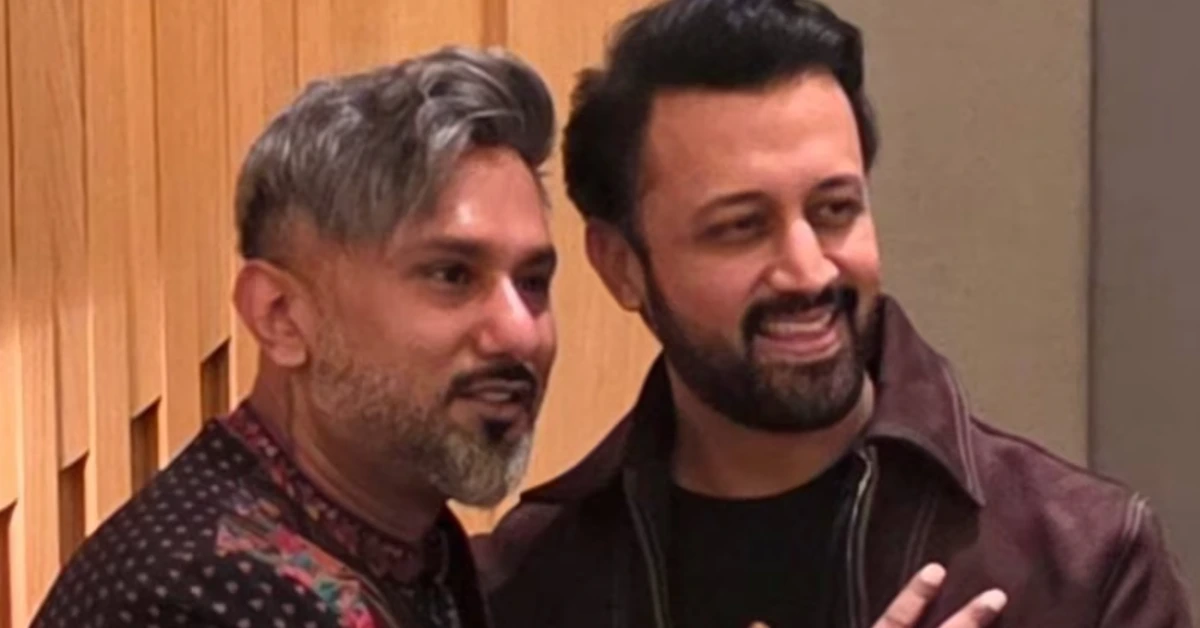
Fuentes also spoke at a conservative gathering in Irving, Texas, in November 2026, where he addressed the midterm election results and told the crowd that “100,000 groypers can do 100 million phone calls”. That speech was about politics and organization. The law school comment was about something more personal: who gets to enter the rooms where power is concentrated, and what they are allowed to do once they are inside.
For more entertainment news and sharp commentary on the stories shaping the conversation, keep reading VvipTimes.