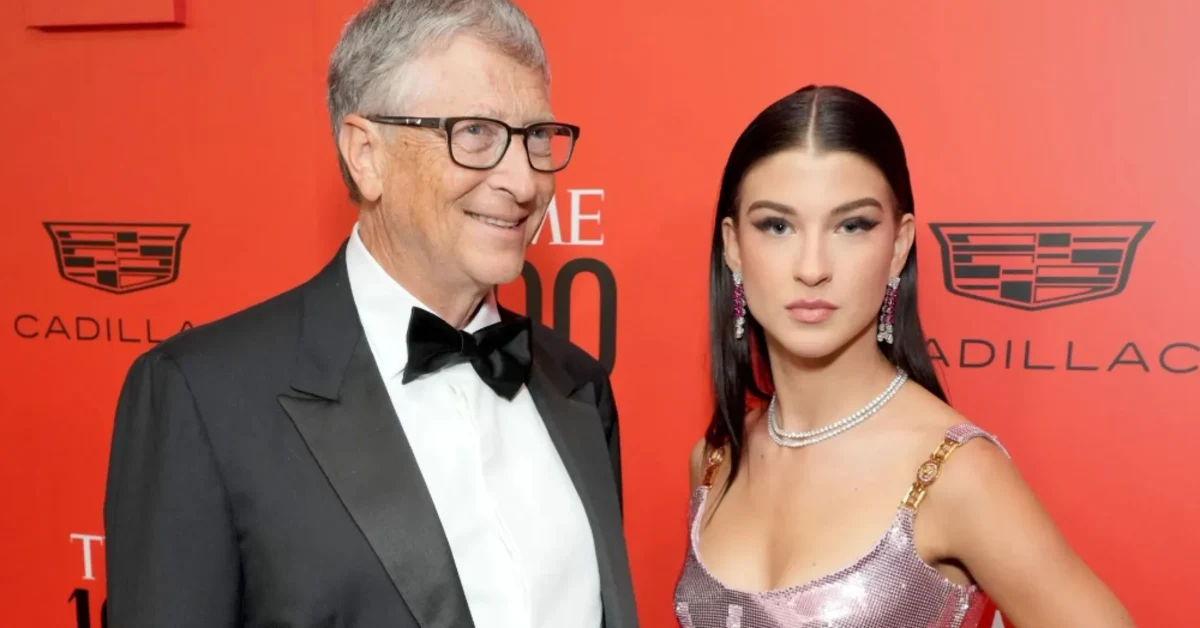

Bill Gates spent years describing artificial intelligence as a force that could improve medicine, education, and daily work. This month, the Microsoft co-founder used a Financial Times stage to describe something far darker: open-source AI tools, with their safety filters removed, can already help attackers find and exploit the software weaknesses that keep hospitals, power networks, and banks running. Journalist Mehdi Hasan watched the clip and posted a response that turned a technical warning into a question about accountability.
What Gates Said About Hospitals, Banks, and Power Grids
Gates made the comments during the Financial Times’ Future of AI Summit, in a conversation with the FT’s AI editor Madhumita Murgia. The interview was released as an episode of the FT’s Tech Tonic podcast.
His argument was specific. Hospitals, electricity networks, and banks all depend on large, connected software systems. AI models are getting very good at reading code and finding flaws. An attack team with the right tools could use those flaws to shut systems down or scramble them.
“Hospitals, the electric network, banks, they all depend on a very complex set of software, which the offensive capability of AI models to find flaws and therefore either shut down or scramble those digital systems . . . that capability exists,” Gates said.
The detail that matters most is where the danger comes from. Gates did not point to a secret laboratory or a hostile government. He pointed to open-source models that anyone can download, modify, and run without oversight.
“If you take what’s called the red team and attack team and assign them to go after those things, if they have the latest AI tools — particularly the open source where you take out all of the monitoring and safeguards — then you will be successful at those attacks,” he said.
He also gave a timeline for fixing the problem. Rebuilding vulnerable software across critical services would take about five years, even with serious effort and resources.
Mehdi Hasan’s Blunt Response
Hasan, the founder and editor-in-chief of Zeteo, shared a clip of the Gates interview on X on Wednesday, November 25. His post did not question the warning itself. It questioned the timing.
“What’s so frustrating is that why are all these people all saying this now, all at the end of 2026, as if it’s just suddenly dawned on them right now, and they didn’t realize or know this beforehand or could have warned – or better yet! – prevented this stuff from happening.”
The frustration lands because Gates is not an outsider shouting from the margins. He is one of the most influential technology figures alive, a man whose foundation spends billions on global health, and someone who spent years publicly cheering AI on.
Why Open-Source AI Changes the Risk
The phrase “open source” can sound harmless, even noble. In software, it usually means code that anyone can inspect, use, and improve. That openness has driven huge advances in computing.
AI models are different in one important way. A closed model from a company like OpenAI or Anthropic can be monitored. The company can filter what the model will answer, block certain requests, and watch for misuse. An open-weight model can be downloaded and changed. Its safety filters can be removed. Its monitoring can be switched off.
“You can take an open source model that can create biological weapons and disable any monitoring of any kind. And this exists today,” Gates told the New York Times in a separate interview. “There is no filtering of any kind.”
That is the gap Gates wants governments to close. He has argued that voluntary safety rules from AI companies mean little if a free, unrestricted version of a similar model is available to anyone. Governments, in his view, have to decide whether open-weight models with dangerous capabilities should be allowed at all, and whether new models should face mandatory safety checks before release.
Gates Was Not Always This Worried
The sharpness of Gates’ warning is notable because his public position has moved a long way. In March 2023, he wrote that AI was as fundamental as the microprocessor and the personal computer. A few months later, he said the best reason to believe AI risks could be managed was that humanity had managed major technological risks before.
The tone began to change in 2026. In his January annual letter, he warned that a non-government group could use open-source AI to design a biological weapon. By August, he was saying there was “a very high chance of a net negative outcome” if the world stayed on its current path. In September, he told NBC News that AI was powerful enough to drive events that could cause a billion deaths.
The November comments about hospitals, banks, and power grids are the same argument applied to everyday infrastructure. They describe a risk tied to tools that already exist, not to some distant future version of AI.
What the Warning Means for Everyday Services
For the average person, the word “cyberattack” can feel abstract. The Gates warning makes it concrete. A hospital attack is not a stolen password. It is a delayed surgery, a darkened emergency room, or a records system that will not load. A bank attack is not a strange email. It is a payment system that stops working. A power grid attack is not a tech story. It is a city losing electricity.
You May Also Like



Gates said the financial incentive for ransomware makes a rise in attacks likely. Crypto payments give criminals a way to collect money, and AI gives them a faster way to find the holes they need.
He also said the fix is slow. Replacing vulnerable software across critical infrastructure is a five-year project at best. That estimate is the closest thing to a deadline in the whole discussion, and it is not a comfortable one. The tools to find weaknesses are already here. The work to close those weaknesses has barely started.
Also Read: Mehdi Hasan Doubts Trump’s $3.8 Billion Israel Aid Claim: ‘I’ll Believe This When I See It’
For more updates on media, technology, and the people shaping the conversation, keep reading VvipTimes.