
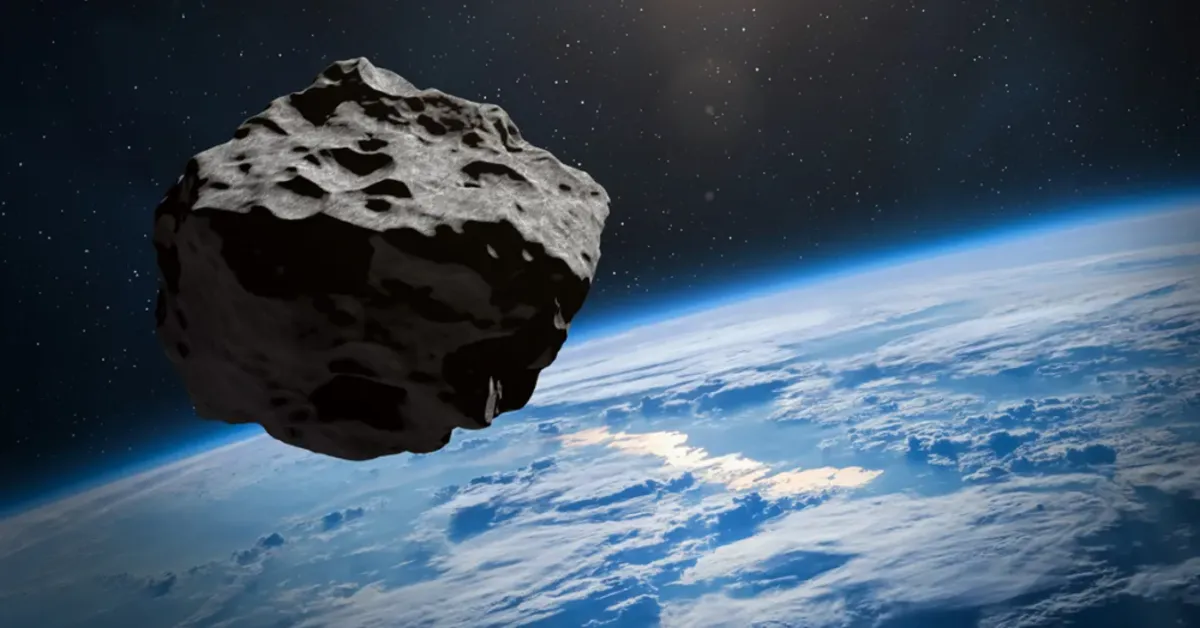

A tiny space object called 1998 KY26 is moving through our solar system in a way that gravity alone cannot explain. It is about 11 metres wide, spins once every 5.35 minutes, and reflects roughly 52% of the sunlight that hits it.
For years, scientists have debated whether this near-Earth object is a rocky asteroid, a “dark comet,” or something far stranger. Now, a Harvard astrophysicist has pushed a new idea into the spotlight: the object could be Phobos 1, an uncrewed Soviet spacecraft that vanished in 1988.
NASA’s top official says there is no reason to worry. The Harvard researcher says the mystery is far from settled.
What Is 1998 KY26?
Discovered on May 28, 1998 by astronomer Tom Gehrels at the University of Arizona’s Spacewatch project at Kitt Peak, 1998 KY26 was first logged as a small near-Earth asteroid. Early estimates put its size at around 30 metres across, with a rotation period of about 10.7 minutes.
Newer observations changed that picture. Research led by astronomer Toni Santana-Ros at the University of Alicante found the object is only about 11 metres across and spins roughly every 5.35 minutes. It reflects about 52% of incoming sunlight, which is unusually bright for a typical space rock.
The object is currently about 186 million miles (300 million kilometres) from Earth, according to multiple reports.
Something else makes 1998 KY26 stand out. Its path drifts slightly from the orbit that gravity alone would predict. Scientists call this “non-gravitational acceleration” — a tiny push from a force other than the Sun’s or Earth’s pull.
The Case for a “Dark Comet”
One leading explanation is that 1998 KY26 is a “dark comet” — an object that behaves like a comet but does not show the fuzzy cloud or tail normally seen when ice turns to gas. The escaping gas can give a comet a gentle push, changing its speed and direction.
A 2023 study led by Bryce T. Bolin examined 1998 KY26 using the Keck I and Gemini North telescopes in Hawaii. The research found the object was getting an unusual extra push but showed no evidence of the dust cloud normally linked to comets.
New research has weakened that idea. A peer-reviewed study published in the journal Icarus by Korbin Hansen and Masatoshi Hirabayashi at the Georgia Institute of Technology used detailed thermal modelling to test whether the object could hold enough buried ice to produce that kind of push.
The answer was no.
The study found that even the coldest regions of 1998 KY26 stay above minus 61 degrees Celsius — warm enough, by cosmic standards, that any buried water ice would escape too quickly to survive. The average temperature is around minus 53 degrees Fahrenheit.
The researchers concluded that calculated water-loss rates “preclude 1998 KY26 being a dark comet at present”.
“If something has ice, then it’s a comet,” said Darryl Z. Seligman, an assistant professor of physics and astronomy at Michigan State University and a former supporter of the dark comet idea. “But no ice meant no comet. The surface of KY26 is too warm.”
The Soviet Spacecraft Theory
The most talked-about explanation comes from Avi Loeb, a Harvard astrophysicist known for challenging conventional thinking about space objects. Along with researchers Adam Hibberd and Adam Crowl, Loeb has examined whether 1998 KY26 could actually be the lost Soviet probe Phobos 1.
Phobos 1 launched on July 7, 1988, on a mission to study Mars and its moon Phobos. The spacecraft stopped communicating on September 2, 1988, after controllers uploaded a faulty command that disabled its attitude thrusters. It has been missing ever since.
Loeb’s team built a simplified model of the Phobos 1 spacecraft and compared how it would reflect sunlight as it rotated with actual observations of 1998 KY26.
The model closely matched eight separate sets of observations, according to reports. The team also tested whether sunlight pushing against a cylinder or solar panels could explain the object’s movement. They found the spacecraft model matched hundreds of telescope and radar observations better than simple rock models.
“The similarity of the orbit of 1998 KY26 to the orbit of the lost Phobos 1 spacecraft suggests that the two objects are the same,” Loeb said in a statement.
Loeb has acknowledged the theory is not proven. The researchers described it as “strongly plausible but presently unproven” in their paper, which has not yet been peer-reviewed.
NASA and Harvard Trade Words
NASA Administrator Jared Isaacman addressed the speculation during an appearance on “Fox & Friends” on Thursday, November 12, 2026.
“First of all, nothing is about to hit us, to be very clear on this,” Isaacman said. “I’ve not seen any evidence to suggest this is a threat to our planet or anything other than an asteroid.”
Loeb pushed back in an interview with Fox News Digital the following day.
“Well, first of all, it’s not an asteroid because 1998 KY26 appears to have non-gravitational acceleration, meaning it’s being pushed by some force other than gravity, and asteroids are just rocks,” Loeb said.
Loeb has also stressed that the lack of a visible comet tail is a key problem for the dark comet explanation.
“It could be a comet shedding some gas backward that is pushing it forward, but in that case we should have seen the gas,” Loeb said. “We should have seen the dust because for comets we see a tail and the dust particles are being pushed away from the sun by the solar radiation.”
He added: “We don’t see a cometary tail. We don’t see any evidence for outgassing around this object. That’s the puzzle.”
A Japanese Mission Was Going to Settle It
For years, the plan to solve the mystery was straightforward. Japan’s Hayabusa2 spacecraft — which already visited the asteroid Ryugu and returned samples to Earth in December 2020 — was set to travel to 1998 KY26 and study it up close.
The arrival was scheduled for July 2031. It would have been the first mission to directly investigate an asteroid of such a small size. Images and measurements from the encounter could have shown whether the object is a natural rocky body or something artificial.
That plan has now changed.
JAXA announced on November 16, 2026, that it was abandoning the 1998 KY26 rendezvous because of an ion engine failure. One of the spacecraft’s four ion engines — the only one still usable for navigation — malfunctioned in mid-August 2026. The spacecraft no longer has enough thrust to perform the Earth gravity assists needed to reach the object by 2031.
Hayabusa2 will now target a different asteroid, 2015 BM510, with a flyby planned for 2028.
Loeb noted the timing of the announcement on social media. “JAXA has cancelled its planned intercept with the ‘dark comet’ 1998 KY26 just one day after I argued that the object may not be a comet at all, but something artificial,” he wrote on X. He also said he was disappointed by the decision.
You May Also Like





What Happens Next for 1998 KY26
Even without a dedicated mission, 1998 KY26 will stay on scientists’ radar.
The European Space Agency says the object will pass within about 32 million miles (51.5 million kilometres) of Earth in 2028. In 2039, it will come even closer — around 10 million miles (16 million kilometres) away.
NASA has said the object poses no known threat to Earth and is being routinely monitored.
Other research points to a more ordinary answer. A study published in the journal Astronomy & Astrophysics examined the light reflected by 1998 KY26 and found its makeup appears consistent with a type of rocky asteroid from the inner part of the asteroid belt. A separate study in Nature Communications in 2025 estimated its diameter at just 11 metres.
For now, the object remains a small, fast-spinning puzzle — too warm to be an icy comet, too oddly behaved to be a simple rock, and too far away to inspect up close.
“There’s not tons of data on very near-Earth objects,” Seligman said. “They’re super small and faint.”
Also Read: Pope Leo XIV’s Peru Scare: Pontiff Nearly Hits Front Seat After Sudden Brake, Days After Rosary Hits Face
For more updates on space missions, celebrity science debates, and the stories behind the headlines, keep reading VvipTimes.




































Leave a Reply