
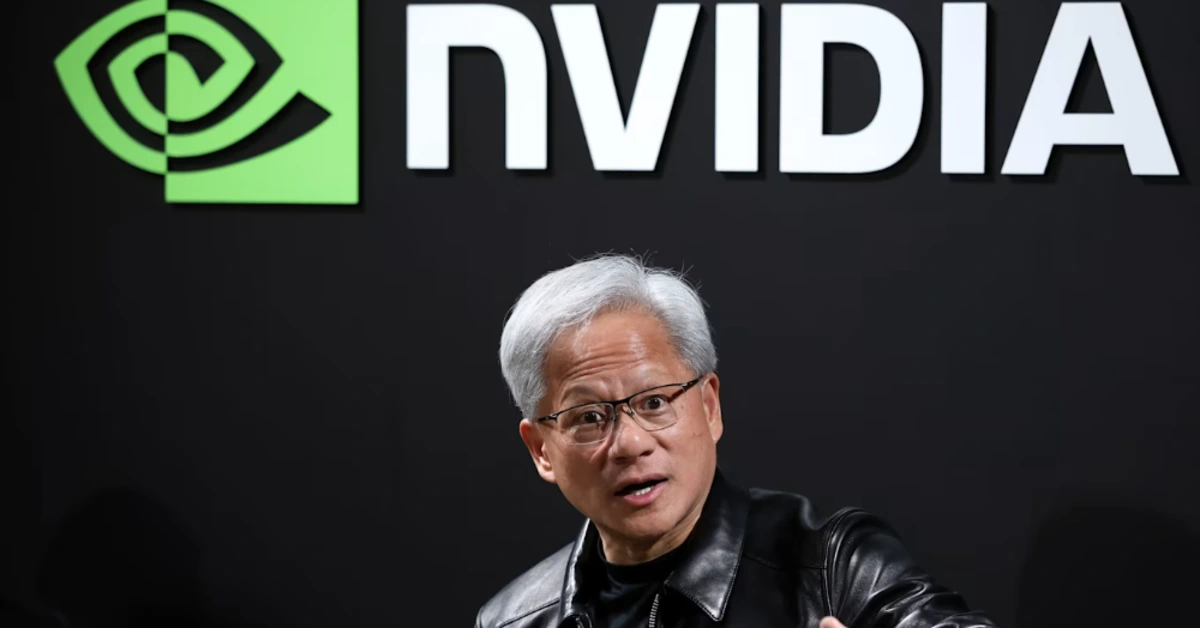

Nvidia’s board of directors has unanimously accepted the resignation of co-founder Jensen Huang and will not reinstate him as chief executive, board chair Harvey Jones said at the start of the company’s quarterly earnings call on Tuesday, November 17, 2026. The decision came hours after Huang publicly offered to return, setting up a clear answer from the board: the company is moving forward without him.
The board’s message to investors was direct. Nvidia’s product plans are unchanged, its customer demand remains strong, and the company’s financial results for the quarter ended October 25, 2026 beat Wall Street estimates by a wide margin.
Board Says No to a Comeback
Jones opened the earnings call by addressing the leadership question that has dominated Nvidia’s news cycle for days. “The Nvidia board unanimously accepted his resignation and does not intend to reinstate Jensen as CEO,” Jones said, according to multiple earnings call transcripts and wire reports.
The board chair added that Huang had resigned “after disclosure of personal behaviour inconsistent with the company’s code of conduct standards and cultural norms.” The original resignation statement on November 12 did not give a reason, making Jones’s comments the first official explanation from the board.
Hours earlier, Huang had posted a statement on X saying he would be “honoured” to return if the board decided it was in the company’s best interest. “Since my departure, I’ve seen an outpouring of calls from Nvidia’s employees, investors, business partners, and customers for me to return as CEO,” Huang wrote. “I did not live up to the standards expected of everyone at Nvidia, and I have made serious mistakes in my personal life.”
Jones also said the board has hired executive search firm Heidrick & Struggles to lead the search for a permanent chief executive. Colette Kress, Nvidia’s chief financial officer of 13 years, is serving as interim CEO.
What the Numbers Say
Nvidia’s third-quarter results, released after the market closed on November 17, gave investors a concrete look at the business without Huang at the helm.
Revenue more than doubled to $115.84 billion, up 103 per cent from $57 billion in the same quarter a year earlier. Net income rose to $65.3 billion, compared with $31.9 billion a year ago. Data centre revenue, the company’s largest business, climbed 110 per cent year-on-year to $107.6 billion.
Both revenue and earnings per share beat analyst expectations. Nvidia reported earnings of $2.68 per share, while analysts had projected $2.47, according to Bloomberg consensus cited by Yahoo Finance. Revenue also topped the $109.15 billion estimate.
The company guided fourth-quarter revenue to $130 billion, plus or minus 3 per cent, above analysts’ average estimate of $125.25 billion. Nvidia also raised its growth forecast for the next fiscal year to 75 per cent, up from the 70 per cent figure shared over the summer.
Kress, speaking on the call, kept her focus on the business. “Our momentum is real,” she said. “Nvidia is an exceptional technology leader, powered by the relentless innovation of our people.”
She also addressed the leadership change directly. “We’ve engaged with our customers, we’ve engaged with our suppliers, our partners, they’re all 100 per cent behind us,” Kress said. “Customers have expressed their support to the business outlook and helping us through that.”
The Man Who Built Nvidia
Huang co-founded Nvidia in 1993 and ran the company for 33 years. He built it from a niche graphics chip maker for video games into the world’s most valuable chip company and the central supplier for the artificial intelligence boom.
His departure followed reports of multiple extramarital affairs, including one with a Chinese businesswoman named Alice Huang, who is not related to him. She is a former executive of Megaspeed, a Singapore-based cloud computing firm under US criminal investigation for allegedly helping Chinese companies obtain advanced Nvidia chips in violation of export controls.
Nvidia’s board opened an independent investigation after reports that Huang had been the target of a foreign intelligence effort. President Donald Trump said on November 8 that the FBI was also investigating.
The scandal wiped hundreds of billions of dollars from Nvidia’s market value. The stock fell 16.7 per cent between Huang’s admission of an affair and the board’s investigation announcement, erasing $751 billion in market value. From its record high on October 6, the stock had dropped 35 per cent heading into the earnings report, removing roughly $2 trillion in value.
Shares rose about 5 per cent in after-hours trading following the earnings release and the board’s comments, a sign that investors found some reassurance in the numbers and the company’s guidance.
Why the Roadmap Matters
The phrase “roadmap is on track” is not a throwaway line. Nvidia’s chip roadmap—the schedule of new processors it plans to release over the next several years—is the backbone of its relationships with customers like OpenAI, Anthropic, Google, and major cloud providers.
Kress said Vera Rubin, Nvidia’s newest generation of AI processors, is “off to an explosive start.” The Vera Rubin architecture follows the Grace Blackwell generation and is central to Nvidia’s data centre business.
Four semiconductor supply chain executives told Taiwan’s Central News Agency that Nvidia’s published GPU roadmap—including the Blackwell, Rubin, and Feynman architectures—will not change because of Huang’s resignation. Product iteration speed will not slow, and orders through 2027 remain unchanged, they said.
One executive noted that Nvidia’s technology path is not decided by one person. Research and development teams and internal decision-making processes are the real drivers, the person said.
Kress also confirmed that Nvidia’s $150 billion share buyback authorization, announced in September, remains on track.
A New Security Committee and a December Hearing
Nvidia’s board created a National Security and Export Control Oversight Committee on Tuesday, its first major governance move since Huang’s departure. The committee includes independent directors, senior external advisers, and legal counsel, and is designed to strengthen the company’s engagement with the US government.
The move comes as Washington tightens rules on AI chip exports. New restrictions announced on November 17 require US licenses for data centres anywhere in the world that provide large amounts of computing power from advanced chips to companies headquartered in China, Macau, or countries under US arms embargoes. Licenses are also required for shipments to Singapore, Malaysia, Thailand, Indonesia, and Brazil.
Huang is scheduled to be questioned by US lawmakers on December 1 over national security concerns, according to the AFP report.
You May Also Like




A Public Campaign and a Divided Reaction
A campaign called Stand With Jensen gathered more than 198,000 signatures on an open letter seeking Huang’s reinstatement as of early Wednesday, including 10,024 people who identified themselves as current Nvidia employees, according to the campaign website. Tesla CEO Elon Musk is among the signatories.
Trump told reporters before departing on a trip to Asia that he “would not mind” Huang’s return. “I think he learned a big lesson,” Trump said.
Not everyone is convinced the transition will be smooth. Analyst Dan Ives of Yorkville had said before the resignation that “Jensen is not replaceable … there is no other person on the management team bench that can step in seamlessly as CEO.” After the earnings report, Ives offered a different view: “Demand did not leave with him.”
Thomas Monteiro, senior analyst at Investing.com, said the results showed that “an orderly CEO transition does not necessarily have to dilute the company’s value.” He added that Nvidia’s growth “can continue with or without Huang, provided the company makes the right call on leadership.”
Also Read: Elon Musk Restores Blue Tick for Jensen Huang After Ex-NVIDIA CEO Loses X Verification
For more updates on major leadership changes and earnings news, keep reading VvipTimes.

































Leave a Reply