

Yash believes the oldest story in Indian memory still has something new to say to the world. With Ramayana: Part One days away from its November 5, 2026 worldwide release, the actor opened up about why viewers will see pieces of themselves in both Lord Rama and Ravana — and why Indian cinema is ready for a bigger seat at the global table. Speaking alongside co-stars Ranbir Kapoor, Ravie Dubey, and Rakul Preet Singh in a conversation with Today Stars, Yash explained that the epic’s power lies in its many viewpoints, not just one.
What Yash Said About Rama and Ravana
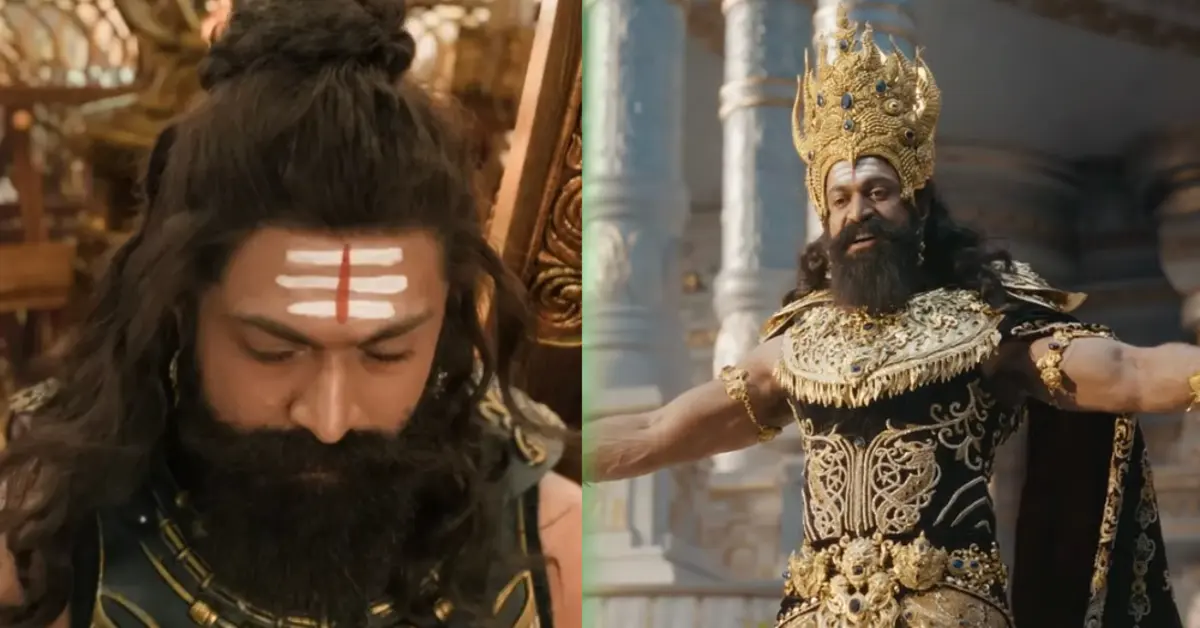
Yash plays the demon king Ravana in director Nitesh Tiwari’s two-part adaptation of the Hindu epic. He also serves as a co-producer through his banner Monster Mind Creations. In the interview, he pointed out that the Ramayana has been told and retold in different ways across India’s states and languages, and that this variety is what makes it so human.
“The interpretations of Ramayana is different in each state, different in each language. There are many interpretations and the beauty of our culture is that we see the story from everybody’s point of view. Through Ravana’s eyes also people have tried to depict the story. So, I feel the beauty of this story is very relatable.”
He went on to explain that Ravana is not just a villain in the text. The character is a learned scholar, a musician, and a warrior — someone who built great power but could not hold it with grace.
“There are two aspects of it, when we want to achieve something we learn and dedicate ourselves to some skill. When we get it we become very powerful. After that, to maintain it is also important. In this story, Ravana is a learned scholar, musician and a warrior. But there are elements where the decisions that are made have a domino effect. That is beautifully depicted.”
The core of his point landed simply: audiences can find a bit of themselves in both the hero and the antagonist. What makes Rama worth watching, in Yash’s view, is how he handles loss, pressure, and impossible choices.
“One can relate to Rama, one can relate to Ravana… but how Rama has handled situations in life, that is something. To show that, we need Ravana.”
Why Ravana Needed to Feel Human
Yash has spoken before about making Ravana feel less like a myth and more like a man. At CinemaCon in Las Vegas earlier this year, he told Reuters that he worked to strip away the purely larger-than-life reading of the role.
“I have tried to internalise the whole essence of Ravana and tried to make him as human as possible at times. It is important for people to relate to him, and since we have global ambitions, we need to make it familiar to a Western audience as well.”
That approach matters because the film is built for viewers who may have never heard the Ramayana before. Yash has repeatedly described the story as one about humanity — about how a person behaves when life hands them everything, then takes it away.
“It’s a story about humanity. It’s a story about how a person in any situation, has to conduct himself gracefully.”
He has also called Ravana a character shaped by choice, not by cartoonish evil. The decisions Ravana makes create a chain reaction, and the film shows that chain clearly.
The Global Ambition Behind Ramayana
The conversation about Rama and Ravana is tied directly to a larger goal: putting Indian storytelling on the same shelf as the biggest films in the world. Yash said the timing is right.
“This is the right time to show Indian films to the world platform, like Korean cinema is really making a mark, so India deserves it. So we had that vision and everyone came together.”
That vision is not just talk. Sony Pictures Entertainment is handling international distribution for the film outside India, a first for an Indian production at this scale. The plan includes a rollout across 50,000 screens in international markets, which is an unprecedented number for an Indian film.
The budget reflects that ambition as well. The two-part epic carries a combined budget of ₹4,000 crore (around $500 million) , which covers both films, post-production, and international promotional costs. Yash himself confirmed the figure and clarified that it applies to the full project, not just Part One.
The Road to November 5
Ramayana: Part One is scheduled to release worldwide on November 5, 2026, across all premium formats, including IMAX. Paid previews in India are planned for November 4. The film will open in Australia, New Zealand, Southeast Asia, the Middle East, Germany, the rest of Europe, and Latin America on the same date.
The cast includes Ranbir Kapoor as Lord Rama, Sai Pallavi as Sita, Yash as Ravana, Sunny Deol as Hanuman, Ravi Dubey as Lakshman, and Rakul Preet Singh as Surpanakha. Arun Govil, Lara Dutta, Sheeba Chaddha, and Adinath Kothare also appear in key roles.
The music is composed by A.R. Rahman and Hans Zimmer, a pairing that underlines the film’s aim to speak to audiences both inside and outside India.
Part Two is planned for release during Diwali 2027.
A Story That Belongs to Everyone
Yash has been clear that this film is not about one actor’s stardom. At the Bengaluru trailer launch, he pushed back against the online fights and regional comparisons that often follow big Indian releases.
“Every street in our country has a Rama temple. Rama belongs to all of us. Whether it is Karnataka, Tamil Nadu, Andhra Pradesh, or Kerala, when someone makes an honest attempt to take our culture to the world, everyone must stand together.”
He framed the film as an Indian story told on Indian terms, with the craft and scale to match its subject.
“This is not just about making a movie; it is about taking an Indian story to the world on our own terms.”
That sentiment runs through the film’s promotion, from the Los Angeles premiere at the Academy Museum of Motion Pictures to the San Diego Comic-Con panel where the Sony distribution deal was announced.
What Viewers Will See on Screen
The Rama-Ravana contrast is the engine of the film. Yash has described Rama as someone born into privilege who loses everything and regains his place through conduct, while Ravana starts with nothing, builds enormous power, and then cannot control it.
“When you fight a demon, you end up becoming a bigger one. Ravana is somebody who is actually very talented. He’s mastered many arts, but eventually, he ends up becoming a person who can’t control his power.”
That reading gives the film a psychological depth that goes beyond a simple good-versus-evil clash. It also explains why Yash keeps returning to the idea that the story belongs to everyone who has ever felt the pull of ambition or the weight of a difficult choice.
Related Stories




View all articles about
Ramayana: Part One arrives in theatres worldwide on November 5, 2026.
For more entertainment stories that break down the biggest releases and the people behind them, keep reading VvipTimes.



























Leave a Reply