

Mark Rodeghier has spent more than 50 years studying UFO reports. As president and scientific director of the J. Allen Hynek Center for UFO Studies (CUFOS), he has interviewed military witnesses, reviewed government records, and led field investigations. On April 9, 2025, he sat down with journalist Ross Coulthart on NewsNation’s Reality Check. The question was direct: did the U.S. Air Force obstruct investigations into unidentified anomalous phenomena (UAPs)? Rodeghier’s answer stretched back to the early years of the Cold War. A recent write-up of that interview by Soap Central, published on November 1, 2026, brought his explanation back into public view.
Who Is Mark Rodeghier?
Mark Rodeghier has been president and scientific director of CUFOS since 1986. He joined the organization in 1974, earned a bachelor’s degree in astrophysics from Indiana University in 1975, and later completed master’s and doctoral degrees in sociology at the University of Illinois at Chicago. CUFOS itself was founded in 1973 by astronomer J. Allen Hynek, who had served as the official astronomical consultant to the Air Force’s Project Blue Book. Rodeghier led the CUFOS investigation of the Roswell case and has written extensively on vehicle interference reports and witness testimony.
That background matters because Rodeghier is not a casual commentator. He has worked inside the UFO research community for five decades, and his organization was built by a man who once advised the Air Force on the very program at the center of the obstruction claim.
The Cold War Roots of UFO Secrecy
Rodeghier traces the Air Force’s alleged behavior to the Robertson Panel, a CIA-sponsored scientific advisory group that met in Washington from January 14 to January 18, 1953. The panel reviewed Air Force UFO case histories and concluded that most sightings could be explained. Its controversial recommendation was that the Air Force and Project Blue Book should spend less time analyzing reports and more time publicly debunking them.
In the Reality Check interview, Rodeghier connected that moment to a wider culture of secrecy across defense, intelligence, and the CIA:
“I suppose it goes back to the Cold War, and this goes up to the Robertson Panel, and, the way in general, the defense, military, and intelligence agencies, and the CIA, have treated not just the UFO subjects, but things like what MK-ULTRA and so forth.”
He argued that officials were not mainly worried about extraterrestrial life. They were worried about public trust. If people learned that important information had been withheld, confidence in official statements could suffer.
Project Blue Book ‘Became a Propaganda Campaign’
Project Blue Book is often described as the Air Force’s official UFO investigation program. Rodeghier’s view is blunter. He said that after 1953, the project largely functioned as a public relations effort rather than a scientific inquiry.
“The Blue Book was essentially a propaganda campaign after 1953. So, disinformation took place.”
He also said another motive for dismissing UFO reports was to protect classified aircraft programs. If the public could be encouraged to treat strange lights and objects as ordinary phenomena, attention would shift away from secret military aviation projects. This argument echoes long-standing historical analysis of the Cold War, when secret reconnaissance aircraft and intelligence programs operated under heavy cover.
What the Air Force Should Have Done
Rodeghier did not argue that every UFO report was a sign of something extraordinary. His point was about responsibility. The Air Force’s job was to protect American airspace. Any unidentified object entering that airspace, whether a Russian bomber or a flying saucer, should have been treated as a serious matter.
“I think one of the main excuses used for attempts by the US Air Force after the Robertson Commission was essentially to reduce the significance of the UFO problem.”
He said officials feared that a flood of UFO reports could overwhelm reporting systems and make it harder to spot genuine incursions by foreign adversaries. In his view, that fear led to a policy of downplaying the phenomenon instead of investigating it properly.
Roswell, Bill Rickett, and the Coyne Helicopter Case
Two cases came up in the interview as examples of why the obstruction claim persists.
The first was Roswell. In the 1980s, Rodeghier took part in a CUFOS mission to Roswell, New Mexico, and interviewed military personnel who had been near the site of the famous 1947 incident. One witness, Bill Rickett, a former counterintelligence agent, said he saw metallic debris that could not be bent or broken. According to Rodeghier, Rickett also said a superior told him to lie about where he had spent the day. Rodeghier has said he does not believe non-human bodies were recovered at Roswell, but he does believe the debris involved materials that still defy ordinary explanation.
The second case was the Coyne Helicopter Case of October 18, 1973. An Army Reserve helicopter crew was flying near Mansfield, Ohio, when a crew member spotted a red, elongated object. The helicopter reportedly climbed hundreds of feet without the pilots touching the controls, and the aircraft’s compass kept spinning after landing. Multiple witnesses on the ground corroborated the sighting. Rodeghier called it an extraordinary case because it involved both visual observation and physical effects.
The Government Shift Since 2017
Rodeghier acknowledged that the official stance has changed since 2017, when the U.S. government began publicly acknowledging UAPs as a national security and flight safety concern. The Office of the Director of National Intelligence and the All-domain Anomaly Resolution Office (AARO) were set up to handle the issue more seriously.
He still prefers a civilian-led investigation. In his view, military structures carry too much of the old secrecy culture to earn full public trust on their own.
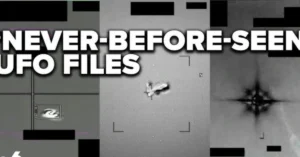
Congress has also stayed active. On September 9, 2025, the House Task Force on the Declassification of Federal Secrets held a hearing titled “Restoring Public Trust Through UAP Transparency and Whistleblower Protection.” Whistleblowers told lawmakers that AARO holds additional video records of potential UAP sightings that have not been released publicly. Representative Anna Paulina Luna has continued to press the Pentagon for those files, and in 2026 the Defense Department began releasing new batches of UAP-related documents under congressional pressure.
You May Also Like




The Soap Central article that recirculated Rodeghier’s quote on November 1, 2026, focused on the same core claim: the Air Force’s resistance to serious UAP investigations did not begin in recent years. It started with a Cold War decision to manage public perception, and Rodeghier says its effects are still visible in how the UAP file is handled today.
Also Read: UFO Researcher Kelly Chase Says She Was Drugged at 2023 Sol Conference, Files Police Report
For more fact-checked entertainment and culture stories that cut through the noise, keep VvipTimes bookmarked.






























Leave a Reply