
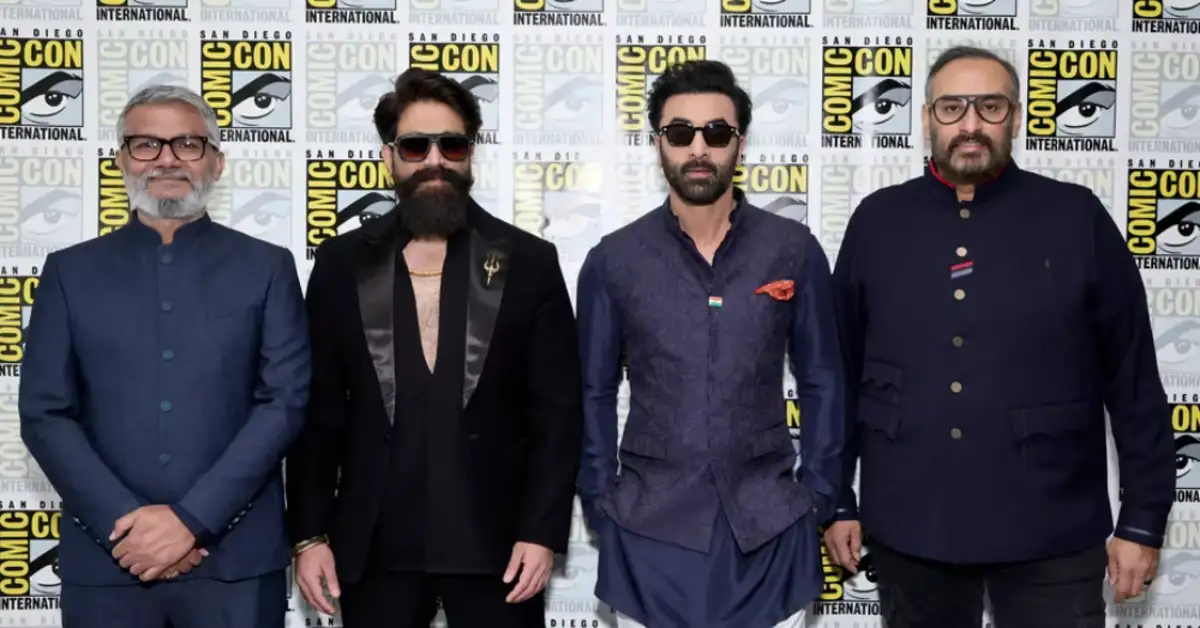

Ramayana: Part One arrived in cinemas on November 5, 2026, and producer Namit Malhotra is feeling the weight of a once-in-a-lifetime moment. In a new interview with PTI, Malhotra compared the experience of bringing the Indian epic to a worldwide audience to a cricket legend getting the biggest chance of his career on day one. The film is now playing on an estimated 70,000 screens worldwide, a release footprint more than double that of any previous Indian film. Here is a complete breakdown of the cast, the characters, the story of Part One, and the backstories that drive the epic.
The ‘Sachin Tendulkar’ Feeling Behind Ramayana’s Global Push
Malhotra did not hold back his emotions while speaking about the scale of the release. “The biggest thing I feel right now is gratitude because, to me, the fact that we have a film industry for over 100 years, and I get to have this golden opportunity to produce Ramayana and present it to the world like never before, is unbelievable,” he told PTI. He then drew the comparison that has been widely shared since.
“There are generations of filmmakers who have come before me who are brilliant in what they’ve done in India. But a Ramayana like this has never been made by any Indian filmmaker. And I get to be that person today. It’s like Sachin Tendulkar getting picked to play in the World Cup on his debut.”
The film had its world premiere at the David Geffen Theatre at the Academy Museum of Motion Pictures in Los Angeles, a venue known for screening Oscar-nominated films. Malhotra also explained the intent behind the global push: to show Western audiences that the Ramayana predates many of the epics they already know.
“Just imagine I’m standing here and saying, ‘You guys know The Odyssey, Lord of the Rings, Harry Potter, and Star Wars, but do you know that Ramayana came before all of these great epics? And it’s not trying to copy or borrow from you. In fact, it’s an original story.’”
The Film That Arrived Today: What You Need to Know
Ramayana: Part One, subtitled Rise of a Legend, is directed by Nitesh Tiwari and produced by Prime Focus Studios in collaboration with DNEG and Monster Mind Creations. The two-part project carries an estimated budget of Rs 4,000 crore, making it the most expensive Indian film ever produced. The first part runs 3 hours and 15 minutes and was released in Hindi, Tamil, Telugu, Kannada, and Malayalam across India, with Sony Pictures handling global distribution outside India and Dharma Productions distributing the Hindi version domestically. The film is available in standard and IMAX formats.
The Cast: Who Plays Who in Ramayana Part One
The film brings together a large ensemble, and each major character carries a clear role in the story.
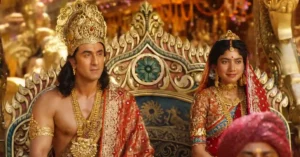
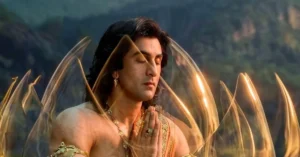
- Ranbir Kapoor plays Lord Rama, the seventh avatar of Vishnu, raised as a prince in Ayodhya. His journey from a dutiful son to a warrior in exile forms the spine of the film.
- Sai Pallavi plays Sita, the princess of Mithila and Rama’s wife. This version shows her as a devoted partner and a woman with her own strength, including action sequences in the forest.
- Yash plays Ravana, the ten-headed king of Lanka. The film presents him as a scholar, a musician, a Shiva devotee, and a ruler whose pride sets off the central conflict.
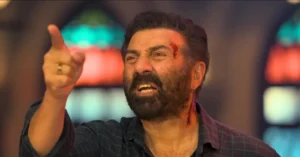
- Sunny Deol plays Lord Hanuman. His full entry is saved for the film’s post-credit scene, where he appears briefly to set up his larger role in Part Two.
- Ravi Dubey plays Lakshmana, Rama’s younger brother who follows him into exile without hesitation.
- Arun Govil, who played Rama in the 1987 television series Ramayan, takes on the role of King Dasharatha in this film.
- Lara Dutta plays Kaikeyi, the stepmother whose demand sends Rama into exile, and Sheeba Chaddha plays Manthara, the maid who pushes her toward that decision.
- Rakul Preet Singh plays Shurpanakha, Ravana’s sister whose encounter with Rama and Lakshmana becomes the trigger for Sita’s abduction.
- Anupam Kher plays Jatayu, the vulture who tries to stop Ravana and gives Rama the direction of Sita’s captivity before dying.
- Kajal Aggarwal plays Mandodari, Ravana’s wife, and Kunal Kapoor plays Lord Indra, the king of the gods who is defeated by Ravana’s forces.
- Amitabh Bachchan provides the voice of the narrator.
The Story of Part One: From Ayodhya to the Forest
The film follows the broad arc of Valmiki’s Ramayana but takes time to build the backstories of both Rama and Ravana.
The story opens with Ravana’s rise. A man once devoted to music and learning is pushed by his mother’s account of his community’s struggles. He performs intense tapasya for thousands of years, pleases Lord Brahma, and receives powerful boons. He then takes control of Lanka from his half-brother Kubera, turns it into the golden city, and becomes the ruler of the three worlds.
The focus then moves to Ayodhya, where Rama is born to King Dasharatha and Queen Kaushalya. Rama grows up trained in archery and warfare, but the film highlights his gentleness, his respect for people, and his commitment to dharma—doing what is right even when it costs him. He travels to Mithila, where he wins Sita at her swayamvar by lifting and stringing the Shiva Dhanush, a bow that no other suitor can even move. He ends up breaking the bow, which sets up a later meeting with Parashurama.
On the eve of Rama’s coronation, his stepmother Kaikeyi—prompted by Manthara—reminds King Dasharatha of two boons he once promised her. She asks for her son Bharata to be crowned instead of Rama, and for Rama to be sent into exile for 14 years. Rama accepts without argument. Sita and Lakshmana refuse to let him go alone and accompany him into the forest.
In the forest, the story moves toward its turning point. Shurpanakha becomes drawn to Rama and tries to approach him. Lakshmana discovers her deception and cuts off her nose. Shurpanakha goes to Ravana and provokes him into seeking revenge. Ravana, with help from Maricha, plans Sita’s abduction. He takes Sita to Lanka. Jatayu tries to stop him and is mortally wounded. Before dying, Jatayu tells Rama that Ravana is responsible and points him in the direction he took. The first part ends with Rama vowing to face Ravana, setting the stage for the war in Part Two.
Ravana’s Backstory: The Making of a Complex King
Nitesh Tiwari has been clear that Yash’s Ravana is not written as a simple villain. In interviews ahead of the release, the director described Ravana as a character with many sides.
“He had so many aspects to his life. He was a great warrior, an accomplished musician, a scholar, a benevolent king, a great Shiva devotee. So there was so much more to him than just being one black character.”
The film shows Ravana’s origins as someone who felt the pain of his community and used his devotion to gain power. He defeats the Devas, takes Lanka from Kubera, and rules with immense pride. His ego and his need for vengeance after Shurpanakha’s humiliation push him toward the decision to abduct Sita. The film gives space to his skills and his devotion, which makes his later actions feel like the result of choice rather than pure evil.
Rama’s Journey: Duty, Exile, and Love
Ranbir Kapoor’s Rama is written as a prince who is loved by the people of Ayodhya, not only for his strength but for his calm and his care for others. He accepts exile without protest because he believes in keeping his father’s word. Sita and Lakshmana go with him, and the film uses their time in the forest to build the relationships that carry the emotional weight of the story.
The film also includes Rama’s early encounters with demons, including his time protecting the sacrifices of Sage Vishwamitra. He and Lakshmana receive divine mantras, face the demoness Tataka, and deal with her sons Subahu and Maricha. These episodes show Rama’s growth as a warrior before the larger conflict with Ravana begins.
Sita’s Role: More Than a Quiet Presence
Sai Pallavi’s Sita is not limited to waiting in the background. The director confirmed that Sita has action sequences of her own, and reviews note that she is portrayed as a woman who can hold her own in dangerous situations while keeping her grace. Her choice to follow Rama into exile, her life in the forest, and her abduction form the emotional centre of Part One. The film shows her strength through her decisions, not just through what happens to her.
The Team Behind the Spectacle
The scale of Ramayana: Part One comes from a team with global experience. The music is composed by Hans Zimmer and A.R. Rahman, with Zimmer reportedly agreeing to join the project before even seeing a full pitch deck. The visual effects are handled by DNEG, the studio behind multiple Oscar-winning films. Action choreography is by Terry Notary and Guy Norris, and production design is by Ramsey Avery and Ravi Bansal. The film was made for IMAX, and the reviews consistently point to the size of the world-building as one of its biggest strengths.
How the World Is Responding
Reviews have been mixed but largely positive on the film’s scale and performances. The Guardian’s Peter Bradshaw called it “thoroughly engaging, rousing and spectacular”. Filmfare gave it 4 out of 5 and praised Ranbir Kapoor, Sai Pallavi, and Yash for carrying the emotional weight. DNA India called it the “best Indian film of 2026” and highlighted the expanded backstories of Rama and Ravana. Some international outlets, including IGN and Next Best Picture, were less convinced, pointing to uneven visual effects and pacing. Audiences in India turned out in large numbers, with advance bookings crossing Rs 75 crore worldwide before release.
Where to Watch Ramayana Part One
Ramayana: Part One is now playing in cinemas worldwide. In India, it is available in Hindi, Tamil, Telugu, Kannada, and Malayalam, including IMAX and other premium formats. Sony Pictures is handling distribution in international markets, including the USA, UK, Canada, and Australia. The film is not available on any streaming platform at the time of release.
What the Post-Credit Scene Shows
The film ends with Sita’s abduction and Rama’s resolve to face Ravana, but a post-credit scene adds one more piece. The sequence shows the Vanar Sena and then a large entrance for Lord Hanuman, with the Hanuman Chalisa playing in the background. Sunny Deol’s voice is heard chanting “Jai Shree Ram,” but his full look is not revealed before the screen cuts to black. The scene makes it clear that Hanuman’s role will be central to Part Two.
The second part of the epic is scheduled for release during Diwali 2028, with the team confirming the date after initially planning a 2027 window. For more entertainment news and detailed breakdowns, keep reading VvipTimes.


















Leave a Reply