
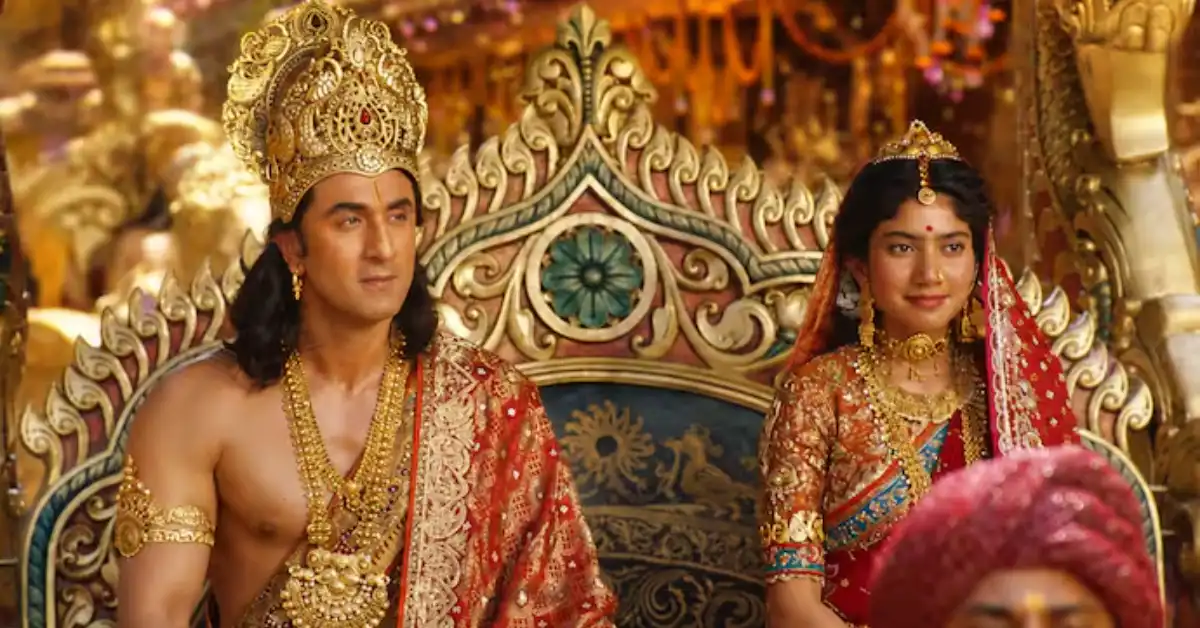

Karan Johar has watched Ramayana: Part 1 and shared a detailed review on Instagram. The filmmaker, who is also distributing the film in the Hindi market, praised Ranbir Kapoor for playing Lord Rama with quiet depth. Johar’s note arrived on the film’s release day, November 5, 2026, as the epic opened in theatres worldwide.
The review matters because Johar is not just a filmmaker but a stakeholder in the film’s Hindi release. His words carry weight for audiences deciding whether to book tickets. More importantly, his specific praise for Kapoor’s “meditative” performance points to how this adaptation treats the character: restrained, eye-driven, and free of dramatic flourishes.
Here is everything Johar said, what the film covers, and who plays whom in Nitesh Tiwari’s two-part adaptation of the Ramayana.
Trigger Warning: This article references themes of abduction and conflict from the Ramayana epic. Reader discretion is advised.
What Karan Johar Actually Wrote About the Film
Johar began his note by calling the Ramayana a story “immersed in our cultural veins” and “an embodiment of Values, traditions and pure humanity”. He wrote that being “BLOWN away” by a cinematic adaptation of a story people have “read it, seen it, told it” is “no short of a Miracle”.
He directed special thanks to producer Namit Malhotra, saying Malhotra inspired him “to be brave, to be audacious and to stand for the most essential ingredient of a creator… CONVICTION”. For director Nitesh Tiwari, Johar wrote that he has “so much love and respect for your immaculate craft and solid confidence to tell a simple story so simply and yet soo solidly”.
The line that has travelled furthest is about Kapoor. Johar wrote:
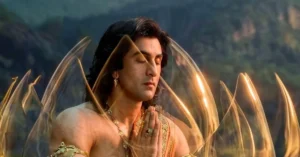
“Ranbir… to be able to make a country believe in you as a divine force of goodness and humanity without any bells and whistles … without frills and fancies takes immeasurable talent and you my dearest friend are a gifted artist and beyond….you are deeply MEDITATIVE in your portrayal or Shri Ram… your eyes do all the heavy lifting… It’s your most challenging role ever, and you have mega succeeded with divine PERFECTION”
Johar also praised Sai Pallavi as Sita, calling her “divine, sublime and so so beautifully convincing” and saying her performance made him “believe in the power of your sacrifice and unconditional love”. For Yash as Ravana, Johar wrote that the actor is “so so MESMERISING and POWERFUL” and that “each and every time you appear on screen, you command attention and applause”. He singled out the sequence showing Ravana and his “multiple inner voices” as “outstanding”.
Ravie Dubey, who plays Lakshman, earned praise for a portrayal Johar called “so BRILLIANT” and “heartening”. Johar closed by calling himself “an inspired filmmaker and a proud Indian cinegoer” and urged families to watch the film “as soon as you can”.
The Release, the Screens, and the Money Already on the Table
Ramayana: Part 1 released in theatres on November 5, 2026, across Hindi, Tamil, Telugu, Kannada, and Malayalam. The film is playing in IMAX and premium formats, with Sony Pictures handling distribution outside India and Dharma Productions distributing the Hindi version.
Advance bookings told a strong story before opening day. The film sold over 27.69 lakh tickets across 87,881 shows in 907 cities, collecting ₹104.58 crore gross in India with block seats included. The Hindi version led with ₹85.37 crore, followed by Telugu at ₹8.57 crore and Kannada at ₹7.86 crore. In overseas markets, paid previews generated more than USD 1.20 million, with opening-weekend advance sales in the US nearing USD 3 million.
The film is mounted on a reported budget of ₹4,000 crore, making it one of the most expensive Indian productions ever assembled. Trade expectations before release pointed to an ₹80 crore net opening in India and a global start of ₹160 crore.
The Cast: Who Plays Whom in Nitesh Tiwari’s Ramayana
The ensemble stretches well beyond the four leads. Ranbir Kapoor plays Lord Rama, Sai Pallavi plays Sita, Yash plays Ravana, Sunny Deol plays Hanuman, and Ravie Dubey plays Lakshman. Arun Govil, who famously played Rama in the 1987 television Ramayan, appears as King Dasharatha.
The wider cast includes Anupam Kher, Lara Dutta, Kajal Aggarwal, Rakul Preet Singh, Vivek Oberoi, Kunal Kapoor, and Sheeba Chadha in key roles. Music comes from Hans Zimmer and A.R. Rahman, with visual effects handled by DNEG, the Oscar-winning studio behind the film’s look.
Production is led by Namit Malhotra’s Prime Focus Studios in collaboration with DNEG and Yash’s Monster Mind Creations. The two-part structure was planned from the start: Part 1 arrived on November 5, 2026, and Part 2 is scheduled for Diwali 2027.
What Ramayana: Part 1 Covers in Its Story
The film follows two parallel journeys: the rise of Prince Rama of Ayodhya and the rise of Ravana, the emperor of Lanka. The narrative begins with Ravana’s backstory, showing his devotion to Lord Shiva, the boon he earns from Brahma after intense penance, and the near-invincibility that follows.
Rama’s arc moves from a prince trained under Sage Vishvamitra to a warrior who defeats the demoness Tataka and wins Sita’s hand by lifting Lord Shiva’s sacred bow. The turning point arrives when Queen Kaikeyi, influenced by Manthara, demands Rama’s fourteen-year exile and the coronation of her son Bharata. Rama accepts his father’s promise and leaves Ayodhya with Sita and Lakshman.
In the forest, Lakshman disfigures Ravana’s sister Shurpanakha after she attempts to harm Sita. Ravana retaliates by plotting with Maricha, who disguises himself as a golden deer to pull Rama away from their hut. With Lakshman also drawn away, Ravana takes Sita to Lanka. The demigod Jatayu tries to stop him and is gravely wounded. Before dying, Jatayu tells Rama which direction Ravana took. Rama performs Jatayu’s final rites and vows to rescue Sita and defeat Ravana, setting the stage for the journey toward Lanka.
The Characters and the Backstories That Drive Them
Rama is the seventh avatar of Vishnu, born to King Dasharatha of Ayodhya to restore balance when Ravana’s power threatens the cosmic order. In this adaptation, Kapoor plays him as a figure of duty rather than flash. Johar’s “meditative” description fits a performance built on stillness and eye contact rather than grand gestures.
Sita is Rama’s wife, born of the earth and raised as the daughter of King Janaka. Her abduction by Ravana sets the central conflict in motion. Pallavi’s portrayal, as Johar described it, leans on “the agency of the portrayal” and the “power of your sacrifice and unconditional love”.
Ravana is the emperor of Lanka, a scholar, devotee of Shiva, and the film’s antagonist. He earns a boon from Brahma after severe penance, which makes him nearly impossible to defeat. Yash plays him with “arrogance, ambition and simmering anger,” according to the Telegraph India review, and the film spends significant time on his rise before shifting to Rama.
Lakshman is Rama’s younger brother, played by Ravie Dubey. He follows Rama into exile and is defined by loyalty. Johar called the depiction of “a loyal and loving brother” both “heartening” and “BRILLIANT”.
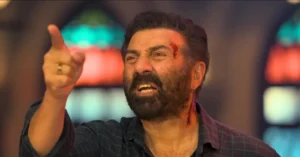
Hanuman is the monkey god and Rama’s most devoted follower, played by Sunny Deol. In the epic, Hanuman’s strength and devotion become decisive in the search for Sita and the war against Ravana. Deol’s Hanuman is one of the film’s most anticipated visual elements, though Part 1 keeps its focus on Rama’s exile and Sita’s abduction.
Dasharatha, played by Arun Govil, is Rama’s father. His promise to Kaikeyi—and his decision to honour it at the cost of his own son’s coronation—is the emotional engine of Rama’s exile.
How the Film Has Been Received Beyond Johar’s Note
Early reviews point to the film’s scale as its strongest asset. Pinkvilla called it “one of the most ambitious and visually magnificent adaptations of the Indian epic,” praising its “grand world-building” and “spectacular action sequences”. Telegraph India noted that Yash “steals the show” and that the decision to dub his voice with Sharad Kelkar in the Hindi version “elevates the impact of his performance even more”.
The same review observed an imbalance in the film’s first act, writing that the extended focus on Ravana makes the transition to Rama feel “somewhat abrupt” and that the screenplay keeps Rama “so firmly within the image of an ideal prince” that “there is limited room to explore his human side”. That tension—between spectacle and emotional interiority—is the conversation the film has generated among critics on its opening day.
For audiences, the practical question is simpler: the film is in theatres now, in five Indian languages and IMAX, with a Part 2 already dated for Diwali 2027. Johar’s review adds one more data point: a filmmaker who has spent three decades in Hindi cinema calling the adaptation a “miracle” and its lead actor “divine PERFECTION”.
Also Read: Ramayana Part 1 Review: Yash Stands Out, Ranbir Kapoor Plays It Restrained, Sai Pallavi Brings Grace
For more entertainment news, reviews, and box-office breakdowns, keep reading VvipTimes.























Leave a Reply