

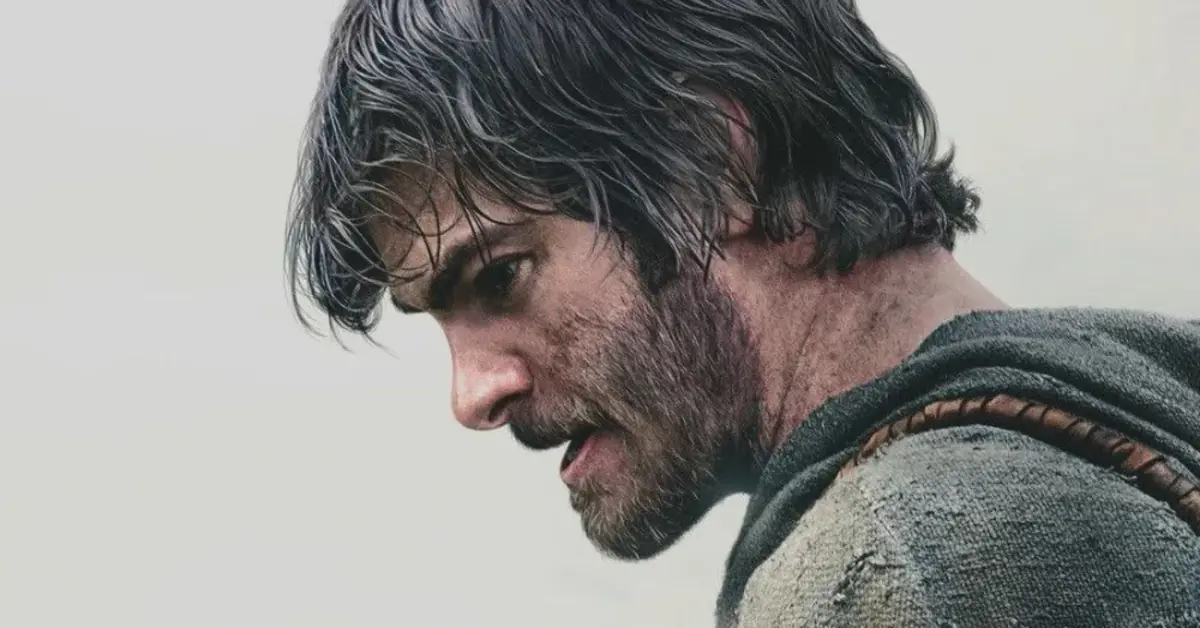

The Uprising, Andrew Garfield’s R-rated medieval war film, arrives on Peacock on November 6, 2026. The movie opened in US theatres on September 10 and struggled at the box office, but streaming gives it a fresh chance to reach viewers who skipped the cinema run. Directed by Paul Greengrass, the film dramatises the 1381 Peasants’ Revolt and ends with a scene that links Garfield’s farmer to the Robin Hood legend. Here is a full breakdown of the story, the cast, the reviews, and the ending.
The Film at a Glance
- Title: The Uprising
- Director: Paul Greengrass
- Lead: Andrew Garfield as Ploughman
- Rating: R for violence and bloody images
- Runtime: About 127 minutes
- US theatrical release: September 10, 2026
- UK theatrical release: October 9, 2026
- Digital rental and purchase: September 29, 2026
- 4K UHD, Blu-ray, and DVD: November 3, 2026
- US streaming debut: Peacock, November 6, 2026
The film is a co-production between the United States, the United Kingdom, and Germany. Focus Features handled US distribution, while Entertainment Film Distributors released it in the UK.
What Happens in The Uprising
The story opens in 1381, after the Black Death has killed roughly half of England’s population. The country is run by the council of King Richard II, who is only 14 years old and too young to rule on his own. The kingdom needs money, so the council raises taxes on peasants instead of the Church or the merchant class.
Andrew Garfield plays a farmer known only as Ploughman. He lost his wife and two children to the plague and survived alone. At the tax collector’s office, he is told to pay death taxes on his family again because he has no paperwork proving they died. A confrontation follows, and Ploughman kills a soldier who tries to arrest him.
That killing sparks a wider rebellion. Farmers across England rise up, and Ploughman becomes one of the revolt’s leaders alongside Wat Tyler (Cosmo Jarvis), a former soldier, and John Ball (Jamie Bell), a priest with radical ideas about equality. The rebels march on London to ask the king for relief from the crushing taxes.
Richard II meets the rebels briefly from a boat on the River Thames but does not listen to their petition. The rebels enter London and sack the city. The king’s council persuades him to promise reforms so the crowd will disperse, then plans to crush the rebellion once the royal armies return from Scotland and France.
The king agrees to meet the rebels at Smithfield and promises to grant their demands. Wat Tyler is killed during the meeting, and John Ball and many rebels are slaughtered. Ploughman learns of the betrayal but cannot warn them in time. He escapes with a small group of survivors.
The Cast and Who They Play
- Andrew Garfield as Ploughman, a grieving farmer who becomes the face of the revolt
- Jamie Bell as John Ball, the radical priest who gives the rebellion its moral voice
- Cosmo Jarvis as Wat Tyler, the former soldier who helps lead the march on London
- Woody Norman as King Richard II, the young monarch haunted by nightmares of mobs
- Katherine Waterston as Joan of Kent, the king’s mother
- Tom Hollander as Sir Robert Hales, the king’s treasurer and a target of the rebels
- Stephen Dillane as Archbishop Sudbury, another senior royal adviser
- Thomasin McKenzie, Jonny Lee Miller, and Sky Yang round out the supporting cast
The Real History Behind the Story
The Peasants’ Revolt of 1381 was a real uprising against poll taxes and unfair treatment of working people. The Black Death had created a labour shortage, giving surviving peasants more bargaining power, but the ruling class pushed back with new taxes and laws.
Wat Tyler and John Ball were real historical figures. Ball was a priest who preached that all people were equal, and he was imprisoned before the rebels freed him. Tyler led the march on London and was killed at Smithfield. Richard II was a teenager during the revolt and later broke his promises to the rebels.
The film adds Ploughman as a fictional character who ties the historical events to the Robin Hood legend. The real revolt did not produce a Robin Hood figure, but the idea of ordinary people fighting a corrupt authority became part of English folklore.
What Critics Said
Reviews were mixed. Rotten Tomatoes shows a 55% critics’ score and a 64% audience score. CinemaScore audiences gave the film a B- on opening night.
ScreenRant’s Brandon Zachary gave the film 9/10 and praised Garfield’s performance.
“Played with a soulful sadness and fierce fury by Andrew Garfield, Ploughman is a widower who buried his whole family, and now finds himself with no patience for the soldiers and taxmen abusing him and the other farmers.” — Brandon Zachary, ScreenRant
The Guardian was less impressed, calling parts of the film “disconcertingly silly” and criticising the Robin Hood epilogue as a letdown. Mashable gave it 2.5/5, pointing to shaky visuals and uneven storytelling. Several critics agreed that Garfield’s performance and the action scenes were strong, while the film’s bleak tone and handheld camera style divided viewers.
Paul Greengrass explained why he wanted to tell this story.
“It’s a rip-roaring adventure, but it’s also got something to say without hitting you over the head.” — Paul Greengrass, speaking to Empire
The Robin Hood Marketing Problem
Shortly before the US release, Focus Features began marketing the film as The Uprising: The Rise of Robin Hood. The UK distributor, Entertainment Film Distributors, did not approve the change. The move caused confusion because the film never uses the name Robin Hood and only suggests the connection in its final scene.
The marketing shift followed a similar release earlier in 2026. The Death of Robin Hood, starring Hugh Jackman, opened in June and grossed only about $9 million worldwide. The two films were not connected, but the shared subject matter added to the confusion around The Uprising.
The Ending Explained
One year after the revolt, King Richard II is travelling through Sherwood Forest when a group of archers ambushes his party. Ploughman, now wearing a green hood, steps forward as their leader. He decides to spare the king, telling him that killing him would not solve anything. Ploughman says that he and his band live beyond the king’s rule, and their defiance will haunt him forever.
The final scene shows the king’s palace under a dark, thundering sky while the king screams. The film does not use the name Robin Hood, but the green clothing, the forest, the bow, and the defiance of royal authority make the connection clear. The ending suggests that the spirit of the revolt survives in a new form, even after the historical rebellion was crushed.
Box Office and Reception Numbers
- Production budget: $20 million
- US opening weekend: $3.31 million from 2,068 theatres
- Worldwide gross: About $7.6 million to $8.1 million
- US theatrical release: September 10, 2026
- UK theatrical release: October 9, 2026
- Digital release: September 29, 2026
- Physical media: November 3, 2026
The film needed roughly $50 million to break even under the standard box office multiplier, so the theatrical run fell well short. The quick digital release, just 18 days after theatres, reflected the weak box office performance.
You May Also Like:


View all articles about
Where to Watch The Uprising
Peacock will stream The Uprising in the United States starting November 6, 2026. The film is already available to rent or buy on digital platforms including Amazon Video, Apple TV, Google Play, YouTube, and Fandango at Home.
Physical copies on 4K UHD, Blu-ray, and DVD arrive on November 3, 2026. Bonus features include deleted scenes, a cast featurette, and a behind-the-scenes look at building 1381 England.
A UK streaming date has not been announced. UK viewers can rent or buy the film digitally, and the UK theatrical release arrived on October 9. Canadian, Australian, and Indian viewers can check local digital stores for rental and purchase options. Peacock is a US-only service, so the subscription streaming release will not be available in those markets on November 6.
For more film breakdowns and streaming release guides, stay with VvipTimes.









Leave a Reply