

A controlled blast of nearly 9,500 pounds of unstable lead azide at the Iowa Army Ammunition Plant was never going to be a quiet news day. The operation carried real stakes for families living near Middletown, Iowa, and it came after weeks of legal back-and-forth, public worry, and repeated delays.
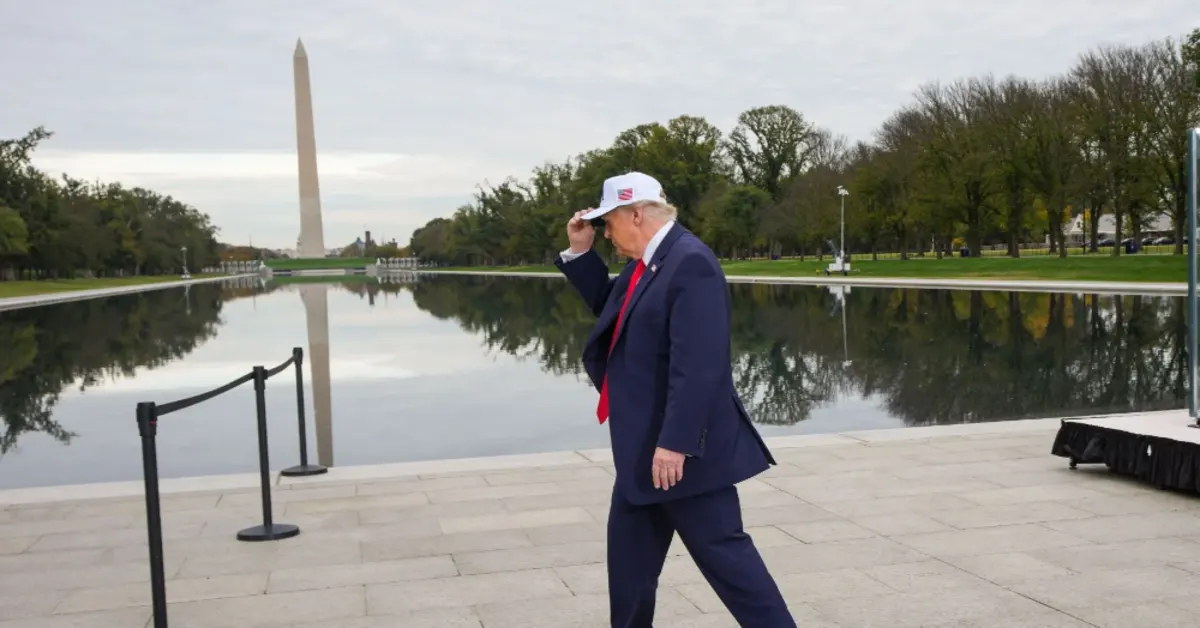
What followed the blast, however, looked less like a federal safety briefing and more like a live political show. President Donald Trump celebrated the result as a personal victory, targeted CNN for its coverage, and scolded Iowa’s incoming governor for asking questions.
The detonation itself went off without any immediate signs of danger. Air monitors reported no airborne lead readings above 0.0 in the hours after the blast, and the Army called the operation a “HUGE success”. The story that travelled fastest, though, was not about the science. It was about the fight over how the event was covered.
The Blast That Was Supposed to Be the Story
The material at the centre of the operation was lead azide, a chemical used in detonators and blasting caps. It had been stored at the Iowa plant for roughly two decades, and officials said it had degraded and crystallised in a way that made it vulnerable to exploding without warning.
The Army argued that a controlled blast was the safest way to remove the risk. The plan involved 68 barrels of material, and the operation was delayed multiple times as courts, state officials, and environmental groups pushed for more information.
On the day of the detonation, Acting Army Secretary Adam Telle said the operation “exceeded all expectations” and that “the threat of an uncontrolled spontaneous detonation has been eliminated”.
“The Army’s controlled, mitigated detonation exceeded all expectations and was a HUGE success. The threat of an uncontrolled spontaneous detonation has been eliminated.”
Maj.-Gen. Eric Shirley, who led the operation, said the risk had been reduced “as close to zero as is absolutely humanly possible”.
For people living nearby, the day was less about politics and more about waiting. Middletown Mayor Rodney Johnson told the BBC he felt “relieved” and “vindicated” after watching the blast from eight miles away and monitoring a camera at his home one mile from the site. “We did not feel anything. We did not see anything,” he said.
Another resident, Sandy Mabeus, closed her windows, brought her outdoor cat inside, and watched three live streams of the explosion. “We did not feel or hear a thing here,” she told the BBC.
Trump Posts: “Perfect Detonation” and “Another Win”
Trump’s first reaction focused on the result. He wrote on Truth Social that reports showed the Army’s mitigation efforts “far exceeded expectations”. A follow-up post praised the Army directly: “Great job by the Army, and others, in Iowa!!!”.
The tone shifted quickly. In a separate post, Trump accused CNN of wanting the operation to fail and framed the successful blast as a victory over the media.
“Fake News CNN was hoping for a bad outcome in Iowa. Their pre-coverage was inaccurate and deplorable. When a PERFECT detonation was completed and there for all to see, they went CRAZY with anger. They want our Country to lose. Another win for Trump!”
The phrase “PERFECT detonation” spread quickly online. The comment turned a federal explosive-disposal operation into a loyalty test, and it gave the president’s supporters a clean line to repeat across social media.
The post also carried a political edge. By calling the blast “another win,” Trump tied a technical military operation to his broader public image. The message was simple: the explosion worked, the critics were wrong, and the media was angry about it.
The CNN Fight Overshadows the Cleanup
CNN was not the only outlet covering the blast, but Trump singled it out. The network had reported extensively on the delays, the legal challenges, and the fears raised by residents and environmental groups before the detonation.
The president’s attack on CNN came after the Army had already announced that air monitors were showing no readings above 0.0 for airborne lead. The EPA also said its real-time monitors were reporting “ZERO detection of airborne lead throughout the region”.
That did not stop the coverage fight from becoming the main event. The president’s post gave the story a second life, and it shifted attention away from the months of warnings that had led to the blast in the first place.
Governor Kim Reynolds of Iowa offered a more measured response. She said initial feedback indicated the detonation “was successful” and that state agencies would continue to monitor incoming data.
Rob Sand Gets a Direct Message From the President
Trump also aimed at Rob Sand, Iowa’s governor-elect. Sand had called for transparency about how the material was allowed to deteriorate to the point where a controlled explosion became the preferred option.
Sand said the lead-up to the detonation “should never have been so chaotic and unclear” and that Iowans were “understandably alarmed and scared”. He also said that anyone affected “must be taken care of fully, right away”.
Trump’s response was blunt. He called Sand “just another politician” and said the governor-elect should “rejoice at this great success” instead of raising complaints about transparency.
“Rob Sands, the new future Governor of Iowa, is obviously unhappy that the Obama created (2009!) mess was so perfectly handled by the U.S. Army through a flawless detonation, that he’s now complaining about the lead up to the event. He hurt and delayed the process. Was absolutely no help. Just another politician.”
The president also said he would “remember” Sand’s stance. The exchange turned a local safety dispute into a national political talking point, with the governor-elect cast as an obstacle rather than a check on the process.
Sand had previously written on X that “no good options exist and the situation is more dangerous and unpredictable than it ever should have been”. That line captured the frustration of officials who felt they were dealing with a problem created years earlier, long before the final decision to blow the material in place.
The Company Behind the Plant Stays in the Background
The Iowa Army Ammunition Plant is owned by the Army and operated by American Ordnance LLC, a subsidiary of Philadelphia-based defence contractor Day & Zimmermann.
The same parent company won a contract worth up to $2.3 billion in June to run the Hawthorne Army Depot in Nevada through 2046. The Iowa plant operator and the Nevada depot operator are separate subsidiaries under the same corporate umbrella.
No public investigation or regulatory finding has established that American Ordnance mishandled the lead azide stockpile. Still, the contract details added another layer to the story: a private defence contractor runs the facility where a federal agency had to carry out an emergency explosive disposal.
Sen. Tammy Baldwin of Wisconsin asked the Army what it was doing to investigate the Iowa operator, according to Military.com. The question remains part of the broader record around the blast, even as the public attention moved to the president’s posts.
A Court Fight That Ended Hours Before the Blast
The detonation did not happen in a vacuum. It followed a legal battle that went all the way to a federal appeals court.
The Eighth Circuit Court of Appeals cleared the way for the Army to proceed after Trump had briefly ordered the military to hold off. Trump said he wanted the court and the incoming governor to sign off before the operation went forward.
The Iowa Environmental Council and the Sierra Club’s Iowa chapter had challenged the plan, arguing that the EPA had skipped necessary permitting steps. The court ultimately allowed the blast to go ahead, finding that the risk of an uncontrolled explosion was greater than the concerns raised about the controlled detonation.
That legal fight explains why the detonation became so politicised. It was not simply a military operation. It was a court-approved emergency action, taken over the objections of environmental groups, with a governor-elect asking for more answers and a president eager to claim the outcome.
What the Air Monitors Showed
The early data offered the strongest factual counterweight to the fears that had built up before the blast.
The EPA said its real-time air monitors reported zero detection of airborne lead across the region during and after the detonation. The Army said there were “no readings so far above 0.0” as of late morning.
EPA Administrator Lee Zeldin told CNN that he had received an initial report of a 0.0 reading after the detonation of 9,500 pounds of lead azide.
FEMA issued an all-clear around the plant, and officials said it was safe for residents to resume normal activities. The Army also said the two controlled blasts destroyed all 68 barrels and did not set off any secondary explosions.
Those numbers matter because lead exposure has no known safe level, especially for children and pregnant women. Environmental groups had argued that any release of lead dust could pose a long-term risk, and they wanted more testing before the blast went ahead.
Government agencies and independent researchers said they would continue testing water, soil, farms, homes, and playgrounds in the weeks after the detonation. The immediate air readings were clean, but the full environmental picture was still being measured.
The Social Media Split
Online, the reaction split along familiar lines. Supporters of the president treated the “perfect detonation” line as proof that the operation was a success and that the media had predicted failure. Critics pointed to the months of warnings and the legal fight as evidence that the process had been chaotic and that public trust had been strained.
The mayor of Middletown offered a more grounded view. Rodney Johnson said the delays had put residents’ lives on hold. “The residents of this community have put their lives on hold. And now many of them live with stress and fear of not knowing when the lead azide will be disposed of”.
That stress was the part of the story that did not fit neatly into a “win” or a “loss” headline. For the people closest to the plant, the blast was the end of a long wait, not the beginning of a political argument.
What the Detonation Left Behind
The Army’s operation removed the immediate risk of an uncontrolled explosion. The 68 barrels of degraded lead azide were destroyed, and the acting Army secretary said the threat of spontaneous detonation had been eliminated.
The political argument over the blast is still active. Trump’s posts turned the event into a media fight, and his criticism of Rob Sand made the governor-elect a national figure in the story. CNN’s coverage became a target, and the phrase “perfect detonation” became a shorthand for the president’s version of events.
You May Also Like




The environmental questions are also not fully closed. Air monitors showed zero airborne lead in the immediate aftermath, but testing of soil, water, and crops is continuing. Officials said the results so far were promising, and they also said more data would come.
For Middletown, the loudest part of the day was over in moments. Two booms, white plumes in the sky, and then a text alert telling residents it was safe to go back to normal. The national argument about what the blast meant is still running.
Also Read: Trump’s AI ‘Praying Soldiers’ Video Draws Fire Over Timing After Iran War Report
For more stories like this, keep reading VvipTimes.