

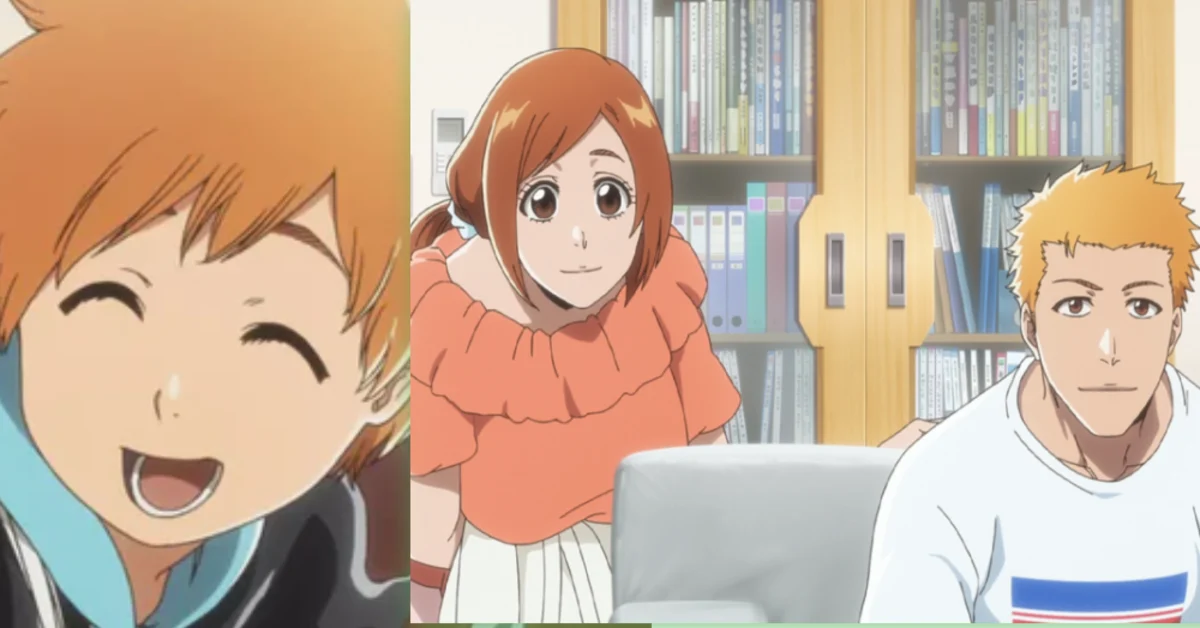

Bleach: Thousand-Year Blood War – The Calamity wrapped its 22-year anime run on October 26, 2026, with the final episode, “DEATH & STRAWBERRY.” The finale did what many fans thought was impossible: it took a manga ending that had been called one of the worst in shonen history and turned it into a satisfying, expansive conclusion. This is the story of how Studio Pierrot, working closely with creator Tite Kubo, pulled it off.
The original Bleach manga ended in 2016 after a rushed final arc that left major storylines unresolved and character arcs cut short. For a decade, that ending hung over the franchise like a cloud. The anime adaptation of the final arc, which began in 2022, was always going to be a second chance. But no one expected the level of change that arrived in the fourth and final cour, The Calamity. New Bankai forms, extended battles across three realms, a near-death moment for Orihime Inoue, and brand-new characters designed by Kubo himself—the anime did not just adapt the manga. It rebuilt its most criticized chapters from the ground up.
Why the Bleach Manga Ending Was So Controversial
To understand what the anime fixed, you first have to understand what went wrong. The Thousand-Year Blood War arc, which ran in Weekly Shonen Jump from 2012 to 2016, was supposed to be the grand send-off for one of the “Big Three” manga alongside One Piece and Naruto. Instead, it became a cautionary tale about what happens when a creator’s health collides with the relentless schedule of weekly serialization.
Tite Kubo was not ending Bleach early because of low sales or publisher pressure, a misconception that lingered in fan circles for years. The real reason was physical and mental exhaustion. Kubo suffered from a partially torn tendon in his left shoulder, a consequence of drawing for hours on end for over a decade. What began as routine colds turned into recurring illnesses that left him bedridden for weeks at a time. Facing a choice between his health and his story, Kubo asked to bring the manga to a close within one or two years.
The result was a finale that felt like a summary of itself. Storylines that had been built up for years were condensed into a handful of chapters. The final battle against Yhwach, the Quincy King and the series’ ultimate villain, was resolved in roughly ten pages, making up only 25 to 30 percent of the final three chapters. Characters who fans had followed for hundreds of chapters got moments that felt rushed or incomplete. The BBC described the original comic ending as “divisive and broadly unpopular with fans” and noted that it was “said to have been rushed due to creator Kubo experiencing health issues during its production”.
CBR put it even more directly: the manga “was rushed through its final arc, condensing and summarizing storylines that should have been given the room to breathe,” and the “lackluster ending severely impacted its standing in the anime world”. For a franchise that had defined a generation of anime fans, that was a painful note to end on.
Studio Pierrot’s Plan: More Time, More Scenes, More Kubo
The anime adaptation of the final arc was announced in 2020 and premiered in October 2022, a full decade after the original anime had ended in 2012 without ever adapting the final manga arc. From the start, Studio Pierrot made it clear that this would not be a one-to-one adaptation. The studio promised “anime-original scenes incorporating Kubo-sensei’s ideas,” a strategy that would define the entire four-cour run.
That promise became a reality in the final cour. Tomohisa Taguchi, who served as chief director across the Thousand-Year Blood War project, and Hikaru Murata, who directed the final cour’s episodes, led a production that aimed for what the studio internally described as a “dramatically high production-value target”. The team wanted the final season to feel like an event, and they were given the time and resources to make it happen.
Kubo himself was deeply involved. During a stage event in Tokyo on October 25, 2026, just one day before the finale aired, Kubo revealed that he had supervised the final part “on a scale equivalent to the work performed across the previous three parts combined”. That level of involvement meant that the changes were not just the studio’s interpretation—they were, in a very real sense, canon. As ComicBook.com reported, “all of it can be considered canon since they are written by Kubo”.
The Big Changes: What the Anime Did Differently
The final cour did not just extend the manga’s ending. It reimagined key moments in ways that gave characters and storylines the space they had been denied in print. Here are the most significant changes.
An Expanded Final Battle Across Three Realms
The manga’s final fight against Yhwach was brief and focused almost entirely on Ichigo Kurosaki. The anime turned it into a multi-front war. In Episode 49, “THE BLADE,” Yhwach appears simultaneously in the Soul Society, the World of the Living, and Hueco Mundo, threatening to merge the three realms into a single reality without the fear of life or death. This was a scenario that did not exist in the manga.
The battle became a collective effort. Uryu Ishida uses the Still Silver Arrowhead given to him by his father to weaken Yhwach, just as he does in the manga. But the anime adds layers. Shunsui Kyoraku manages to reach Yhwach and unleash the Right Arm of the Soul King. Grimmjow Jaegerjaquez and other characters in Hueco Mundo pierce a blade through Yhwach’s chest. All three instances of Yhwach—one in each realm—are attacked at the same time, turning what was a solo victory into a coordinated strike from across the Bleach universe.
Ichigo’s New Bankai and Orihime’s Sacrifice
Episode 45, “DEFEND YOU,” was produced entirely with anime-original scenes, and it introduced one of the most talked-about changes in the entire cour. Ichigo unlocks a brand-new Bankai form called “Blood Chains Ichigo,” a transformation that Kubo himself created for the anime and that never appeared in the manga. The form gave Ichigo a level of power that briefly put Yhwach on the back foot, something the manga’s version of the fight never allowed.
The episode also took a massive risk with Orihime Inoue. In the anime, Orihime pushes her reality-rejecting powers beyond anything seen before and jumps in front of Yhwach to save Ichigo, leading to what appeared to be her death. For a moment, fans were left stunned. But the moment served a larger purpose. Kubo later revealed that he had considered a storyline where Orihime dies during the original manga’s production. The anime did not ultimately kill her off—the epilogue confirms that she and Ichigo have a son, Kazui—but the near-death sequence gave her a moment of heroism that the manga had never provided.
New Characters and Kubo’s Direct Touches
The finale did not just expand existing material. It added new elements that Kubo had wanted to include but could not fit into the manga. For Episode 50, “DEATH & STRAWBERRY,” Kubo designed additional minor characters who appear only in the finale. These were not filler additions—they were pieces of the Bleach world that Kubo had envisioned but never had the chance to draw.
Kubo also made smaller but meaningful corrections. During the October 25 stage event, he revealed that in the final scenes where Ichigo and his allies swing their swords, he adjusted the sequence so that Ichigo’s blade strikes first. It was a small change, but it reflected his hands-on approach to ensuring that the anime’s ending felt like his ending.
What the Staff Said: Inside the Final Cour
The October 25, 2026 event at United Cinema Aqua City Odaiba in Tokyo brought together the key people behind the finale. Tite Kubo, Masakazu Morita (the voice of Ichigo Kurosaki), Noriaki Sugiyama (the voice of Uryu Ishida), director Hikaru Murata, and animation producer Yoshihiko Tominaga shared stories from the production.
Tominaga explained the guiding principle of the final cour: to shape “the Bleach that Kubo-sensei draws, and the Bleach that fans envision, exactly as it is”. Murata spoke about the visual ambition, saying the team aimed for “screen density, quality, and volume worthy of the final cour” and used CG for certain character effects to free up resources for other parts of the animation.
Kubo praised the opening of Episode 41, where the camera races across a battlefield, saying it felt like an attraction and that “the feeling of wanting to entertain the viewers came through directly”. Morita, who had voiced Ichigo since 2004, described his reaction to seeing the completed footage of Episode 45 as simply: “What?! What is this?!”. Sugiyama said the impact of the finished episode—with music, color, and effects added—was “tremendous”.
How Fans Reacted to the New Ending
The finale landed differently than the manga did. Where the 2016 ending was met with frustration and disappointment, the 2026 anime ending was met with gratitude and emotion. BBC Newsbeat spoke to fans ahead of the finale. Ruby Ebbs, 27, who started reading Bleach at age nine and cosplays with fellow fans, said: “A lot of us are feeling quite emotional about it. It is honestly my favourite series of all time, it has got me through a lot across my life”. Nicholas Thong, 30, who has a Bleach tattoo, recalled how the series helped him through school: “It helped me make friends in school, talking to a few people who also knew Bleach and about our favourite characters”.
Episode 49 drew immediate praise on social media. Fans called it “the best” and “like a movie,” with many saying the wait had been worth it. Anime News Network forum users debated the finale’s pacing and pairings, but even those who had criticisms acknowledged the emotional weight of the conclusion. One user wrote that Episode 45 remained “the best episode of Bleach,” even if later episodes felt fast.
On X (formerly Twitter), the finale trended with words like “BLEACH finale,” “Thousand-Year Blood War,” and “22 years“. Comments included messages like “I can’t believe BLEACH, which I’ve watched since elementary school, is ending next week” and “Thank you for 22 years! I’ll be watching the final blow until the end!”. A recurring sentiment was gratitude—not just for the ending, but for the fact that the ending had been given the care it deserved.
Where to Watch the Finale Worldwide
The finale, Episode 50, “DEATH & STRAWBERRY,” was released on Monday, October 26, 2026, at 8:30 a.m. Pacific Time. In the United States, it streams on Hulu. For most international audiences, it is available on Disney+. The episode also aired on TV Tokyo in Japan on October 27 at 12:00 a.m. JST.
For viewers in other regions, the release schedule was as follows: United Kingdom at 4:30 p.m. BST, India at 9:00 p.m. IST, Australia at 2:00 a.m. ACDT on October 27, and Brazil at 12:30 p.m. BRT. Netflix has streamed previous parts of Thousand-Year Blood War in several Asian markets, including India, but the finale’s streaming home for those regions remains Disney+.
The Ending the Manga Could Not Have
The Bleach manga ending was shaped by circumstances that no creator should have to face—chronic pain, illness, and the crushing pace of weekly serialization. The anime ending was shaped by something different: time, resources, and a creator who was finally able to see his story finished on his own terms. Studio Pierrot did not erase the manga’s final arc. It expanded it, recontextualized it, and gave it the emotional and narrative weight that the printed pages could not carry.
Related Stories
View all articles about
The result is a finale that fans waited 22 years to see. For a series that began in 2004 and became one of the defining anime of its era, that is a rare thing: a second chance at a goodbye that feels like a proper one. The final episode title, “DEATH & STRAWBERRY,” is a callback to the very first chapter of Bleach—a reminder that endings and beginnings are often the same thing, just viewed from different sides of the page.
Also Read: Bleach Thousand-Year Blood War Tops Fall 2026 Anime Rankings in Week 3 After Finale
The final chapter of Bleach is here. For more entertainment news and analysis, keep reading VvipTimes—where every story gets the ending it deserves.



















Leave a Reply