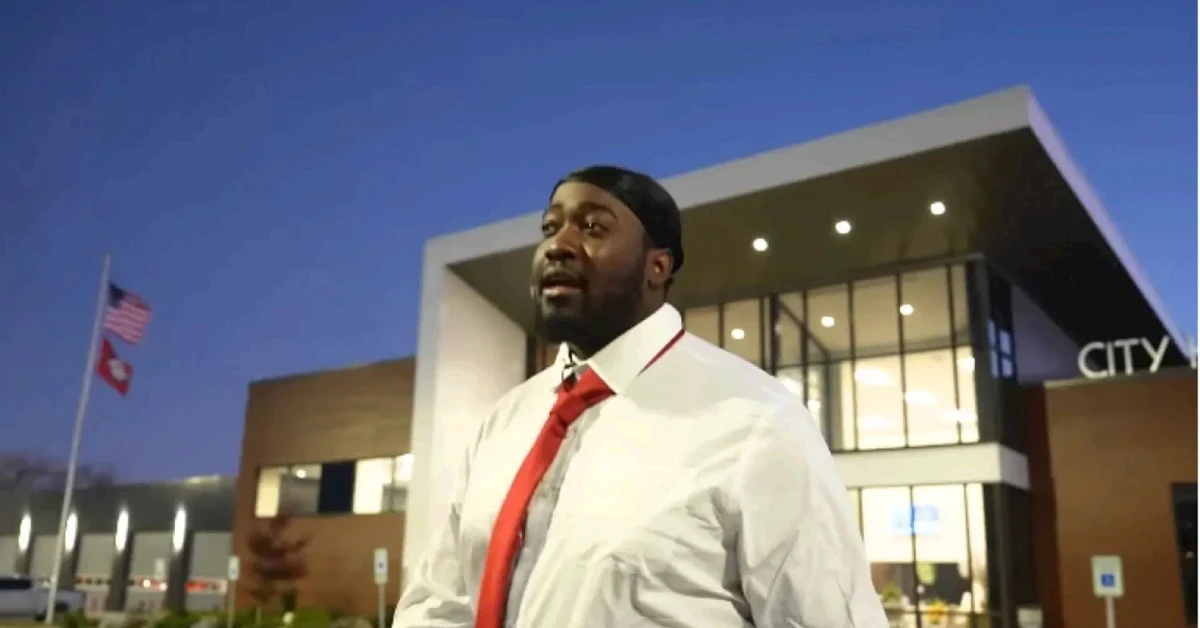

A Kick streamer paid a stranger’s bail so the man could play Grand Theft Auto 6 on a livestream, then attached a condition that critics say crossed an ethical line. The stunt, which aired on November 24, 2026, has drawn sharp criticism from viewers who describe it as exploitative, while raising questions about how far content creators will go for attention.
The $4,000 Offer and One Strange Rule
JiDion, a popular American streamer whose real name is Jidon Armani Adams, spent $4,000 to bail a man identified only as David out of a detention facility. The streamer met David outside the jail and explained the arrangement on camera.
“Well, this is awkward, but I bailed you out,” JiDion told David in the footage. “I didn’t expect it either, man. You just popped up on the radar, and I was like, ‘I’m gonna bail him out.’ But I need something from you, okay? So today is gonna be the best day of your life. You’re gonna be a free man, and we’re about to go play GTA 6, bro”.
David appeared surprised and admitted he was not particularly good at the game. The condition came later, during the car ride. JiDion explained that David would have to commit a crime inside GTA 6, attract the attention of the in-game police, and escape. If the virtual police caught him, JiDion said, David would go back to jail.
“If you get away from the cops, you get to keep everything,” JiDion said. “But if the cops catch you in the game, you go back to jail”.
David asked whether JiDion meant actual jail. The streamer replied, “Yeah”.
Losing a video game does not, by itself, provide legal grounds for someone to be returned to custody, and JiDion cannot independently send a person back to jail. The footage does not show why David was originally detained, what charges he faced, or which jail he was in.
Who Is JiDion?
JiDion built his following through prank videos, public confrontations, and gaming content. He has been permanently banned from Twitch and has faced controversy over stunts that push boundaries. In recent years, he has shifted toward livestreamed sting operations aimed at alleged predators, content that has drawn both attention and criticism.
The bailout stream fits a pattern of high-stakes, attention-driven moments that blend real-life situations with gaming entertainment. The line between the two has become increasingly blurred in his content.
Why Viewers Called It ‘Predatory’
Reaction on X, formerly Twitter, was swift and largely critical. One user wrote, “This is disgusting and extremely predatory”. Another said, “So we just playing with unfortunate people’s lives for content now…”.
A third comment described the arrangement as “sickening stuff,” adding, “Treating human beings like pawns in some sort of creator one-up game”.
The criticism centered on the power imbalance between a content creator with the resources to pay someone’s bail and an individual who had just been released from detention. Viewers questioned whether David fully understood what he was agreeing to, and whether the streamer was using the man’s circumstances to generate views.
Some also raised concerns about potential coercion, though the available footage does not establish that JiDion committed a legal offence. Social media criticism is not a legal finding, and no charges have been reported in connection with the stunt.
JiDion defended his decision by explaining why he chose David over another inmate. “The only reason why I’m not bailing out James is… he was arrested on November 23rd, so he had four days to play GTA 6,” JiDion said. “David, he had no chance, bro. The system got him”.
The Power Imbalance in Content Creation
The bailout stunt highlights a growing tension in livestream culture. Creators with money and platforms can shape real-world situations for entertainment, while the people pulled into those situations may not have the same control or understanding of what is happening.
David’s case is unusual because the arrangement involved the criminal justice system, not just a prank in public. Paying someone’s bail is a legal act. Attaching a gaming challenge to that release is where the ethical questions begin.
The condition itself—escape virtual police or return to jail—was almost certainly not enforceable. Yet the footage shows David asking whether JiDion meant real jail, suggesting the line between the game and real consequences was not entirely clear to him. That ambiguity is central to the criticism.
Content creators often rely on surprise and confusion to produce engaging moments. When the person on the other side is in a vulnerable position—just out of jail, unfamiliar with the game, unsure of what they have agreed to—the result can feel less like entertainment and more like exploitation.
GTA 6’s Record-Breaking Launch
The stream took place five days after Grand Theft Auto 6 launched worldwide on November 19, 2026, for PlayStation 5 and Xbox Series X|S. The game follows Jason and Lucia in a criminal conspiracy across Leonida, including a modern-day Vice City.
GTA 6 is already one of the biggest entertainment releases of the year, and its launch has driven a wave of streams, challenges, and creator stunts. Kick, the platform that aired JiDion’s stream, ran its own GTA 6 promotion starting November 12, with 10,000 Ultimate Edition digital codes in the prize pool.
The game’s cultural footprint has made it a backdrop for content across platforms, and the bailout stream tapped directly into that momentum. Whether the stunt will be remembered as a clever piece of livestream theatre or a step too far depends on how viewers weigh the entertainment value against the ethics of the arrangement.
You May Also Like
The Wider Trend of Extreme Streamer Stunts
JiDion’s bailout deal is not the first streamer moment to raise ethical questions. Livestreaming has increasingly rewarded creators who take risks, involve unsuspecting people, and blur the boundary between real life and content.
The pattern is familiar: a creator identifies a situation with emotional or legal stakes, inserts themselves into it, and turns the outcome into a live event. The audience watches in real time, and the clip circulates afterward. The people at the center of the situation often have little say in how the moment is framed or how long it follows them online.
In David’s case, the arrangement was presented as a gift—freedom in exchange for a gaming challenge. The criticism suggests that many viewers saw something else: a person’s freedom turned into a plot point, and a vulnerable moment used to fuel a livestream.
JiDion has not publicly responded to the backlash, and no further updates on David’s situation have been reported. The stream remains available in clip form, and the debate over where entertainment ends and exploitation begins continues.
Also Read: GTA 6 Sold 32.5 Million Copies Before Launch; Its Metacritic User Score Is Now Fighting for a 5
Stay tuned to VvipTimes for more updates on the stories shaping entertainment and streaming culture.