
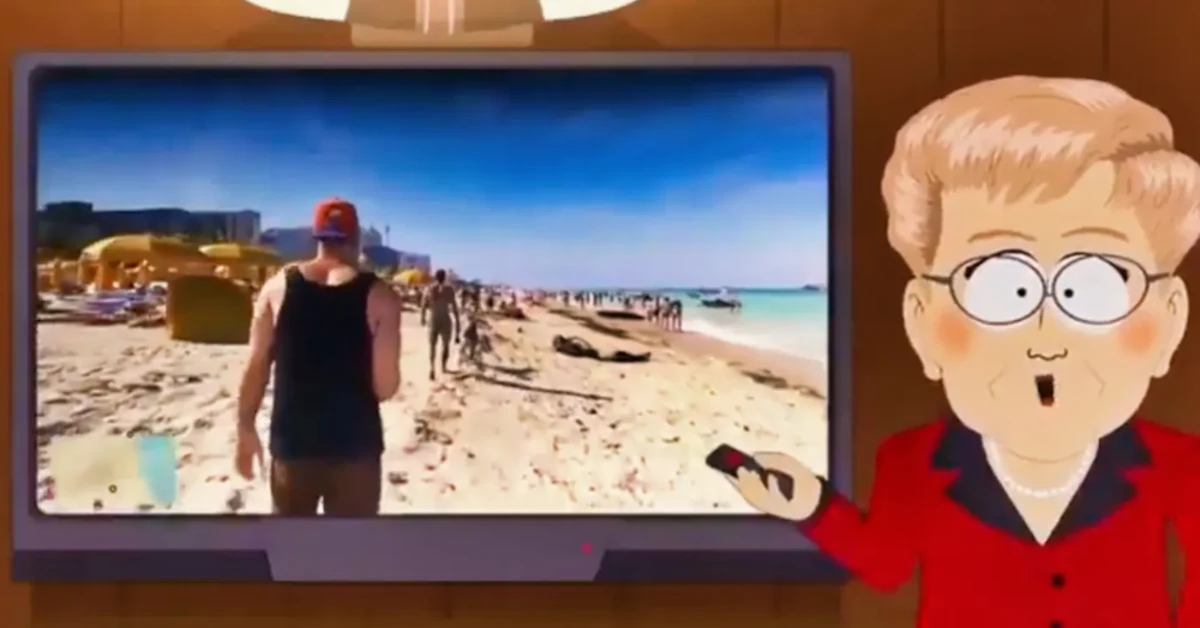

The biggest event in South Park Season 29’s November calendar is not the midterm elections. It is the launch of Grand Theft Auto VI. Episode 4, “Guinea Pig on a Stick,” aired October 28 on Comedy Central and ended with a sequence that reframed the season’s running joke. What characters had spent weeks describing as a vague national turning point in November was not a political outcome at all. It was a video game. The episode confirmed the misdirection with a direct line: cattle are “going to be a big factor in what happens in November,” followed by a shrug that the ranch worker does not know “what cows have to do with Grand Theft Auto VI.”
The confirmation lands three weeks before Rockstar Games releases GTA VI on Thursday, November 19, 2026, for PlayStation 5 and Xbox Series X|S. That date sits sixteen days after the November 3 midterms. South Park’s fourth episode used that gap to argue, through satire, that the cultural weight of a decade-in-the-making game release will reshape the town’s attention more than any ballot count. The show did not merely joke about the game. It aired actual GTA VI gameplay, with end credits acknowledging Rockstar Games supplied the footage.
The GTA VI Gameplay Reveal That Closed Episode 4
The closing minutes of “Guinea Pig on a Stick” delivered a mock preview introduced as “what’s coming in November.” The footage showed protagonist Jason Duval on a crowded Vice Beach, striking a non-player character with a bag of dog waste. A narrator highlighted the environment and the physics before declaring the sequence the kind of change November would bring. Cartman’s response was blunt approval, and the scene cut to credits.
The mechanics of the reveal matter more than the gag. Rockstar Games has kept GTA VI footage tightly controlled since the game’s first trailer. South Park’s ability to secure a gameplay clip, even a comedic one, gave the episode a marketing function beyond satire. The end-credit acknowledgment turned the segment into a coordinated cross-promotion timed to the game’s final pre-launch window.
That coordination explains why Episode 4 could treat GTA VI as a plot device rather than a punchline. The beef crisis that dominated the episode was a vehicle. The ranch visit gave the boys a reason to encounter the game. The midterm references gave the audience a false target. The final reveal gave the season a concrete November anchor that has nothing to do with voting.
Why the Midterms Were Always the Decoy
Season 29 seeded the midterm misdirect from the premiere. In “South American Biker Gangs,” Detective Harris surveyed the country’s condition and said things would improve in November, a line that characters and viewers could read as hope for an election result. The same episode’s running joke placed “hopefully things will be better in November” alongside GTA VI’s release window, but the political reading dominated early coverage.
Episode 4 made the dual meaning explicit and then collapsed it. The ranch worker’s cattle comment pointed toward election-season patriotism, where politicians market local beef as a symbol of national loyalty. That thread allowed the episode to skewer how campaigns attach themselves to ordinary consumer goods. But the same worker’s GTA VI line pulled the thread loose. The November event that would actually change daily life in South America was a game launch, not a policy shift.
The satire cuts in two directions. It mocks the assumption that electoral politics is the default lens for every November milestone. It also mocks the entertainment industry’s own tendency to treat a blockbuster release as a civic event. South Park does not resolve that tension. It lets both readings sit until the gameplay footage arrives and the game becomes the only event with a confirmed date and a visible product.
Ratings, Schedule, and the Business Logic of a Six-Episode Season
Season 29 premiered September 16, 2026, and drew 4.2 million multiplatform viewers across Comedy Central and Paramount+ in its first three days in the U.S. That figure represented a 33% ratings jump in the key demographic compared with Season 28, rising to a 0.97 rating and a 4.77 share. The premiere also followed the show’s temporary rebrand to “South America,” a name change tied to the season’s Trump-era geographic satire and a dispute over the naming of Lake Ontario.
The six-episode order is shorter than the ten-episode seasons Comedy Central ran for most of the show’s middle era. The schedule is biweekly: September 16, September 30, October 14, October 28, November 11, and November 25. That cadence places the final two episodes on either side of the GTA VI launch. Episode 5 arrives November 11, eight days before the game. Episode 6, the season finale, lands November 25, six days after the game.
The timing is not accidental. A biweekly schedule built around a November 19 game release gives the season two post-launch episodes to react to the cultural conversation the game generates. If GTA VI dominates discourse in the way its pre-release metrics suggest, South Park’s finale can incorporate immediate audience reaction rather than guessing at it weeks in advance. The midterms, by contrast, will be three weeks old by the finale. The show’s production calendar has effectively bet on the game as the more durable November story.
The “South America” Rebrand and Its Corporate Context
The name change from South Park to South America is the season’s other structural experiment. Comedy Central announced the shift in September, framing it as a response to President Trump’s executive order renaming Lake Ontario as “Lake America.” Parker and Stone said they were “inspired by the bravery and patriotism of Apple and Google,” companies that had updated U.S. maps to reflect the federal change.
The rebrand functions on two levels. It is a direct parody of political branding, and it is a distribution strategy. The new title created a fresh search entity across Paramount+ and Comedy Central at a moment when the show needed to distinguish its twenty-ninth season from a crowded animation slate. The ratings data suggests the maneuver worked: the 33% demographic lift coincided with the rebrand’s first week.
For Paramount, the corporate parent that houses both Comedy Central and Paramount+, the season serves as a cross-platform asset. Episodes air first on Comedy Central and stream the next day on Paramount+ in the U.S., Canada, and Australia. The GTA VI tie-in extends that asset value beyond the show’s own audience. Rockstar’s game is a PlayStation and Xbox product, not a Paramount property, but the gameplay reveal gave Paramount’s platforms a piece of the pre-launch conversation without a formal distribution deal.
What November 11 and November 25 Still Need to Prove
The final two episodes carry a structural burden. Episode 5, airing November 11, will arrive after the midterms have concluded and before GTA VI launches. It has a narrow window to address whatever political fallout the election produces while the game remains an impending event rather than a lived one. Episode 6, the finale, airs November 25, after the game has been in players’ hands for six days. It can treat GTA VI as a cultural fact rather than a promise.
The season’s willingness to bind its narrative arc to a third-party release is unusual for a show that has historically built episodes around news cycles. South Park has parodied video games before, but it has rarely allowed a game’s release calendar to dictate the pacing of a season-long joke. The approach carries a risk: if GTA VI’s launch is delayed again or underperforms culturally, the finale’s premise weakens. Rockstar’s official site continued to list November 19 as of late October, and multiple outlets confirmed the date had not moved.
The midterm misdirect also leaves a question about how the season will treat the election’s actual outcome. Episode 4 used the midterms as a foil, not a subject. If the finale ignores the election entirely, the satire risks looking like avoidance rather than misdirection. If it circles back to the midterms after the GTA VI reveal, the season can argue that both events competed for public attention and that the game won. That argument would be consistent with the season’s sharpest observation: in a media environment saturated with political branding, a video game release can organize attention more efficiently than a campaign.
You May Also Like



View all articles about
The Industry Signal in a Six-Episode Experiment
South Park’s twenty-ninth season is functioning as a test case for how legacy cable animation can stay relevant in a streaming-first release pattern. The biweekly schedule reduces the number of episodes but increases the production window for each one, allowing the show to incorporate near-real-time events. The GTA VI reveal required coordination with Rockstar, a level of third-party integration that a weekly ten-episode order would have made harder to schedule.
The ratings suggest the model has early traction. A 4.2 million three-day multiplatform total for a show in its twenty-ninth season is not a nostalgia number. It is a performance that justifies Paramount’s continued investment in the franchise across Comedy Central and Paramount+. The question is whether the model scales beyond a six-episode stunt. If the finale delivers a ratings lift around the GTA VI launch, Paramount will have data to support more short-order, event-timed seasons. If the finale loses momentum after the game’s release, the experiment may remain a one-off.
For now, the November event that South Park Season 29 has spent four episodes teasing is not a political outcome. It is a video game with a confirmed release date, a protagonist named Jason, and a bag of dog waste. The show has made its bet. The final two episodes will determine whether that bet pays off as satire, as marketing, or as both.
VVIPTimes will continue tracking South Park Season 29’s final episodes and the GTA VI launch as they collide in real time.

































Leave a Reply