
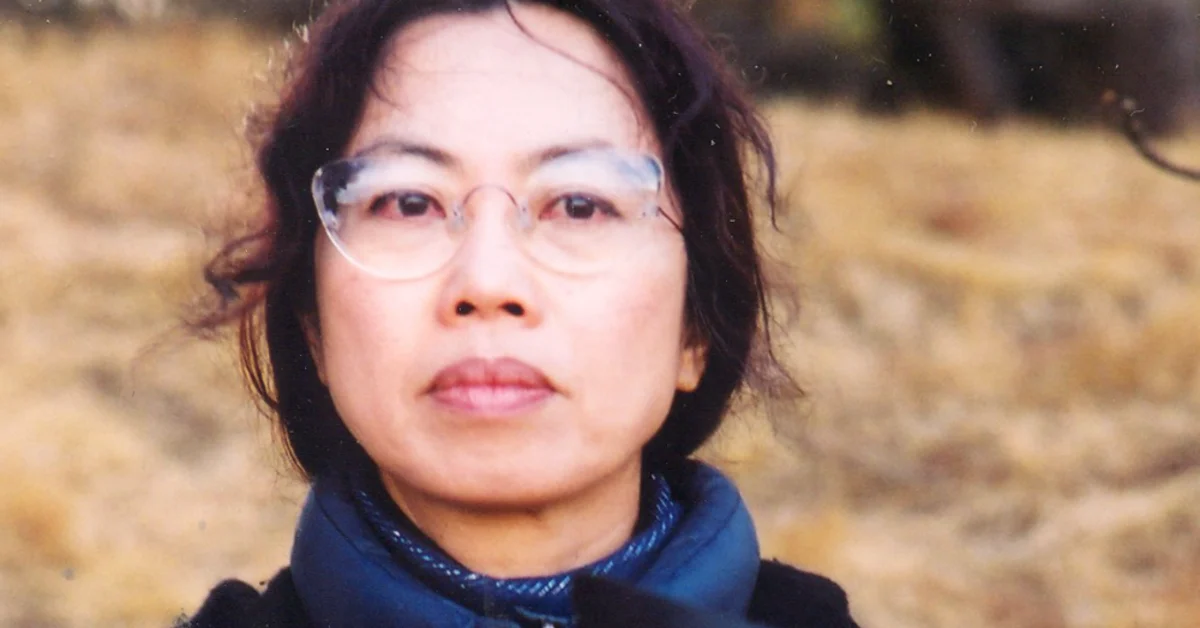

Vietnamese-American filmmaker Trinh T. Minh-ha has finished editing The Undying Desert, her first feature set in the United States, after filming in the Great Basin Desert for almost two decades. The filmmaker shared the news during the 30th Ji.hlava International Documentary Film Festival, where her work is being celebrated with a retrospective titled Translucent Being: Trinh T. Minh-ha .
The film marks a shift for a director who has built her career across Africa, China, Vietnam and Japan. Viewers had long asked when she would turn her camera toward the country where she lives. The Undying Desert answers that question with a project that examines how people relate to a landscape often mistaken for emptiness .
A Film Two Decades in the Making
Trinh T. Minh-ha began shooting in the Great Basin Desert nearly 20 years ago. The editing phase is now complete, but no distribution deal or public release date has been announced .
The long production period was not a delay in the usual sense. Returning to the same desert repeatedly became part of the film’s method. Each trip changed how she understood the place and her own responses to it. The director described the process as a way of revising her relationship with the landscape rather than simply collecting more footage .
“I’ve just finished editing it,” Trinh told Variety at Ji.hlava. “I’ve made films in Africa, China, Vietnam and Japan, and people would ask: ‘When are you going to make a film about the U.S.?’ They were right, because I live there.”
The Great Basin Desert stretches across parts of Nevada, Utah, California, Idaho and Oregon. It is a high, dry region that outsiders often describe only in terms of what it lacks. The filmmaker challenges that language directly .
Why the Great Basin Desert
Trinh associates the word “arid” with a colonizing outlook. In her view, the label says more about the people using it than about the desert itself. The landscape she filmed is active and full of life .
“A desert is huge, majestic and beautiful. At the same time, it’s considered ‘arid’ by colonizing forces. All these prejudices about what a desert is still exist in our language. But it’s actually very lively,” she said .
The film looks at two main questions. The first is how Native American communities understand the desert as layers of life rather than empty space. The second is why visitors travel there at all .
Trinh draws a clear line between being physically present and being mentally present. Some people use the desert as a terrain for sports or recreation. In her words, they are there but not with the desert .
“It wipes away every notion that allows us to conform to certain ways of life. Suddenly, you don’t have to be polite or compete with others. You go there to be with your true self,” she said .
Not everyone is ready for that experience. The film does not treat the desert as a simple wellness destination. It holds both the openness and the discomfort that come with removing social routines .
Native American Life and the Desert
The Great Basin is home to Nuwu (Southern Paiute), Newe (Western Shoshone) and Nuumu (Owens Valley Paiute) peoples, among others. These communities have lived across the region since time immemorial and view their ancestral land as a living entity with purpose and feeling .
Trinh said the film is closely related to Indigenous ways of life, especially those of Native Americans. The desert, in this understanding, is not a backdrop for human activity. It is a place where ancestors remain present and where life and death belong together .
“Native Americans see the desert as layers and layers of life, but it’s even more radical. They always remember that their ancestors are with them too. Life and death go together,” she said .
The film does not claim that every Indigenous community understands the desert in exactly the same way. Instead, it points to a relationship with the land that treats history and presence as part of the same reality .
That distinction matters because the Great Basin has been shaped by outside pressure for generations. Federal land management, resource extraction and recreation have all changed how people access and use the region. The film’s attention to Native American perspectives sits against that longer history .
The Ji.hlava Retrospective and a New Project
The 30th Ji.hlava International Documentary Film Festival ran from October 23 to November 1, 2026 in the Czech city of Jihlava. The anniversary edition featured more than 350 films from around the world .
The retrospective Translucent Being: Trinh T. Minh-ha presented five of her poetic film essays. The programme focused on how different cultures can be shown without claiming authority over them or imposing a single interpretation .
Trinh’s films often avoid individual stories in the conventional sense. She describes her approach as poetry in which the “I” is collective rather than personal. The camera invites people in rather than closing them out .
“I’ve always been engaged in politics, but as Jean-Luc Godard also noticed, there’s a difference between the political and politics. Everything we do can be political. This is particularly relevant for women because we’re very attuned to everyday activities. If you remain blind to that, you might make a political film about a progressive subject. But the way you treat it can be very regressive. When you turn the camera toward someone else, you also have to turn it toward yourself,” she said .
Work on another desert project began immediately after The Undying Desert was completed. Trinh is co-directing it with longtime collaborator Jean-Paul Bourdieu. The new film stays in the Great Basin but shifts its focus to groups who isolate themselves in the desert to research Mars colonization .
“In the Great Basin Desert, there are groups of people who isolate themselves and turn this location into a research center for Mars. They plan to go there and colonize another planet,” she said .
A Career of Setting Her Own Rules
Trinh T. Minh-ha was born in Hanoi in 1952. She is a filmmaker, writer, composer and professor of Rhetoric and Gender and Women’s Studies at the University of California, Berkeley .
Her first film, Reassemblage, was released in 1982 and was shot in Senegal. It questioned the ethnographic gaze and became a landmark of independent documentary. Surname Viet Given Name Nam followed in 1989 and challenged how documentary images and interviews claim to represent truth .
Other works include Naked Spaces: Living is Round, Shoot for the Contents, Forgetting Vietnam and What About China? Her films have been shown in retrospectives around the world .
“Cinema is not just an experience for the eyes. It’s an experience for the whole body. When I was first showing Reassemblage, someone told me: ‘I’m hearing this film with my eyes and seeing it with my ears,’” she recalled .
That approach to filmmaking carries into The Undying Desert. The film is not built around a single argument or a fixed message. It asks viewers to approach the desert with open senses rather than rigid expectations about what a documentary should say .
What We Know About Release
The Undying Desert is completed but does not yet have a public release date, distributor or confirmed festival premiere beyond the Ji.hlava context. No trailer or streaming information has been announced .
The film’s completion was confirmed by Trinh in an interview with Variety published on October 30, 2026 during the Ji.hlava festival .
A separate desert project with Jean-Paul Bourdieu is already in progress. That film will also be set in the Great Basin Desert and will examine groups preparing for life on another planet while living in one of the driest regions on Earth .
Trinh’s retrospective at Ji.hlava placed The Undying Desert alongside five of her earlier essay films. The festival’s programme described her work as an inquiry into memory, women’s experiences and cultural transformation from Senegal to Vietnam and China.
You May Also Like



View all articles about
For now, the clearest release information is that The Undying Desert has finished editing after nearly two decades of filming. Distribution and screening details are still to be announced.
Stay with VvipTimes for clear, fact-checked updates on the films and filmmakers shaping documentary cinema.



























Leave a Reply