

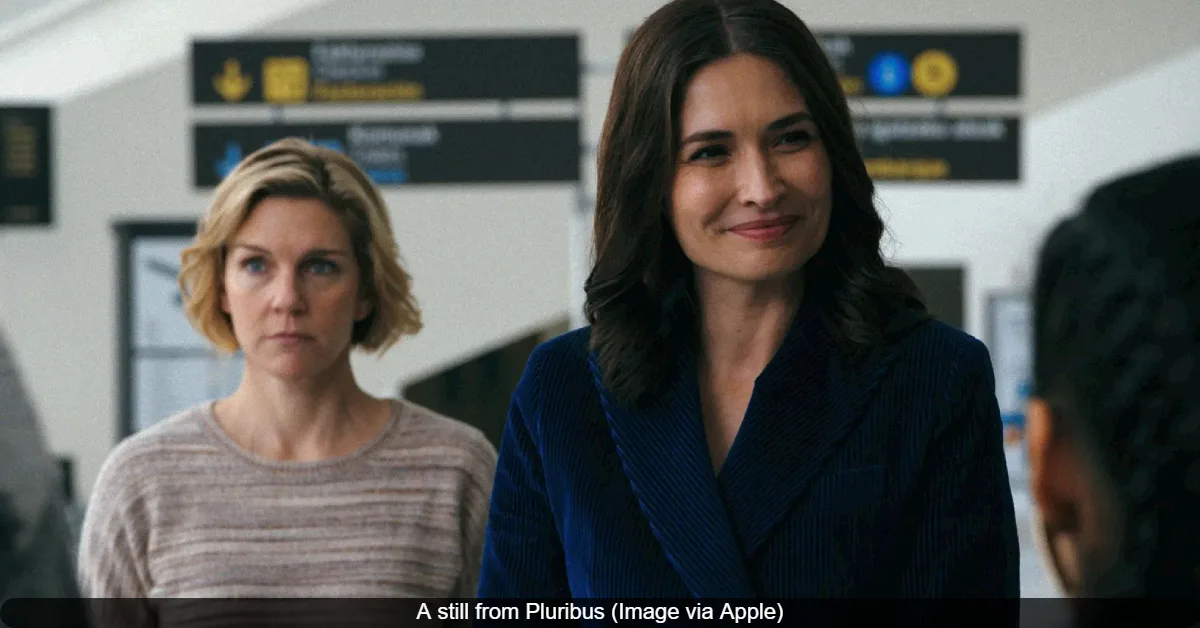
Fans of Vince Gilligan’s new Apple TV series, Pluribus, have discovered a direct, physical link to his earlier work. Viewers recognized a specific, isolated rock formation in the New Mexico desert from the new show, a location made famous by one of the most intense episodes of Breaking Bad. This spot is not just a scenic backdrop; it is the very same place where Walter White and Hank Schrader had their final, deadly confrontation.
The discovery connects two of Gilligan’s stories set in Albuquerque, though he has confirmed the shows exist in separate universes. This real-world location, deeply etched in the memory of television fans, now serves a new narrative purpose in Pluribus. For many viewers, seeing the landmark again brought back a flood of memories from the iconic crime drama.
The To’hajiilee Shootout Site’s New Role
In Breaking Bad, the location is known as the To’hajiilee area, part of the Navajo Indian Reservation. It was the site of a massive shootout in the final season, a pivotal moment where the series’ long-building tensions violently exploded. The unique, jagged rock formations provided cover for the characters and created a visually unforgettable setting for the climax of Walter White’s empire.
In Pluribus, this same stretch of desert appears in a quieter, more contemplative scene. The main character, Carol Sturka (played by Rhea Seehorn), travels through the area. The landscape’s imposing emptiness perfectly mirrors her isolation as one of the few people immune to a global hive mind. While the narrative context is completely different—a sci-fi mystery versus a crime saga—the location’s inherent feeling of stark, remote finality serves both stories powerfully.
The site remains a popular, if somewhat challenging, destination for dedicated fans seeking a pilgrimage. Online guides note that the exact spot can be difficult to find, requiring travel down specific tribal roads. Some visitors have even reported finding spent blank cartridges from the original filming, left behind as souvenirs.
Why Vince Gilligan Keeps Returning to Albuquerque
The shared location is no coincidence. Vince Gilligan has developed a profound creative and professional bond with Albuquerque, New Mexico. Although Breaking Bad was initially planned to be set in California, the production moved to New Mexico for financial reasons. This move turned into a major creative blessing.
Gilligan has often said the city itself became a character in his shows. He specifically praised the unique skies and landscapes that define the region’s visual identity.
“Albuquerque has meant the world for Breaking Bad. I can’t imagine Breaking Bad being anywhere else,” Gilligan stated in a past interview. “Just the cinematography and the look of the show. When I think of Albuquerque, I think of clouds, just those beautiful floating cumulus clouds. The skies. These are skies you just don’t see in Southern California”.
This affinity led him to base his next major project, Pluribus, in the same city. The show is filmed primarily in and around Albuquerque, utilizing both recognizable city spots and vast desert exteriors. Key actors from his previous shows also developed a lasting connection to the area; Bryan Cranston (Walter White) and Aaron Paul (Jesse Pinkman) both purchased homes there and have spoken fondly of their time filming.
Building a Brand New Neighborhood to Avoid Past Problems
For Pluribus, Gilligan and his team undertook one of their most ambitious physical productions. Instead of filming in an existing neighborhood, they constructed an entire suburban cul-de-sac from the ground up on the west side of Albuquerque. This set included seven full houses with real concrete curbs.
The decision was a direct lesson learned from the intense fandom surrounding Breaking Bad. The real home used as Walter White’s house on Piermont Drive became a non-stop tourist attraction. While most fans were respectful, some went too far, re-enacting scenes by throwing pizzas onto the roof—a famous moment from the show. This caused significant distress for the homeowners.
“Lately, we’re hearing that folks are wandering onto [the owner’s] property and… they’re throwing pizzas on roofs and stuff like that,” Gilligan said in 2015. “And let me tell ya, there is nothing original or funny or cool about throwing a pizza on this lady’s roof”.
To prevent subjecting another family to that experience, the Pluribus production built Carol Sturka’s neighborhood on leased land, giving them complete control. This allowed for unrestricted filming and ensured the privacy of local residents. The set was designed to offer a perfect view of the Sandia Mountains, continuing Gilligan’s tradition of integrating the local landscape into the story.
A Global Story Anchored in New Mexico
While Albuquerque is the heart of Pluribus, the story’s scope is global. The production also filmed in several international locations to visually represent the worldwide scale of the show’s mysterious event.
- Spain’s Canary Islands: Scenes set in Tangier, Morocco, were filmed here. The islands’ diverse landscapes also doubled for other global settings.
- Las Vegas, Nevada: The lavish penthouse where the immune character Koumba Diabaté lives is the real Westgate hotel.
- Helena, Montana: This location was used for its scenic resemblance to parts of New Mexico.
Despite these global hops, the story always returns to Carol’s home in Albuquerque. The show is a testament to Gilligan’s belief that this specific Southwestern setting can support any genre, from gritty crime to thoughtful science fiction.
No Shared Universe, But a Shared Creative Vision
Despite the geographical overlap and the return of actress Rhea Seehorn, Gilligan has been clear that Pluribus is not connected to the stories of Breaking Bad or Better Call Saul. He has explicitly stated the new show contains “no crime, and no methamphetamine” and that Seehorn’s character, Carol, is entirely different from her role as Kim Wexler.
“There might be some Easter eggs along the way, [but] I can’t imagine Carol running into Kim Wexler. That would be pretty weird,” Gilligan told TV Insider.
The connection is purely geographical and thematic. Both stories explore a lone individual pushing against an overwhelming system, and both use the New Mexican landscape to amplify themes of isolation, consequence, and stark beauty. The recognition of the To’hajiilee site is the ultimate Easter egg—a profound, unspoken nod to loyal fans who know that ground well. It is a reminder that while the fictional worlds are separate, they are born from the same creative mind and rooted in the same powerful, real-world soil.
Also Read: City of Shadows Ending Explained: How a Case Exposed Police Corruption and a Dark Past

