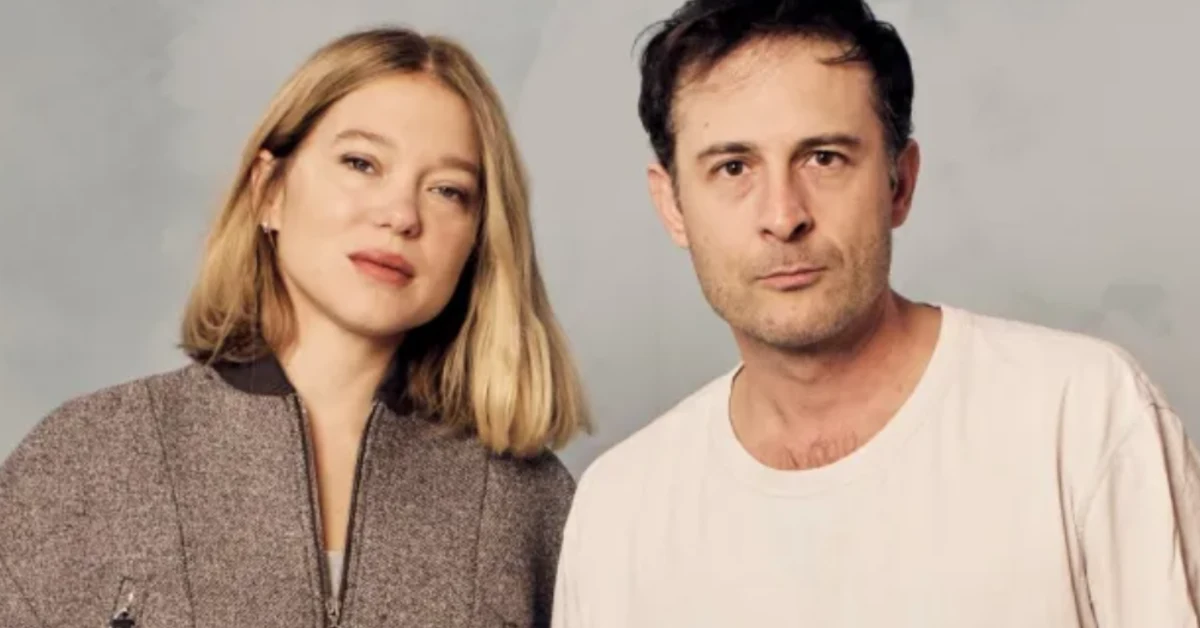

Arthur Harari spent part of his Sunday at the Marrakech Film Festival telling an audience that artificial intelligence is a “slippery slope” he would rather avoid. Minutes later, the director admitted he had already crossed a version of that line. His new film, The Unknown, contains a scene where Léa Seydoux kisses Léa Seydoux, and the shot could not have been completed without a deepfake tool.
The admission arrived during a public conversation with film critic Charles Tesson on November 22, 2026, at the 23rd Marrakech International Film Festival, which runs from November 20 to 28. The contradiction was not lost on the room, and it has since travelled across film outlets because it captures a question many working directors are now facing: where is the line between using a tool and letting the tool do the work?
The Scene That Required Two Léa Seydouxs
The Unknown is a body-swap story. Niels Schneider plays David Zimmerman, a Paris photographer who follows a mysterious woman named Eva and wakes up inside her body. The role of Eva, and the body David inhabits, belongs to Seydoux. That premise creates a rare visual problem: a scene where Eva’s body meets Eva’s body, and one face has to belong to two people at once.
“At one point in The Unknown, there is a scene where Léa Seydoux kisses Léa Seydoux, and we had to use a deepfake tool to do that,” Harari told the Marrakech audience. A deepfake, in plain terms, is software that can replace one face or body with another in a video. In this case, it helped create a shot where the same actress appears on both sides of a kiss.
Harari did not describe the shot as a gimmick. He framed it as a technical solution to a story problem, and he was careful to separate that solution from the larger concerns he has about AI.
Where Harari Draws the Line
Before the deepfake disclosure, an audience member asked how Harari views AI in his creative process. His first answer was a refusal. “I’m in much the same position as everyone else: this shift toward using AI is suddenly upon us, and it’s becoming not just a possibility, but something increasingly pervasive and tempting,” he said. “Personally, I’ve never used it; for the time being, I don’t see any place for it in my work”.
The director, who co-wrote the Oscar-winning Anatomy of a Fall, then walked that statement back. He admitted the deepfake use, but he also drew a firm line around writing. AI tools, he said, can be “perfectly legitimate and interesting” for simple research tasks. Using them “to actually craft parts of the writing process” is something else entirely. “That,” he said, “is a very slippery slope”.
His reasoning is not about machines taking over. It is about habit. “We are inherently prone to addiction — look at our phones, for instance; we’re constantly glued to them,” Harari said. “Once you get a foot in the door, it becomes incredibly difficult not to use it at every turn”.
The ‘Human Behind It’ Argument
Harari’s defense of the deepfake shot rests on a simple claim: a person was controlling the tool at every stage. “There was a human behind it. There was always a human involved — someone who programs it, so to speak, and keeps it under control,” he said. “So, I’m not against it in principle. It’s just that I think we need to ask ourselves what constitutes the essence of what we’re trying to create — right from the writing stage”.
That distinction matters to him because it separates a tool used for a specific visual task from a tool that starts making creative decisions. Harari did not say how much of the shot the deepfake produced, how long it took, or whether a body double and traditional effects were tested first. Those details remain open.
Léa Seydoux Does Not Feel Threatened by AI
Seydoux, the actress at the center of the scene, has already shared her own view on AI. Speaking to Variety earlier in 2026, she said she does not believe the technology will put filmmakers out of business. “I don’t think so. I think that nothing can replace humanity,” she said. “I don’t feel threatened. Maybe I’m wrong! But I believe in human nature”.
She has also called The Unknown “the best part I’ve ever played”. The film gives her a dual role of sorts, playing a woman whose body becomes a vessel for another person’s consciousness, and the deepfake scene is the most direct visual expression of that idea.
Festival Run and Release Details
The Unknown premiered in competition at the 2026 Cannes Film Festival, where it was a Palme d’Or contender. It later screened at the New York Film Festival and at the BFI London Film Festival in October 2026.
The film opened in French cinemas on August 26, 2026. Neon holds North American distribution rights and has said it will release the film in U.S. and Canadian theaters in 2026, though a specific date has not been announced. International rollout is expected in late 2026 and early 2027.
The Marrakech conversation took place on Sunday, November 22, 2026, as part of the festival’s public talk series. Harari appeared alongside other filmmakers including Rian Johnson, Luca Guadagnino, and Cristian Mungiu.
You May Also Like

A Practical Example in an Ongoing Debate
Harari’s admission does not resolve the AI debate in filmmaking, and he did not present it as a resolution. It gives the debate a concrete case: a director who says he does not want AI in his work used a deepfake tool for a single, story-driven shot, and he argues that human control kept the tool in its place. The same director also says the tool becomes dangerous when it moves from a specific task into the writing process, where creative choices are made.
For audiences, the scene in The Unknown will look like two Léa Seydouxs on screen. For filmmakers, the exchange at Marrakech is a record of how one director is drawing his own line, and where he says he will not cross it.
Also Read: The Eagles Question Just Got a New Answer in The Rings of Power Season 3
For more entertainment news and updates, visit VvipTimes.